How to Grow Kale from Seed? A Detailed Guide to Planting Methods
How to grow kale from seed? Please provide detailed guidance and an introduction. Kale is a variant of the cabbage species in the genus Brassica of the family Brassicaceae, native to Greece and other countries along the Mediterranean coast of Europe, and has a long history of cultivation in some European and American countries. In recent years it has been introduced from the United States, the Netherlands, Germany and other countries, and in Beijing, Shanghai and other cities...
How to grow kale from seed? Please provide detailed guidance and an introduction.
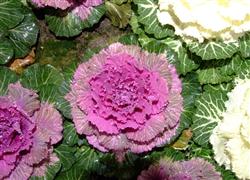
Kale is a variant of the cabbage species in the genus Brassica of the family Brassicaceae, native to Greece and other countries along the Mediterranean coast of Europe, and has a long history of cultivation in some European and American countries. In recent years it has been introduced from the United States, the Netherlands, Germany and other countries, and is grown as a specialty vegetable in the suburbs of Beijing, Shanghai and other cities. Kale has wide adaptability, is cold-resistant, heat-tolerant and tolerant of rich fertilizer and water, is easy to cultivate, and after a single planting can be harvested multiple times, with a harvest period of up to 6 months, and can be grown in most regions of the country. Its leaf shape is unusual, with leaf margins deeply pinnately lobed, beautiful and attractive; among them, the colored varieties have high ornamental value and can be grown and sold as potted vegetables, and can also be planted along roadsides and in flower beds in parks to beautify the environment.
1. Botanical Characteristics
Kale has an underdeveloped taproot and many fibrous roots, with the main root mass distributed in the soil layer around 30cm. The stem is upright, fleshy and relatively stout, with a plant height of 40-80cm; the leaves are green, long elliptical, with pinnately divided margins, relatively thick, and the degree of leaf surface wrinkling differs among varieties. The petiole is relatively long, accounting for about 1/3 of the whole leaf. The inflorescence is a raceme, the flowers are yellow, and it is cross-pollinated. The fruit is a silique, the seeds are round and spherical, yellow-brown to dark brown, with a 1000-seed weight of 3-4g.
2. Growing Conditions
1. Temperature
Kale prefers mild climate conditions and has strong cold resistance. Seeds can germinate slowly at 3-5°C, germinate fastest at 20-25°C, and temperatures above 30°C are unfavorable for germination. The most suitable temperature for stem and leaf growth is 18-20°C, with 8-10°C at night, but it can withstand low temperatures of -4°C, can endure brief frost during the growing period, and can still grow normally after the temperature rises. It is also relatively heat-tolerant and can grow at 30-35°C, but the leaf fiber increases, the texture becomes hard, and the quality decreases.
2. Light
Kale is a long-day crop. During growth and development, it needs a certain size of vegetative body, completes the vernalization stage under relatively low temperature conditions, and flowers and sets seed under long-day conditions. During the vegetative growth period (before completing the vernalization stage), longer days and stronger light are beneficial to growth. However, during the product formation period, weaker light is required; strong light will promote leaf aging and worsen the flavor.
3. Water
Kale prefers moisture, but can endure a certain degree of drought during the seedling stage and rosette stage, while during the product formation stage it requires relatively sufficient soil moisture and relatively humid air conditions. Under conditions of 75%-80% relative soil humidity and 80%-90% relative air humidity, it grows well, with high yield and good quality. Insufficient soil moisture will seriously affect leaf growth, and the yield will decrease markedly.
4. Soil and Nutrients
Kale has wide adaptability to soil, but cultivation in loam rich in organic matter is more conducive to improving yield and quality. Neutral or slightly acidic soil is suitable, and it should not be planted in low-lying, easily waterlogged plots. It prefers fertilizer and requires a large amount of it. Because the harvest period is long, its demand for nitrogen fertilizer must be met, along with combined application of phosphorus, potassium and trace elements.
3. Main Cultivation Techniques
1. Selecting Good Varieties
At present, the main ones include the Gull series, Osaka series, Nagoya series and Finch series, etc. The varieties are good and all relatively suitable for planting in the Shandong region, with strong growth vigor, uniform consistency, light green leaves, many leaf surface wrinkles, soft and tender texture, good taste, high calcium content, beautiful appearance, good ornamental value, strong disease resistance, good stress resistance and high yield. In the North China region, they can be planted in facilities such as unheated greenhouses and improved sunny cold frames.
2. Cultivation Season
In northern regions, spring and autumn planting can be done in the open field, and spring, autumn and winter planting can all be done in protected facilities. The seeding rate per 667 sq m is 20-25g. For spring protected cultivation, sow and raise seedlings from December to February of the following year, transplant from January to March, and harvest from March to June; for spring open-field cultivation, sow and raise seedlings in mid-to-late February, transplant from late March to early April, and harvest from early May to June; for autumn open-field cultivation, sow and raise seedlings from July to August, transplant from August to September, and harvest from September to November; for autumn protected cultivation, sow and raise seedlings from August to September, transplant from September to October, and harvest from October to May of the following year. Each region can also flexibly determine the planting period according to specific climate conditions, market demand and crop rotation arrangements.
3. Raising Seedlings
Seedling transplanting is mostly used; for large-scale planting, mechanical or manual direct seeding can also be used. Each 667 sq m requires 10-15 sq m of seedling bed, and 3kg of high-quality decomposed organic fertilizer is applied per sq m and mixed evenly with the bed soil. There are two methods: drilling and broadcasting. For drilling, open furrows at a spacing of 6cm and place 1 seed every 2-3cm; for broadcasting, it should be done after watering thoroughly, the seeds should be sown evenly, and after sowing cover with sieved fine soil about 1cm thick. After sowing in winter, cover with plastic film to keep the bed soil moist and increase the ground temperature. The ground temperature of the seedling bed is best at around 20°C, and the room temperature is best at 20-25°C during the day and around 10°C at night. When 2-3 true leaves appear, prick out seedlings once, with a spacing of 6cm x 10cm. Standards for strong seedlings: seedling age 30-35d, 5-6 true leaves, short internodes of the hypocotyl, dark green leaves, good root development, and no pests or diseases. After transplanting, they recover and grow quickly and have strong resistance to adverse environments and diseases.
4. Fertilization and Transplanting
Because of the large fertilizer requirement and the long harvest period, sufficient base fertilizer must be applied and multiple topdressings are needed. For base fertilizer, apply more than 2000kg of decomposed, finely crushed organic fertilizer per 667 sq m, spread evenly, deep plow and level, and make flat beds or raised beds (suitable for heavy clay soil) 6-8m long and 1.2m wide, with 2 rows transplanted per bed, row spacing 60cm, plant spacing 40cm, and about 2800 plants per 667 sq m.
5. Field Management
After the seedlings recover, cultivate and loosen the soil 1-2 times to increase ground temperature, promote root growth, and combine with weeding. Water less in the early stage so that the soil alternates between moist and dry; after 10 leaves have grown, increase the watering frequency and keep the soil moist often, but do not water too much each time; frequent light watering is better and beneficial to growth; if conditions permit, it is best to install drip irrigation facilities. For winter protected cultivation, do a good job of heat preservation and cold protection. Kale has strong cold resistance, but to ensure vigorous growth, about 15d before transplanting in protected facilities, or according to external environmental conditions, when the outside ambient temperature is below 5°C, cover with film. After uncovering the straw mats, ventilate to remove indoor humidity and maintain 15-20°C during the day and 5-10°C at night. 4. Pest and Disease Control
1. Black Rot
It mainly harms leaves. It is a bacterial vascular disease that causes the vascular bundles to necrose and turn black, with small black spot lesions or black streaks appearing on the veins of true leaves. The pathogen mostly invades through the water pores at the leaf margins, initially appearing as "V"-shaped lesions, and the veins in that part necrose and turn black. If it invades through wounds, it forms irregular pale yellow lesions. In the early stage of the disease, promptly remove diseased plants. In the early stage of disease in adult plants, spray Bingjunqing or 14% copper ammonia complex or 77% Kocide wettable powder, spraying once every 7-10d, for 2-3 consecutive times.
2. Downy Mildew
It mainly harms leaves. After infection, white frost-like substances first appear, followed by death. When humidity is high, loose white mold-like substances grow on the underside or upper side of the leaves. In the early stage of the disease, spray Bingjunqing or 40% aluminum triethyl phosphonate wettable powder or 70% chlorothalonil wettable powder or 72.2% Previcur aqueous solution, spraying once every 7-10d, for 2-3 consecutive times.
5. Sclerotinia Rot
Also called sclerotial soft rot, it mainly harms the stem base and leaves. In the early stage of the disease, pale brown lesions appear at the leaf margins; later the affected tissue becomes soft and rotted, and under high humidity conditions white or grayish-white flocculent mycelium grows and forms black mouse-dropping-like sclerotia. In the early stage of the disease, spray 50% ammonium nitrol humate powder or 20% methyl parathion EC or 50% iprodione wettable powder, spraying once every 7-10d. Fertilize reasonably; it is recommended to use soil-loosening fertilizer to loosen the soil, break up compaction, let the roots breathe, drain well and respire well, so they can grow well. Avoid excessive application of nitrogen fertilizer, which causes excessive vegetative growth, making the tissue tender and susceptible to infection.
4. Cabbage Caterpillar
Use the biological pesticide Chongmanjing diluted 2000 times and spray evenly, at an interval of 7-10 days, spraying 2-3 times to completely kill various aphids, green caterpillars, etc.
Click to get more cabbage growing techniques
Click to get more vegetable growing techniques