What are the precautions for growing purple cabbage?
What should be noted when growing purple cabbage? Please give guidance. Compared with ordinary cabbage, purple cabbage has the characteristics of a longer growing period, firm head formation, bright color, storage and transport tolerance, and good quality. 1. Regional selection. Purple cabbage prefers cool conditions, is relatively cold-tolerant, and is a low-temperature, long-day, naturally cross-pollinated vegetable. Seed production...
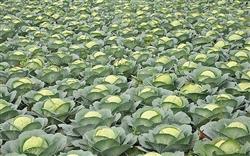
What should be noted when growing purple cabbage? Please give guidance
Compared with ordinary cabbage, purple cabbage has the characteristics of a longer growing period, firm head formation, bright color, storage and transport tolerance, and good quality.
1. Regional selection
Purple cabbage prefers cool conditions, is relatively cold-tolerant, and is a low-temperature, long-day, naturally cross-pollinated vegetable. The seed production site should be level and fertile, with convenient irrigation, few pests and diseases, and no other cabbage, cauliflower, or broccoli seed-production fields within 2000 m around it.
2. Seedling management
1. Suitable sowing period. In North China, medium-maturing varieties are suitable for open-field sowing and seedling raising in early to mid-September, late-maturing varieties need to be sown appropriately earlier, and early-maturing varieties should be sown appropriately later.
2. Cultivating strong seedlings. Purple cabbage can sprout 3-4 days after sowing. At this time the rainy season has just passed, the temperature is also suitable, and the seedlings are generally in good condition. However, to cultivate strong seedlings, attention must still be paid to: (1) When the true leaves reach 3 leaves and 1 heart, transplant the seedlings in time for temporary planting, with a plant-row spacing of (6-8) x 8 cm. (2) Pay attention to temperature changes to prevent high temperatures from causing the seedlings to grow leggy and weak. (3) Spray pesticides in time to prevent the seedlings from being damaged by pests and diseases.
3. Post-autumn management techniques
When the true leaves reach 7-8 leaves, transplant the purple cabbage seedlings at a plant-row spacing of 25-30 cm into improved sunny beds or solar greenhouses, with the aim of ensuring safe overwintering and cultivating strong seedlings for spring planting.
1. Land preparation and basal fertilizer application. Before land preparation, apply 3000-4000 kg of organic fertilizer mixed with soil, such as human manure, poultry manure, or livestock manure, 30-50 kg of superphosphate, and 100 kg of plant ash per mu, plow shallowly into the soil, and rake and level it.
2. Temperature regulation. Cover with film in time at the end of October. During the overwintering period, ensure the temperature is above 15°C during the day and above 5°C at night. On the one hand, strictly control seedling growth to prevent the seedlings from becoming too large due to high temperatures; on the other hand, the temperature must not be controlled too low, to prevent frost damage or premature completion of vernalization and early bolting.
3. Water management. Water thoroughly at transplanting, and replenish with 1 watering in time after the seedlings recover. Purple cabbage is suitable for growing under moist environmental conditions, and the best soil moisture in the seedbed is maintained at 70-80%.
4. Standards for strong seedlings after winter. Purple cabbage grows steadily and slowly in the shed. By early to mid-March, the plants should reach more than 20 leaves, with spreading leaves that are large and thick, thick stems, short internodes, well-developed root systems, no pests or diseases, and the heart leaves folded to form a small ball shape, which is best.
4. Transplanting management techniques
1. 7-10 days before transplanting, ventilate the purple cabbage in the shed at regular times for low-temperature hardening, so that after transplanting it can resist the effects of late spring cold spells and grow normally.
2. In northern regions, after the soil thaws in mid-to-late March, transplant to the open field in time, with a row-plant spacing of (50-60) x 50 cm, and plant 2000-2500 seedlings per mu. After transplanting, because the temperature is still relatively low, after watering thoroughly for seedling recovery, generally do not water again in the early stage, to promote root development. Once the seedlings have recovered, they enter the head-forming stage. As the leaf heads rapidly enlarge, the number of irrigations should increase, and the irrigation amount should be increased. In combination with watering, apply 10-15 kg of urea each time to promote plant growth and leaf head formation.
3. Select plants with bright purplish-red leaf heads, short stem disks, small internodes, few outer leaves, early head wrapping, firm head formation, and no pests, diseases, or head splitting as seed plants, and strictly eliminate diseased, inferior, and off-type plants that do not conform to the characteristics of this variety. In mid-to-late April, use a knife to cut a cross shape at the top of the leaf head to expose the growing point. Sometimes it needs to be cut several times so that the main bolt can be drawn out smoothly.
5. Seed plant management and harvesting
1. After bolting, set up some supports for the seed-production plants in time to prevent the flower stems from lodging and breaking.
2. Water and topdress before the beginning of flowering, and spray pesticides regularly to prevent insects. Purple cabbage must not lack water during the flowering period, and irrigation can be appropriately reduced in the middle and late pod-setting stages.
3. Begin harvesting in early July after the seed pods turn yellow. Harvest promptly as each batch matures. In North China, this coincides with the arrival of the rainy season. After harvesting, place in a dry place for 3-5 days of after-ripening, then thresh. Generally, harvesting is completed in 3-4 rounds. Three years of practice have proved that using this technical method to harvest and produce commercial purple cabbage seed can make full use of the temperature regulation measure in winter sheds, avoid unfavorable factors such as freezing, head rot, or drying out that may occur when fully headed plants are temporarily planted, and save labor and effort. At the same time, it can also ensure the purity of commercial seed and achieve high seed-production yields.
Click to get more cabbage growing techniques
Click to get more vegetable growing techniques