Detailed Explanation of Colored Sweet Pepper Planting Methods and Technical Key Points
How to grow colored sweet peppers? Please give an introduction. Colored sweet peppers are high-yielding hybrid specialty vegetable varieties introduced and cultivated from abroad. They are excellent varieties with internationally advanced levels, featuring a long growth period (harvest period), high purity (over 99%), high and stable yields, strong disease resistance, excellent product quality, extremely tolerant of storage and transport, and thick fruit flesh...
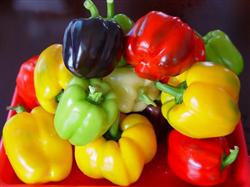
How to grow colored sweet peppers? Please give an introduction
Colored sweet peppers are high-yielding hybrid specialty vegetable varieties introduced and cultivated from abroad. They are excellent varieties with internationally advanced levels, featuring a long growth period (harvest period), high purity (over 99%), high and stable yields, strong disease resistance, excellent product quality, extreme tolerance of storage and transport, thick fruit flesh, and smooth fruit skin. Colored sweet pepper plants grow vigorously, with plant height reaching 2.5-3.0 m. The average single fruit weight of colored peppers is mostly over 200 g, with an average yield of about 5000 g per mu in high-yielding plots, and an output value between 20,000 and 60,000 yuan. After ripening, the colors are divided into milky white, purple-red, red-yellow, green, orange-red, black, etc., expanding the range of vegetables used for making Western-style salads, and both taste and color add more character to modern cooking. The products are exported in large quantities to the United States, Japan, South Korea, Western Europe, and other countries. Especially in recent years, the vigorous development of the domestic service industry has increased the demand for colored peppers. Colored pepper seeds have a very high technological content and are more valuable than other sweet pepper varieties. They belong to a high-input, high-output planting project, and in planting management, careful and meticulous management is required to obtain generous returns.
I. Season selection: For winter crop cultivation of colored peppers in protected facilities, sowing is generally chosen in early to mid-July, transplanting in mid to late August, and continuous harvesting from December to June of the following year. During this period, it passes through the two major holidays of New Year's Day and the Spring Festival, when market demand for colored pepper products is large and prices are high and stable. This brings relatively high economic benefits. At the same time, during the cultivation process, there are fewer diseases and it is easy to manage.
II. Variety selection: At present, colored pepper varieties suitable for protected cultivation should have large single fruit weight, bright fruit surface color, uniform coloring, and tolerance of low temperature and weak light. Varieties commonly used in production at present include Mandi, Taranto, Huang Guiren, Red Inda, Huang Taiji, Red Luodan, etc.
III. Cultivating strong seedlings: Cultivating age-appropriate strong seedlings with thick leaves, dark green leaf color, sturdy stems, and well-developed root systems is the key to high yields of colored peppers. Colored pepper seedling cultivation takes place in the high-temperature and rainy seasons of July and August. To cultivate strong seedlings, it is necessary to use a greenhouse or small arched shed (the following uses a small arched shed as an example) covered with top film and additionally covered with shade netting, in a combined film-and-net form for seedling cultivation, so as to effectively provide shade, lower temperature, and prevent rainstorms.
1. Seed treatment: Before sowing, first sun-dry the seeds for 1-2 days to promote after-ripening of the seeds and increase the germination rate. Then carry out warm-water seed soaking, putting the seeds into 55°C warm water and stirring continuously until the temperature drops to 30°C for soaking. To effectively prevent viral diseases, after hot-water disinfection, put the seeds into a 10% trisodium phosphate solution and soak for 20 minutes, then rinse clean with clear water before germination.
2. Seed soaking and germination: After warm-water soaking, soak the seeds in 30°C warm water for 8-10 hours so that the seeds fully absorb water, then wash off the mucilage on the seed coat, drain the surface moisture of the seeds, and wait for sowing. For seedling cultivation in summer high temperatures, it is generally not advisable to sow after germination.
3. Sowing and seedling cultivation:
(1) Preparation of nutrient soil: To ensure good seedling growth, the nutrient soil should have sufficient nutrient supply for the seedling stage and good water retention and air permeability. A ratio of organic fertilizer, soil, and fine sand of 5:3.5:1.5 can be used (the organic fertilizer must be fully decomposed, with 20-25 kg of superphosphate and 1 kg of diammonium phosphate added per cubic meter). The above three ingredients should all be sieved and then stirred evenly in a certain proportion. At the same time, mix in 50% chlorothalonil or carbendazim wettable powder at a ratio of 1:100. The moisture in the nutrient soil should be such that it can form a ball when held in the hand and can be broken apart when dropped from a height of 30 cm. If it does not form a ball, the amount of fine sand should be appropriately reduced; if it does not break apart, the amount of soil should be appropriately reduced.
(2) High-temperature greenhouse sealing: 7-10 days before transplanting, after deep plowing the soil and applying base fertilizer, cover with the greenhouse film, close all ventilation openings of the greenhouse, and keep the greenhouse sealed continuously for 3-4 days. At noon on sunny days, the temperature within the soil layer can reach 60°C-70°C, which can play a very good role in disinfection and sterilization.
(3) Land preparation and ridging: For overwintering cultivation of colored peppers, ridge cultivation with wide and narrow rows should be adopted to help increase soil temperature. Before high-temperature greenhouse sealing, deep plow the land more than 30 cm. In conjunction with plowing, apply 5000-6000 kg of fully decomposed chicken manure or 1500-2000 jin of soybean meal organic fertilizer per mu, 200 kg of compound fertilizer, 2-3 kg of biological potassium fertilizer, and 2-3 kg of biological bacterial fertilizer for resistance to Fusarium wilt and Verticillium wilt, etc. After leveling the land, form ridges with a ridge width of 30 cm and height of 20 cm, a small ditch width of 20 cm between two ridges, and a working path width of 50 cm, finally forming a small row spacing of 50 cm, a large row spacing of 80 cm, and a plant spacing of 50 cm. Plant about 2000 plants per mu.
Click to get more sweet pepper planting techniques
Click to get more vegetable planting techniques