Detailed Explanation of Summer Radish Planting Methods and Technical Points
How to plant summer radish? Here is an introduction. Summer radish planting can be done with reference to the following methods: 1. Select excellent varieties: For off-season cultivation, summer radish should choose high-quality varieties with good heat tolerance, strong disease resistance, and rapid fleshy root expansion. Such as: Xiachangbai No. 2, Xiameinong Zaosheng No. 3, and other varieties. 2. Prepare...
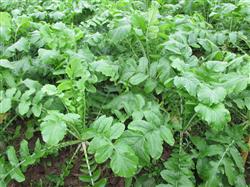
How to plant summer radish? Here is an introduction
Summer radish planting can be done with reference to the following methods:
1. Select excellent varieties: For off-season cultivation, summer radish should choose high-quality varieties with good heat tolerance, strong disease resistance, and rapid fleshy root expansion. Such as: Xiachangbai No. 2, Xiameinong Zaosheng No. 3, and other varieties.
2. Land preparation and fertilization: For planting radish, plots with deep soil layers, good drainage, and rich organic matter sandy loam soil should be selected. After the previous crop is harvested, promptly remove residual branches and weeds from the field, then broadcast 3000-4000 kg of fully decomposed organic fertilizer and 50 kg of vegetable-specific compound fertilizer per mu as base fertilizer. Next, deep plow, prepare the land, rake level, and rake fine, and finally form ridges with a ridge spacing of 60-80 cm, ridge height of 15-20 cm, and ridge top width of 20 cm.
3. Sow at the right time: According to market demand, sowing is suitable from late June to early August, but it should not be sown too early, otherwise there will be more rain and diseases are likely. Large radish varieties can be sown in holes, with a seeding rate of 0.5 kg per mu. When sowing in holes, use double rows per ridge, maintain a plant-row spacing of 20 cm x 20-25 cm, 2-3 seeds per hole, and cover with 2 cm of sieved fine soil after sowing. Medium-sized radish varieties can be sown in furrows, with a furrow depth of 2-3 cm and a seeding rate of 0.75-1.0 kg per mu. Small varieties are mostly broadcast sown, with a seeding rate of 1.5-2.0 kg per mu. When sowing, to prevent underground pests, use medicated soil or seed dressing with pesticides. After sowing, water lightly once in the furrows, and water again 2-3 days later, with the water amount not exceeding the ridge height and preferably soaking through the ridge back.
4. Strengthen field management
1. Thinning and final thinning: After the seedlings emerge, carry out the first thinning when the cotyledons unfold; carry out the second thinning after 3-4 true leaves grow; when the seedlings have 5-6 leaves and the radish fleshy root begins to break open, start final thinning, keeping only one healthy seedling per hole.
2. Cultivation and weeding: Combined with thinning, carry out shallow then deep intertillage and hoeing, and at the same time place soil from the furrow onto the bed surface to prevent seedlings from falling over.
3. Timely irrigation: Summer temperatures are high and water evaporates quickly, so water reasonably according to soil moisture and the characteristics of each growth stage of radish. In the seedling stage, the roots are shallow and water demand is small, so master the principle of "water less but often"; during the peak leaf growth stage, master the principle of "moderate irrigation" and do not water too much; during the fleshy root expansion stage, master the principle of "sufficient and even water supply" and keep soil moisture at 70-80%. Note: Summer radish should not be watered at noon; watering in the evening is best.
4. Fertilizer application: After final thinning, apply 8-12 kg of urea per mu together with watering to promote leaf growth; in the early stage of fleshy root expansion, that is, after the shoulder is exposed, apply 15-20 kg of urea or ammonium sulfate and 10-15 kg of potassium sulfate per mu with water. In addition, if foliar spraying is carried out 2-3 times in combination with root topdressing during this period, it will effectively promote fleshy root expansion.
5. Pest and disease control: Summer temperatures are high and there are many insect pests, mainly cabbage caterpillars, aphids, diamondback moths, striped flea beetles, etc. Insecticides such as chlorpyrifos, imidacloprid, chlorfluazuron, and BT emulsion can be selected for control; for diseases such as black rot, soft rot, and viral disease, corresponding fungicides such as agricultural streptomycin, new phytomycin, virus K, and virus spirit can be selected respectively for control.
5. Harvest in time: When the fleshy root is fully expanded and the weight per plant reaches 300-500 g, harvest and market successively according to market conditions. Note that it should not be harvested too late, otherwise it is prone to sponginess and affects quality.
Click to get more radish planting techniques
Click to get more vegetable planting techniques