What diseases occur during the cultivation of daikon radish?
What diseases affect daikon radish? Here is an introduction and their control methods. The common diseases of daikon radish are as follows for reference: 1. Downy mildew: Radish downy mildew mainly damages the leaves. The disease starts from the outer leaves, with small light green to pale yellow spots appearing on the leaf surface, which after expanding become yellowish-brown and are restricted by the leaf veins into polygonal shapes. In humid...
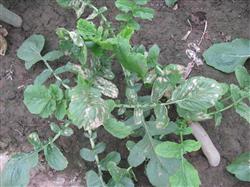
What diseases affect daikon radish? Here is an introduction and their control methods
The common diseases of daikon radish are as follows for reference:
1. Downy mildew: Radish downy mildew mainly damages the leaves. The disease starts from the outer leaves, with small light green to pale yellow spots appearing on the leaf surface, which after expanding become yellowish-brown and are restricted by the leaf veins into polygonal shapes. When humid, white mold appears on the underside of the leaves, and in severe cases the outer leaves wither and die. For chemical control, spray the leaves with 72% cymoxanil mancozeb wettable powder at 600-800 times dilution, or 69% anker mancozeb wettable powder at 1000 times dilution, or 72.2% propamocarb at 600-1000 times dilution.
2. Black rot: Black rot is a disease caused by the black rot fungus. The main symptoms are the center of the root turning black and the vascular bundles of the fleshy root turning black and rotting, later forming cavities. High temperature and frequent rain, excessive irrigation, poor drainage, unrotted fertilizer, continuous cropping, and numerous artificial wounds or insect injuries all favor the onset of the disease. For chemical control, in the early stage of the disease spray 41% Haolike suspension concentrate at 5000 times dilution, 72% agricultural streptomycin at 3000-4000 times dilution, or 50% DT wettable powder at 500 times dilution, once every 7-10 days, for 2?D3 consecutive applications.
3. Viral disease: Plants with viral disease are noticeably dwarfed, and the leaf color is yellow-green mottled or deformed. Aphids are an important transmission vector. Extensive field management, high temperature and drought, large populations of aphids and flea beetles, or weak plant growth all lead to more severe disease. In the early stage of the disease, use 1.5% zhibingling at 500 times dilution or 20% virus A wettable powder at 500 times dilution, spraying 2-3 times consecutively. This enhances the plant's resistance, and at the same time pay attention to preventing high temperature and drought.
Click to get more radish cultivation techniques
Click to get more vegetable cultivation techniques