How to prevent and control powdery mildew in Astragalus membranaceus? A complete guide to control methods
How to prevent and control powdery mildew in Astragalus membranaceus? Please note that Astragalus membranaceus is a wild or cultivated species, and throughout its entire growth period it suffers quite severe damage from powdery mildew, which directly affects yield and quality. 1. Symptoms: Powdery mildew in Astragalus membranaceus not only damages leaves but also damages flower stamens, pods, stems and other parts. In the early stage of powdery mildew in Astragalus membranaceus, the leaves...
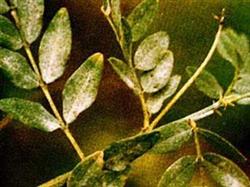
How to prevent and control powdery mildew in Astragalus membranaceus? Please explain
Astragalus membranaceus is a wild or cultivated species, and throughout its entire growth period it suffers quite severe damage from powdery mildew, which directly affects yield and quality.
1. Symptoms: Powdery mildew in Astragalus membranaceus not only damages leaves but also damages flower stamens, pods, stems and other parts. In the early stage of powdery mildew in Astragalus membranaceus, sparse white powdery mold layers appear on the leaves and pods. In the late stage of the disease, the powdery layer turns grayish white, the leaves wither and yellow, and many small black spots appear on the diseased leaves.
2. Pathogen: Powdery mildew in Astragalus membranaceus is caused by infection by Erysiphe pisi, a species of the genus Erysiphe. The cleistothecia are spherical or flattened spherical, dark brown, and contain several asci inside; the asci are oval or obovate, colorless, and have short stalks.
3. Occurrence characteristics: According to investigation, powdery mildew in Astragalus membranaceus forms its sexual generation in late September and overwinters as ascocarps on diseased residues. When the temperature reaches above 20°C in May of the following year, the pathogen spores germinate and first infect two-year-old Astragalus membranaceus plants, forming disease centers. The pathogen reproduces and reinfects repeatedly, white powdery material appears on the leaves, and it spreads by wind and rapidly spreads to neighboring plants, soon covering the entire field. The disease is severe in August to September, with both incidence rate and severity reaching 100%. From late September to early October, ascocarps form and fall into the soil with diseased residues to overwinter. The characteristic of this disease occurrence is that disease centers appear first in the field and then spread outward in all directions.
6. Control methods:
(1) Agricultural control: Burn diseased plant residues and fallen leaves to reduce overwintering inoculum sources. According to the habit of the powdery mildew pathogen of Astragalus membranaceus overwintering on dead branches and fallen leaves, after harvesting the aboveground parts of Astragalus membranaceus, sweep up the residual branches and fallen leaves and burn them in a centralized manner to reduce overwintering inoculum sources.
(2) Chemical control: The occurrence period of powdery mildew in Astragalus membranaceus is relatively long, and June to October is the best period for controlling powdery mildew in Astragalus membranaceus. In the early stage of the disease, spray 50% thiophanate or 50% carbendazim at 800 to 1000 times dilution, once every 10 days, for 2 to 3 consecutive times. Spray once each in the middle and late stages, using 25% triadimefon WP at 4000 times dilution, with a control effect of more than 90%. In addition, 70% thiophanate-methyl WP or 70% mancozeb WP at 500 to 800 times dilution can be sprayed for control.
Click to get more Astragalus membranaceus cultivation techniques
Click to get more medicinal herb cultivation techniques