What are the key points of Astragalus mongholicus cultivation and management techniques?
How do you manage the cultivation of Astragalus mongholicus? Please introduce the following methods that can be referred to for managing Astragalus mongholicus cultivation: 1. Thinning, final thinning and replanting: Whether by direct seeding or seedling raising, after the seedlings emerge completely, final thinning should be carried out between rows. Thinning should be done early to avoid plants crowding each other, shading one another, and competing for fertilizer and water. Astragalus mongholicus is generally thinned 2-3 times, ...
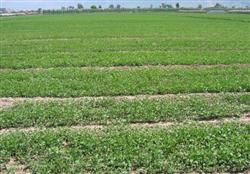
How do you manage the cultivation of Astragalus mongholicus? Please introduce
The following methods can be referred to for managing Astragalus mongholicus cultivation:
1. Thinning, final thinning and replanting:
Whether by direct seeding or seedling raising, after the seedlings emerge completely, final thinning should be carried out between rows. Thinning should be done early to avoid plants crowding each other, shading one another, and competing for fertilizer and water. Astragalus mongholicus is generally thinned 2-3 times: the first time when seedling height is 6 cm, the second time when seedling height is 10-12 cm, and then final thinning is carried out. For hole sowing, keep 3-4 seedlings per hole; for drill sowing, keep 1 strong seedling every 10-12 cm; for seedling raising, keep 1 seedling every 2-3 cm (the larger seedlings removed by thinning can be transplanted, allowing the smaller seedlings to continue growing). Remove weak, small and diseased seedlings, and keep strong ones. During final thinning, if there are gaps, replanting should be carried out. Replanting should be done on cloudy days or in the afternoon or evening of sunny days. The seedlings used can be pre-cultivated or selected from those removed by thinning. Pay attention to watering after planting. Replanted seedlings tend to branch more, so when there are too many gaps, it is best to reseed with pre-germinated seeds.
Astragalus mongholicus is used medicinally for its root, and its yield is composed of two factors: root weight per plant and the number of plants per unit area. Cultivation practice in recent years has shown that appropriately dense planting can increase the leaf area index and can appropriately raise the yield of Astragalus mongholicus, but root weight decreases somewhat and the quality of Astragalus mongholicus is somewhat reduced. Taking all factors into consideration, the planting density of Astragalus mongholicus should preferably be about 18,000-20,000 plants per mu. Where fertilizer and water conditions are good, the soil is fertile and nutrients are sufficient, planting can be appropriately denser; where fertilizer and water conditions are poor and nutrients are insufficient, it should be sparser.
2. Intertillage and weeding:
Astragalus mongholicus seedlings grow slowly, and after emergence, weeds and seedlings often grow together. If not attended to, this can easily cause weed infestation, so weeding should be done promptly. Weeding is generally carried out together with intertillage. Intertillage can loosen the soil, cut off soil capillaries, prevent water evaporation, and play a role in drought prevention and moisture conservation. After heavy rain and prolonged rain, intertillage also plays a role in reducing soil moisture and preventing waterlogging. The folk sayings "the hoe holds water" and "the hoe holds fire" refer to this principle. Intertillage is generally carried out 3-4 times per year. When seedling height is about 5 cm, carry out the first intertillage and weeding together with thinning; when seedling height is 7-8 cm, carry out the second intertillage; after final thinning, carry out the third intertillage, and afterward proceed according to weed conditions in the field. From the second year onward, carry out intertillage once each in April, June and September. The depth of intertillage is generally based on the principle of shallow during the seedling stage, deep for mature plants, shallow near the seedlings and deep between the rows, so as to avoid injuring seedlings, burying seedlings, damaging roots or leaving weeds. Hoe finely, hoe evenly, and do not miss any spot.
3. Topdressing:
Astragalus mongholicus likes fertilizer. In addition to applying sufficient base fertilizer, in order to meet nutrient needs at different growth stages and increase yield, during the first and second years of growth, topdressing is carried out 3 times each year together with intertillage and weeding. The first topdressing is carried out together with the second intertillage and weeding. It should be applied lightly and in a targeted way, more for small seedlings and less for large seedlings, so as to promote small seedlings to catch up with large ones and turn weak seedlings into strong ones, achieving uniform, even and strong seedlings. Generally, apply 1000 kg of human excrement and urine per mu, or 15 kg of ammonium sulfate diluted in water and poured on. The second topdressing is carried out together with the third intertillage and weeding. Mix 1500 kg of compost, 50 kg of superphosphate and 10 kg of ammonium sulfate evenly per mu, then open furrows between the rows and apply, covering with soil after application. The third topdressing is after the seedlings wither in early winter, applying 2000 kg of barnyard manure per mu plus 50 kg of superphosphate and 150 kg of cake fertilizer, mixing well and applying to the field, then earthing up after application to prevent freezing.
4. Irrigation and drainage:
During the seedling stage, Astragalus mongholicus consumes little water. In order to promote root penetration downward, increase root length and raise the yield of Astragalus mongholicus, under the condition of sowing with sufficient soil moisture, watering may be omitted. If the underlying soil moisture is insufficient and the weather is dry, small amounts of water or alternate-row irrigation should be used; never flood irrigation. During the seed-setting and ripening stage, if high temperature and drought occur, timely watering should also be carried out to promote normal seed maturation, reduce the hard seed rate and improve seed quality. In the rainy season, excessive soil moisture can lead to root rot, and plots prone to water accumulation should be drained promptly to reduce soil moisture and facilitate normal root growth.
5. Topping and bud removal: Topping and bud removal can break the growth dominance at the top of the main stem, inhibit the plant height of Astragalus mongholicus, control aboveground plant growth, reduce nutrient consumption, promote root growth and increase the yield of Astragalus mongholicus. This is an important part of high-yield cultivation of Astragalus mongholicus. According to production surveys, it can generally increase yield by about 15.4%.
Bud removal is generally carried out when flower buds appear in mid-June, removing them, usually 3-4 times per year. Topping must be done "at the right time." If topping is too early, it will affect aboveground growth, reduce the leaf area coefficient, affect photosynthesis and lower yield; if topping is too late, it will not play its proper role. According to the growth and development characteristics of Astragalus mongholicus, the appropriate time for topping should be in late July.
6. Overwintering management:
Astragalus mongholicus is a perennial plant. From the withering of the aboveground part and the formation of overwintering buds at the root crown to the time before greening up the following year, it needs to go through about 180-190 days. Doing a good job of management in this stage is crucial to the growth and development of Astragalus mongholicus in the second year. In production, necessary measures should be taken to do a good job of overwintering management of Astragalus mongholicus.
(1) Cleaning the field: After the aboveground part of Astragalus mongholicus withers before winter, promptly remove withered branches and fallen leaves, and burn them in a centralized manner or compost them, so as to eliminate overwintering sources of pests and diseases and reduce the occurrence of pests and diseases the following year.
(2) Fertilizing and earthing up: After the seedlings wither in winter, mix 2000 kg of decomposed barnyard manure, 50 kg of superphosphate and 150 kg of cake fertilizer evenly per mu, then spread it flat over the root crowns, then dig deep to clear the ditches and cover the fertilizer with ditch soil to prevent the roots from freezing.
(3) Irrigation to prevent freezing: Because water has a relatively high specific heat, irrigation can increase the heat capacity of the soil and has a certain antifreeze effect. Irrigation should preferably be done once thoroughly before the Start of Winter.
Click to get more Astragalus mongholicus cultivation techniques
Click to get more medicinal herb cultivation techniques