How to grow Astragalus? Detailed planting methods and techniques
How to grow Astragalus? Please explain in detail. Astragalus is also called Mianqi, Mianhuangqi, and Beiqi, and is a perennial herbaceous plant of the Fabaceae family. It is divided into Northeast Astragalus (Astragalus membranaceus) and Inner Mongolia Astragalus (Astragalus membranaceus), and its dried roots are used medicinally, with effects such as tonifying qi and securing the exterior, promoting urination, expelling toxins and draining pus, and promoting tissue regeneration; it treats shortness of breath, collapse, palpitations...
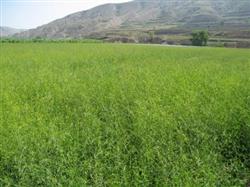
How to grow Astragalus? Please explain in detail
Astragalus is also called Mianqi, Mianhuangqi, and Beiqi, and is a perennial herbaceous plant of the Fabaceae family. It is divided into Northeast Astragalus (Astragalus membranaceus) and Inner Mongolia Astragalus (Astragalus membranaceus), and its dried roots are used medicinally, with effects such as tonifying qi and securing the exterior, promoting urination, expelling toxins and draining pus, and promoting tissue regeneration; it treats shortness of breath, collapse, palpitations, spontaneous sweating, general weakness and edema, chronic nephritis, dehydration, chronic diarrhea, uterine prolapse, and chronic non-healing sores.
Astragalus is a deep-rooted plant and is best planted in fertile, loose, well-drained sandy soil; it prefers a cool climate, is strongly drought-resistant, cold-tolerant, afraid of heat and waterlogging, and excessively high temperatures often inhibit growth; the seed coat is relatively hard, water absorption is poor, the germination rate is low, and seed germination does not like high temperatures; it should not be grown continuously on the same land, and is not suitable for planting in heavily saline-alkaline land, low-lying waterlogged land, or clay land.
I. Cultivation techniques:
1. Plant in fertile, loose, well-drained sandy soil.
2. Choose the preceding crop: it is not suitable to grow continuously after potato, chrysanthemum, or Atractylodes macrocephala, avoid rotation with leguminous crops, and avoid continuous cropping on the same land.
3. Fertilization and land preparation: choose a plot with high terrain, deep, loose soil, good drainage, and neutral or alkaline sandy loam or fine sandy soil. When plowing and preparing the land, apply more than 5000 kg of fully decomposed and finely broken barnyard manure and 50 kg of cake fertilizer per mu, rake the soil fine and level it, and make raised beds in rainy and easily waterlogged land.
4. Seed treatment: the outer seed coat has a pectin layer, the seed coat is extremely hard, water absorption is poor, and the emergence rate is low. Before sowing, the seeds must be treated, and the main methods used include boiling water stimulation, sulfuric acid treatment, and scratching with fine sand.
5. Planting methods: there are two methods, direct sowing and seedling transplanting.
(1) Direct sowing method: artificially treated new seeds produced the previous year are sown in spring after the land thaws from the end of March to the beginning of April, or winter sowing can be done in November of the same year before the land freezes, and winter-sown seeds do not undergo any treatment. In the prepared field, sow at a row spacing of 30 cm and a plant spacing of 12 cm, cover with soil 2 cm thick, press lightly, and use 3 kg of seed per mu.
(2) Seedling transplanting: direct sowing generally has low yield, poor quality, and great difficulty in ensuring a full stand, so production should adopt the seedling transplanting method for cultivation. In spring or summer, after the seeds are pretreated, evenly broadcast them into the field at a seeding rate of 7 kg per mu, cover with soil 2 cm thick, spread a thin layer of fine sand, and spray water multiple times during drought. After 30 days the seedlings can emerge completely. During the seedling stage, thin and weed twice, with row and plant spacing of 6-8 cm, and pay attention to pest and disease control. In early to mid-October of the same year, dig them out and store them buried in soil with insulation, or dig up the seedlings before sprouting in the following spring and transplant them into the field; when transplanting, open furrows at 20 cm, place the Astragalus seedlings obliquely and flatly at a plant spacing of 10 cm, with the upper part of the seedling head upright and 3-4 cm from the ground, then level the surface and press lightly.
6. Field management:
(1) Thinning and final singling: before direct sowing, when the seedlings are 3-4 cm high, thin them and transplant seedlings to fill gaps; when the seedlings are about 10 cm high, final singling is done at a plant spacing of 12 cm. Combine thinning and final singling with weeding and loosening the soil, and water appropriately in cases of extreme drought.
(2) Topdressing: Astragalus relatively likes fertilizer. On the basis of applying sufficient base fertilizer, it still needs topdressing 2-3 times each year. The first time is after the seedlings are uniform or after greening up, apply farmyard manure per mu; the second time is after intertillage and weeding, apply barnyard manure per mu; the third time, for perennial Astragalus after the plants wither in winter, apply 2000 kg of high-quality farmyard manure and 150 kg of cake fertilizer per mu, mix them evenly, and apply them in furrows between rows, then earth up after application.
(3) Irrigation and drainage: after final singling, generally do not water, keep the ground slightly dry, and carry out appropriate seedling hardening to help the roots elongate. When the weather is especially dry, water appropriately. In the rainy season, pay timely attention to drainage to prevent root rot.
(4) Pest and disease control: when underground pests such as white grubs are found during the growing period, use 90% solid trichlorfon made into a 1000-fold solution to drip-irrigate the plants; for aphids, use 40% dimethoate emulsifiable concentrate 1000-fold solution for spraying, and spraying during the green fruit stage also helps control the Astragalus seed chalcid; for the bean pod borer at the early larval stage, use 50% malathion 1500-2000-fold solution; for powdery mildew, use lime sulfur mixture with a Baume degree of 0.1-0.3 for spraying, or use 70-100 g of triadimefon per mu made into a 500-fold solution for spraying.
7. Selecting and reserving good seeds: when harvesting Astragalus, select roots whose aboveground stems are short and weak, whose underground parts are thick and long with few lateral roots, and which do not flower in the current year, and keep them for use as planting stock. Cut off the secondary roots below the rhizome head, plant in a bed field with sufficient base fertilizer, with a row spacing of 40 cm and a plant spacing of 26 cm, open furrows 20 cm deep, place the seed roots vertically in the furrows with the buds facing upward and the rhizome head 2-3 cm from the ground, and press firmly. They flower and set seed from July to September. When the seeds turn brown, pick the pods, picking as they ripen. After sun-drying, thresh the seeds, remove impurities, put them into cloth bags or gunny bags, and store them in a ventilated and dry place for future use.
8. Harvesting and processing: with correct management measures, Astragalus sown in winter or transplanted in spring can be harvested in the same year, or it can be harvested after three years. Generally in early January, when the stems and leaves of the plants wither, cut off the aboveground stems and leaves, open a furrow 60-70 cm deep at one end of the bed, then turn the soil with a long iron fork, pull out the roots, remove the soil, cut off the rhizome head, and when sun-dried to 70-80% dry, cut off the lateral roots and fibrous roots, sort into grades and tie into small bundles, then continue drying until fully dry, after which they can be sold on the market. Perennial fresh goods for export undergo peeling processing. Just dry them in the air.
Click to get more Astragalus planting techniques
Click to get more medicinal herb planting techniques