What are the key points of high-yield Astragalus mongholicus cultivation techniques?
How can Astragalus mongholicus be planted for high yield? Please give guidance. For high-yield Astragalus mongholicus cultivation, you can refer to the following methods: 1. Land selection and preparation. Astragalus mongholicus prefers cool conditions, is drought-tolerant and cold-tolerant, fears heat and waterlogging, and avoids high temperatures. Its main root grows vertically downward, so it is best to choose well-drained, sunny loam with deep soil. Before sowing, in combination with land preparation, apply...
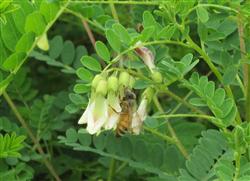
How can Astragalus mongholicus be planted for high yield? Please give guidance
For high-yield Astragalus mongholicus cultivation, you can refer to the following methods:
1. Land selection and preparation. Astragalus mongholicus prefers cool conditions, is drought-tolerant and cold-tolerant, fears heat and waterlogging, and avoids high temperatures. Its main root grows vertically downward, so it is best to choose well-drained, sunny loam with deep soil. Before sowing, in combination with land preparation, apply 3000-4000 kg of farmyard manure and 25-30 kg of phosphate fertilizer per mu. After raking and leveling, form ridges 40-45 cm wide and 15-20 cm high, with a row spacing of 40-45 cm.
2. Seed treatment. The seed coat of Astragalus mongholicus is hard, and the seeds do not germinate easily after sowing, so seed treatment should be carried out before sowing. Soak the seeds in 50°C warm water while stirring, and after the water temperature drops, soak for 24 hours. Remove them, wash them clean, spread them on a wet towel, and cover with another wet cloth to promote germination. Sow after the seeds split open and sprout. Alternatively, mix the seeds with 2 times their volume of river sand and rub them to scratch the seed coat, which can also speed up germination. Soak the seeds in 70-80% sulfuric acid for 3-5 min, then quickly rinse them under running water. After washing the seeds clean, sow them when slightly dry, and the germination rate can reach more than 90%.
3. Sowing. The suitable temperature for seed germination is 14-15°C. Spring sowing is done in March-April, and autumn sowing in early to mid-October. For drilling, open 2 shallow furrows 1.5-2 cm deep on the ridge surface, evenly scatter the seeds into the furrows, and cover with soil to completely cover the seeds. Then irrigate the field in the furrows between the two ridges to keep the soil moist. Seedlings emerge in 15 days. Flat-bed planting is also possible, but it has more disease occurrence, and the root shape is not as good as that of ridge planting.
In production, seedling raising and transplanting are commonly used. In spring, transplant direct-sown seedlings at a plant and row spacing of 20×40 cm, lifting and planting them at the same time, with a furrow depth of 10-15 cm. Place the seedlings smoothly in the furrow, cover with soil after planting, using about 15,000 seedlings per mu.
4. Cultivation management
Thinning and final singling. For direct-sown plants, when the seedlings are 5-7 cm tall, thin and final-single them in time, with a plant spacing of 10-15 cm.
Intertillage and weeding. After emergence, carry out intertillage and weeding in time, and pay attention to hilling soil onto the ridges so that the ridges maintain their original width. Generally, weed 2-3 times.
Topdressing. After thinning and final singling, carry out topdressing, applying 1500 kg of human and livestock manure water or 5 kg of urea per mu, followed by 1 watering. After intertillage and weeding in mid-to-late June, apply 1000 kg of compost, 30 kg of phosphate fertilizer, and 5 kg of ammonium sulfate, mix them, open shallow furrows on the ridges and apply them therein, then cover with soil and water.
Disease and pest control. The main disease is powdery mildew, which is prevented by spraying 50% thiophanate-methyl 1000-fold solution. Violet root rot damages the roots, causing root rot; the plant wilts from top to bottom and eventually the whole plant dies. Diseased plants should be pulled out and burned, and the diseased spots disinfected with lime powder. At the same time, control of other pests and diseases should be strengthened.
5. Harvesting and processing. Generally, harvest 2-3 years after sowing. Harvesting can be done in autumn from September to November or in spring before overwintering sprouts. Because the main root goes deep into the soil, carefully dig deep to avoid breaking the main root or damaging the outer skin. After harvesting, remove the soil clean, cut off the rhizome head while fresh, sun-dry until half dry, straighten the roots and tie them into bundles, then sun-dry or dry them to obtain raw Astragalus mongholicus.
Click to get more Astragalus mongholicus cultivation techniques
Click to get more medicinal herb cultivation techniques