How to Cultivate Astragalus? A Full Breakdown of the Key Growing Techniques
How to cultivate Astragalus? Guidance and advice. Growing medicinal herbs is a path to prosperity for farmers. With the development of China's pharmaceutical and health care industry, more and more people will devote themselves to the production of traditional Chinese medicine. In order to achieve high yield, high quality and high returns from medicinal herbs, the following introduces the cultivation techniques for Astragalus. Astragalus is a leguminous perennial...
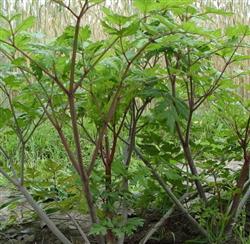
How to cultivate Astragalus? Guidance and advice
Growing medicinal herbs is a path to prosperity for farmers. With the development of China's pharmaceutical and health care industry, more and more people will devote themselves to the production of traditional Chinese medicine. In order to achieve high yield, high quality and high returns from medicinal herbs, the following introduces the cultivation techniques for Astragalus.
Astragalus is a perennial herb in the legume family, produced in Northeast China, North China and other regions. The root is used as medicine; it has the functions of tonifying qi and consolidating the exterior, promoting diuresis and reducing swelling, expelling toxins, and promoting tissue regeneration. There are Astragalus mongholicus and Astragalus membranaceus, both of which are authentic varieties.
Astragalus is a deep-rooted plant, with a main root 20-80 cm long. It prefers a cool climate, is drought-tolerant and cold-tolerant, and fears heat and waterlogging. It grows wild on dry, sunny slopes of grasslands. The seeds do not like high temperatures for germination; 14-15°C is the suitable germination temperature. Seed germination and the seedling stage require sufficient moisture, otherwise the seedlings will not emerge or will die from drought. Astragalus mongholicus blooms in late May, and its fruiting period is from late June to mid-July; Astragalus membranaceus blooms in late June, and its fruiting period is from August to mid-September. During full bloom, the soil should not be too dry, to avoid flower and pod drop. Seedlings are slender and weak, and fear strong light; with slight shade they are easy to establish. Mature plants and the growing period prefer drought and ample sunlight.
I. Cultivation Techniques
1. Site selection and land preparation. Astragalus prefers cool conditions, is tolerant of drought and cold, fears heat and waterlogging, and avoids high temperatures. Its main root grows vertically downward, so it is best to choose well-drained, sunny, deep loam soil. After selecting the site, plow to a depth of 30-40 cm, and combine with land preparation by applying 3000-4000 kg of farmyard manure and 25-30 kg of phosphate fertilizer per mu. After leveling with a rake, form ridges (or beds). Generally, ridge spacing is 50-60 cm, and bed width is 1.2 m. When making beds, it is best to open a deep ditch every two beds, 45-50 cm deep; between two beds, open a shallow ditch 20 cm deep as a working path, which can be appropriately widened, with bed height 15-20 cm.
2. Seed treatment. Astragalus seed coats are hard and do not germinate easily after sowing, so seeds should be treated before sowing. Soak the seeds in 50°C warm water while stirring; after the water temperature drops to 40°C, soak for 24 hours. Remove them, wash them clean, spread them on a wet towel, and cover with another wet cloth to promote sprouting. Sow after the seeds crack and sprout. Alternatively, mix the seeds with 2 times their volume of river sand and rub them to scratch the seed coat, which also allows rapid germination. Another option is to soak the seeds in 70-80% sulfuric acid for 3-5 minutes, then immediately rinse them under running water. After washing the seeds clean, sow them once slightly dry, and the germination rate can reach over 90%.
3. Sowing. The suitable temperature for seed germination is 14-15°C, and sowing can be done in spring, autumn or summer. Spring sowing is in mid-to-late March; autumn sowing is done before the ground freezes, and seedlings emerge the following spring. In windy, sandy and arid areas, it is difficult to preserve seedlings with spring or autumn sowing, and spring emergence easily attracts seedling-stage pests. Therefore, sowing in summer, in June-July, results in uniform emergence and robust seedling growth. For drilling, open a 3 cm sowing furrow on the ridge, scatter the seeds evenly into the furrow, mix the seeds with an appropriate amount of fine sand, cover with soil 1-1.5 cm, cover the seeds firmly, and press lightly. The sowing rate is 1-1.5 kg per mu. Flat-bed planting is also possible, but there is more disease, and the root shape is not as good as with ridge planting.
In production, seedling raising and transplanting are commonly used. Transplant direct-sown seedlings at a spacing of 20×40 cm, with furrows 10-15 cm deep. Place the seedlings upright in the furrow, cover with soil after planting, using about 15,000 seedlings per mu.
4. Cultivation management.
① Intertillage, weeding, thinning and final thinning. Astragalus seedlings grow slowly, and after emergence, weeds and seedlings often grow together. Therefore, when seedlings are 4-5 cm tall, intertillage and weeding should be done in time. When seedlings are 7-8 cm tall, carry out the second intertillage and weeding. When seedlings are 10-12 cm tall, combine the third intertillage with thinning and final thinning, spacing Astragalus membranaceus at 9-10 cm and Astragalus mongholicus at 6-7 cm.
② Topdressing. In the first and second years, growth is vigorous and root growth is also relatively fast. Each year, 1-2 applications of fertilizer can be combined with intertillage and weeding, applying 500-1000 kg of barnyard manure per mu in furrows. If chemical fertilizers are used, phosphorus and potassium fertilizers should be the main types.
③ Irrigation and drainage Generally no irrigation is needed, but if drought occurs after sowing, water should be applied in time to promote seed germination and emergence. In the rainy season, if humidity is too high, roots grow downward slowly and are prone to rotting, so drainage should be cleared in time to facilitate normal root growth.
5. Pest and disease control.
(1) Diseases. The main disease is powdery mildew. Affected plants have diseased leaves that yellow early and fall off. When the temperature is 19-20°C and the relative air humidity is 40%-60%, the disease spreads. The pathogen overwinters on host plant debris.
Control methods: Clearing the garden and disposing of diseased plant residues is an important agricultural control measure. During occurrence, spray with 50% thiophanate-methyl 1000-fold solution or BO-10 biological preparation.
Violet root rot harms the roots, causing root rot. The plant wilts and yellows from top to bottom, and eventually the whole plant dies. Diseased plants should be pulled up and burned, and the diseased spots disinfected with lime powder. At the same time, control of other pests should be strengthened.
(2) Insect pests
① Bean pod borer. It generally occurs from late June to late September. Adults lay eggs on young Astragalus pods or flower buds. After hatching, the larvae bore into the pods and eat the seeds. Mature larvae bore out of the pods, enter the soil and form cocoons to overwinter.
Control methods: During the flowering period, spray with 90% trichlorfon 1000-fold solution, or 40% omethoate 800-1500-fold solution. Apply once every 7 days until the seeds mature.
② Bean pod fly. The larvae bore gradually downward from the tender shoots into the stems, causing the top tender shoots to gradually wither, and the plants break easily in wind.
Control methods: During the occurrence period (June-July), spray with 90% trichlorfon 1000-fold solution, or 25% phosmet emulsifiable concentrate 800-fold solution, once every 7 days, for 3-4 consecutive applications.
③ Aphids. This is a pest commonly occurring in Astragalus-producing areas. It mainly harms Astragalus stems and leaves, gathering in groups on the undersides of leaves and young stems to suck stem and leaf sap. In severe cases, it causes stems to yellow, leaves to curl, flowers and pods to drop, seeds to shrivel, and leaves to fall early, resulting in the whole plant drying up and dying.
Control methods: Spray with 40% dimethoate emulsifiable concentrate 1000-fold solution, or Yibianjing 1000-fold solution for control.
④ Astragalus seed wasps. Astragalus seed wasps are a mixed population of Bruchophagus astragali, Inner Mongolia Astragalus seed wasp, Beijing Astragalus seed wasp, round-bellied Astragalus seed wasp, pseudo-Beijing Astragalus seed wasp and Astragalus seed golden chalcid. Their main habits are roughly the same. During the green pod stage of Astragalus, larvae bore into the seeds and feed on the seed contents, leaving only the seed coat. The damage rate is generally 10%-30%, and in severe cases can reach 40%-50%. The host plants are mainly Astragalus species, and there are cases of host transfer damage.
Control methods: Clear the garden to reduce insect sources; during the green pod stage of Astragalus, spray with 40% dimethoate emulsifiable concentrate 1000-fold solution for control.
6. Harvesting and processing.
① Seed saving The plants bloom and set seed in the second year after sowing. When the pods droop, yellow and mature, and the seeds turn brown, they can be harvested. Seed maturity is uneven, so harvest as they ripen. If harvesting is too late, the pods split open and the seeds are lost. After harvesting the pods, dry them in the sun and thresh them, remove impurities and store for later use.
② Harvesting Astragalus membranaceus is harvested 2-3 years after sowing, and Astragalus mongholicus 3-4 years after sowing; a short growing period generally gives poor quality. Harvest in autumn after the aboveground parts yellow and wilt. First cut off the aboveground plants, then dig out the roots. Dig deeply to prevent breaking the main root and damaging the outer skin. You can start digging from one end of the field, dig out a cross-section, and turn the soil over.
③ Processing After the roots are dug out, remove all soil, cut off the rhizome (root head) and fibrous roots while fresh, sun-dry until half dry, straighten the roots and tie them into bundles, then sun-dry or oven-dry to obtain raw Astragalus. Store the finished product in a ventilated, dry place. Generally, 150-250 kg of dry goods are harvested per mu.
Click to get more Astragalus cultivation techniques
Click to get more medicinal herb cultivation techniques