How to use herbicides in a sesame field in summer?
How to use herbicides in a sesame field in summer? Here is an introduction to the methods you can refer to for weed control in a summer sesame field: I. Post-sowing, pre-emergence soil closed treatment. After sowing sesame, use 100 ml of 50% acetochlor emulsifiable concentrate or 200 ml of Dual (72% metolachlor emulsifiable concentrate) per mu, add 50 kg of water, and spray evenly. This can control foxtail grass...
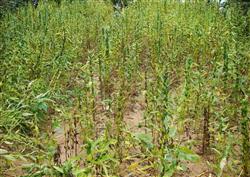
How to use herbicides in a sesame field in summer? Please introduce
Weed control in a summer sesame field can refer to the following methods:
I. Post-sowing, pre-emergence soil closed treatment. After sowing sesame, use 100 ml of 50% acetochlor emulsifiable concentrate or 200 ml of Dual (72% metolachlor emulsifiable concentrate) per mu, add 50 kg of water, and spray evenly. This can control many annual grass weeds such as foxtail grass, crabgrass, shortawn foxtail, and goosegrass, and also has a certain control effect on many broadleaf weeds propagated by small seeds. Keep the soil moist after application, and do not carry out intertillage or loosening within 50 days to avoid damaging the herbicide soil layer.
II. Skillfully use non-selective herbicides. Weeds in summer sesame fields generally emerge 3-10 days earlier than sesame and grow rapidly. You can make full use of the period before sesame emergence and use paraquat to control weeds that have already emerged, using 200 ml of 20% paraquat aqueous solution per mu plus 40 kg of water for spraying. This herbicide is a contact non-selective herbicide. After application, it can be quickly absorbed by plant leaves, causing photosynthesis and chlorophyll synthesis to terminate quickly. Leaves begin to change color 2-3 hours after the herbicide contacts them, but it cannot translocate, so it can only damage the parts exposed to the herbicide. Once the herbicide contacts the soil, it is deactivated and loses effectiveness, with no residue, and has no effect on sesame emergence.
III. Use selective herbicides after emergence. After sesame emerges, when weeds are at the 2-3 leaf stage, use 70-100 ml of Jinghecaoke (5% quizalofop-p-ethyl emulsifiable concentrate) or 50 ml of Jingwenshade (15% fluazifop-p-butyl emulsifiable concentrate) per mu plus 40 kg of water for spraying. After 4-5 days, the weeds show poisoning symptoms such as yellowing of the heart leaves and browning of the internodes, and after 7-8 days the whole plant dies. It mainly controls annual grass weeds such as wild oat, crabgrass, goosegrass, shortawn foxtail, foxtail grass, and Chinese sprangletop.
Click to get more sesame cultivation techniques
Click to get more food crop cultivation techniques