How to plant summer sesame for high yields?
How to plant sesame in summer for high yields? Please explain the planting method. To achieve high yields when planting sesame in summer, you can refer to the following planting methods: 1. Crop rotation. Choosing a plot where sesame has not been grown within two years is the prerequisite for achieving high quality and high yields in summer sesame. 2. Choose improved varieties. For summer sesame production, choose...
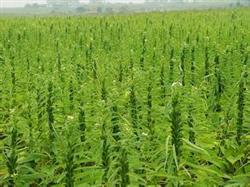
How to plant sesame in summer for high yields? Please explain the planting method
To achieve high yields when planting sesame in summer, you can refer to the following planting methods:
1. Crop rotation. Choosing a plot where sesame has not been grown within two years is the prerequisite for achieving high quality and high yields in summer sesame.
2. Choose improved varieties. For summer sesame production, choose sesame varieties with good quality, high yield and strong stress resistance, such as Yuzhi No. 8, Yuzhi No. 11 and Yuzhi No. 9.
3. Sow early at the right time. The suitable sowing period for summer sesame in our province is from June 5 to 15, and within this period the earlier the better. If the soil moisture is poor, carry out artificial moistening 3-5 days before sowing to ensure a full stand after sowing. When sowing, use a precision seeder for precision sowing, with a seeding rate of 400-500 grams per mu.
4. Seedling stage management. Begin thinning when the seedlings have 1 pair of true leaves, and final thinning when they have 3-4 pairs of true leaves; generally leave 10,000-12,000 plants per mu. For early-sown plots with high fertility, leaving 8,000-10,000 plants per mu is appropriate; for late-sown plots with slightly poorer fertility, leaving 12,000-13,000 plants per mu is appropriate. For plots sown on iron stubble, carry out intertillage to clear the stubble as early as possible; this work should be done early rather than late.
5. Fertilizer and water management. Apply 5 kg of urea per mu during the seedbed stage; apply 8-10 kg of urea per mu at the early flowering stage; in the middle and late stages, combine with pesticide spraying to spray 0.3% potassium dihydrogen phosphate, 1% urea and boron fertilizer (200 grams per mu) on the leaves 1-2 times. Do not water summer sesame throughout its entire growth period unless there is drought; when rainwater accumulates in the field on rainy days, drain it promptly to prevent waterlogging damage.
6. Topping at the right time. Carry out topping one week after the full flowering stage or 30 days before harvest. Topping can promote full grains and reduce nutrient consumption caused by empty tips.
7. Chemical weeding. 2-3 days after sowing and before emergence, spray the soil surface with 100-150 ml of 50% acetochlor per mu mixed with 40-50 kg of water. At the 2-4 leaf stage of weeds after emergence, for plots mainly with monocotyledonous weeds, spray the stems and leaves with 60-75 ml of 15% quizalofop-p-ethyl per mu mixed with 40-50 kg of water; for plots mainly with dicotyledonous weeds, spray the stems and leaves with 60-75 ml of 25% fomesafen per mu mixed with 40-50 kg of water; for plots with a mixture of monocotyledonous and dicotyledonous weeds, the above two agents can be mixed and sprayed.
8. Harvest at the right time. Sesame capsules do not ripen uniformly; generally the suitable harvest time is when the basal leaves have fallen, the capsules have turned from green to yellow, and the lower 2-3 capsules have split open. After harvesting, tie into small bundles, pile them together for 1-2 days, then set them on racks to dry. After drying, knock and pat each bundle, then dry them again after knocking, and then knock them once more.
Click to get more sesame planting techniques
Click to get more food crop planting techniques