What Is Mung Bean Powdery Mildew? A Complete Guide
What is mung bean powdery mildew? An introduction to the symptoms of mung bean powdery mildew: small white powdery lesions are scattered on the leaf surface; when the climate is suitable, the lesions expand rapidly, and the diseased leaves become covered with a white powdery substance, namely the pathogen's hyphae, conidiophores and conidia. After the young pods are infected, they become deformed, and a white powdery substance also forms on their surface...
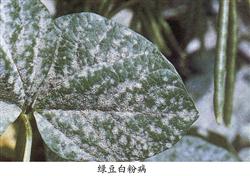
What is mung bean powdery mildew? An introduction
Symptoms of mung bean powdery mildew: small white powdery lesions are scattered on the leaf surface; when the climate is suitable, the lesions expand rapidly, and the diseased leaves become covered with a white powdery substance, namely the pathogen's hyphae, conidiophores and conidia. After the young pods are infected, they become deformed, and a white powdery substance also forms on their surface. As the disease progresses to its later stages, small black granules, namely the pathogen's cleistothecia, appear within the white powdery substance.
Development pattern of mung bean powdery mildew: the pathogen overwinters as cleistothecia on diseased plant residues, and the following year releases ascospores, which spread by wind and rain to cause primary infection. Conidia produced on the lesions also spread by wind to cause secondary infection. High temperature and dry conditions favor the occurrence of the disease.
Control methods for mung bean powdery mildew: first, remove diseased plant residues; second, in the early stage of the disease, spray with a 1000-1500 times dilution of 15% triadimefon wettable powder, or a 2000 times dilution of 20% triadimefon emulsifiable concentrate.
Click to get more mung bean cultivation techniques
Click to get more grain crop cultivation techniques