How to control red spider mites on mung beans? These methods you need to know
How to control red spider mites when growing mung beans? Please introduce the methods. Both the adults and nymphs of the mung bean red spider mite can harm mung beans. They spin silk webs on the underside of mung bean leaves and suck leaf sap with their piercing-sucking mouthparts. The damaged bean leaves first show yellow-white spots, and later, as the red spider mites increase, the webs take on a slightly reddish patch with large numbers of red spider mites...
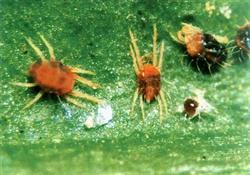
How to control red spider mites when growing mung beans? Please introduce the methods
Both the adults and nymphs of the mung bean red spider mite can harm mung beans. They spin silk webs on the underside of mung bean leaves and suck leaf sap with their piercing-sucking mouthparts. The damaged bean leaves first show yellow-white spots, and later, as the red spider mites increase, the webs take on a slightly reddish patch with large numbers of red spider mites lurking within, causing the affected leaves to curl up partially or even entirely, wither and turn yellow or reddish-brown, and the leaves to drop off, leaving even bare stems; in severe cases the whole plant dies. The mung bean red spider mite first harms the lower leaves of mung beans, then gradually spreads to the middle and upper parts. In mung bean fields with many weeds or sparse plants, the outbreak is more severe.
The following methods can be used for control: according to the field occurrence characteristics of the mung bean red spider mite, control should begin at the early stage of its occurrence. When red spider mites are found in the field at the spot or patch stage and the rate of curled-leaf mung bean plants reaches 10%, spraying should be carried out for control. The best pesticide for controlling the mung bean red spider mite is the avermectin class. It is recommended to use 1.8% avermectin emulsifiable concentrate at 20-30 ml per mu by spraying, 48% chlorpyrifos emulsifiable concentrate at 100 ml per mu by spraying for control; or 73% propargite at 40-70 ml per mu. Field spraying is best done on sunny afternoons from 16:00 to 19:00, focusing on spraying the underside of mung bean leaves. When spraying, make it uniform and thorough, and spray both the front and back of the leaves so as to achieve a good control effect.
Click to get more mung bean growing techniques
Click to get more grain crop growing techniques