What Is Peanut Leaf Spot? A Detailed Guide to Peanut Cultivation Techniques
What is peanut leaf spot? Please provide an introduction to peanut leaf spot symptoms: Peanut leaf spot consists mainly of black spot and brown spot, both of which primarily damage the leaves. When peanuts are affected, symptoms first appear on the lower leaves, then gradually spread to the upper leaves. In the early stage of the disease, small brown spots appear, gradually...
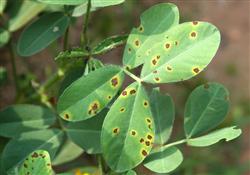
What is peanut leaf spot? Please provide an introduction
Peanut leaf spot symptoms:
Peanut leaf spot consists mainly of black spot and brown spot, both of which primarily damage the leaves. When peanuts are affected, symptoms first appear on the lower leaves, then gradually spread to the upper leaves. In the early stage of the disease, small brown spots appear, which gradually develop into round or irregularly shaped lesions. Brown spot lesions are larger and surrounded by a yellow halo, while black spot lesions are smaller, lighter in color than brown spot, with neat edges and no obvious halo. In humid weather or during prolonged rainy periods, the lesions may merge with one another into large irregular patches, causing the leaves to scorch and dry up, seriously affecting photosynthesis. If it occurs on the petioles, stems, or pegs, it produces oval dark brown or brown lesions in mild cases, and in severe cases the entire stem or peg turns black and dies, causing a substantial drop in peanut yield.
Peanut leaf spot control:
(1) Eliminate the source of the pathogen. After the peanut harvest, promptly remove the diseased plant debris left in the field, and do not discard or pile it up at random. Plots with diseased plant debris should be plowed in a timely manner to accelerate the decomposition of the debris and prevent the pathogen from reinfecting the peanuts.
(2) Select disease-resistant varieties. The more resistant ones are generally varieties with upright growth, thick leaves, dark color, and large peanut seeds, or early-maturing varieties. In plots with severe disease, these varieties can be chosen for planting, such as Jihua No. 2, Luhua 14, and others.
(3) Strengthen cultivation management. Sow at the appropriate time, plant at a reasonable density, apply sufficient base fertilizer, and topdress in a timely manner to promote vigorous growth of the peanuts and improve disease resistance.
(4) Chemical control. Spraying promptly in the early stage of the disease can reduce the damage. Relatively good chemicals: 80% mancozeb at 400 times dilution, 70% thiophanate-methyl at 1000-1500 times dilution, 50% carbendazim at 1000-1500 times dilution. When spraying, be careful to spray evenly and thoroughly, spraying once every 7-10 days for 2-3 consecutive sprays, which can basically control the occurrence of the disease.
Click to get more peanut cultivation techniques
Click to get more grain crop cultivation techniques