How to Grow Honeysuckle? Detailed Explanation of Cultivation Methods and Key Technical Points
How to grow honeysuckle? Please provide methods. Honeysuckle is a perennial shrub of the Caprifoliaceae family, capable of growing throughout the country and withstanding temperatures of minus 35-40°C without damage. Plant characteristics: stems are upright; after planting, the plant height reaches 1 m to 15 m in the same year. If excessive leggy growth is found, it should be pruned to encourage more side branches. The more side branches...
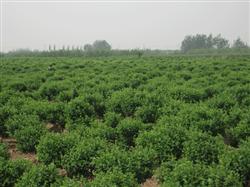
How to grow honeysuckle? Please provide methods
Honeysuckle is a perennial shrub of the Caprifoliaceae family, capable of growing throughout the country and withstanding temperatures of minus 35-40°C without damage.
Plant characteristics: stems are upright; after planting, the plant height reaches 1 m to 15 m in the same year. If excessive leggy growth is found, it should be pruned to encourage more side branches. The more side branches, the higher the yield. Plant 450-500 plants per mu, with a survival rate above 98%.
Pick once in the first half of the year when the flower buds are about to open, and pick once around the Mid-Autumn Festival. After picking, dry them in a ventilated, dry place. From planting to the second year is the full production period, which lasts for many years, with a dry flower yield of 100-150 kg per mu. Plant in winter before the ground freezes, and in spring from flowering until June 1. Dig small holes at a row spacing of 1.5 m and a plant spacing of 1.2 m. Water a little and they will survive. They can grow on hillsides, wasteland and sandy beaches, and are also beautiful bonsai; as ornamental flowers they are fresh and elegant, with a distinctive style.
Field management: topdressing, loosening soil and weeding. Every year in late autumn, clear away dead branches and fallen leaves at the base of the flower clumps and peel off the corky bark of the branches and trunks, which can reduce pest and disease damage the following year. Deeply turn the soil 30 cm around the flower clumps, apply 5-10 kg of farmyard manure per clump, and if conditions permit add 0.1 kg of superphosphate, then shape it into a trough form that is high on all sides and low in the middle. For flower clumps on mountain land, after fertilizing, shape them into fish-scale pits or basin shapes according to the terrain to help collect rain and snow. After picking the first flush of flowers, promptly apply quick-acting fertilizer to increase the yield of the second and third flushes.
Pruning: Winter pruning is generally carried out from after all leaves have fallen in winter to before buds break the following spring. Winter pruning mainly follows the principle of "light pruning for vigorous branches, heavy pruning for weak branches, and pruning every branch"; consider that after new branches grow, the plant shape should be complete and reasonable, which helps ventilation and light penetration. Vigorous branches should be pruned lightly, generally retaining 8-10 buds; weak branches should be pruned more heavily, retaining 3-5 pairs of buds; thin, weak, diseased and twining or crossing branches should all be removed. Pruning should be adapted to local conditions and to the individual plant, and "cutting everything off in one go" must be avoided. For plants with good water and fertilizer conditions and vigorous growth, pruning should generally adopt renewal by cutting back, mainly thinning, using "major surgery" to transform and renew old flower clumps. For young flower plants after planting, the main goal is to develop the plant shape; generally first retain 3-5 main stems, and the layout of the main stems should be reasonable. The top tips should be cut back to promote thickening.
Summer pruning has a big impact on increasing the yield of the second and third flushes. Proper pruning significantly increases yield, and the flowering period is relatively concentrated, making picking easier. Generally, after the previous flush of flowers is picked, cut off the top tips of vigorously growing branches to control apical dominance and encourage new branches to sprout; small thin branches with yellowing leaves that affect ventilation and light penetration should all be removed.
Harvesting and processing: They can be picked 15-20 days after budding. When the upper part of the flower bud swells and turns greenish-white, it is the right time to pick; if delayed, the flowers will open and affect the quality and yield of the product. Picking should be done in the early morning and forenoon each day, and the fresh flowers should be processed and dried promptly after picking.
Processing methods include natural air-drying, oven drying and sulfur fumigation drying. For natural air-drying, spread the fresh flowers on a clean site or mat, with a thickness of about 2 cm depending on the intensity of sunlight. Place them in the sun to dry; they must not be rained on before they are dry. If rainy days occur during the flower-picking season, it is difficult to guarantee product quality.
Oven drying is carried out in a drying room. Heat the room temperature to 45°C, place the fresh flowers on trays, and when put on the racks to dry, the heat can reach 60°C. After repeated moisture removal and closing the windows, dry until fully dried.
Click to get more honeysuckle cultivation techniques
Click to get more medicinal herb cultivation techniques