What Is Kudzu Root? A Detailed Guide to Kudzu Root Cultivation Methods
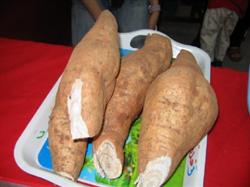
What is kudzu root? How is kudzu root cultivated? Please give an introduction. Kudzu is a perennial deciduous vine of the genus Pueraria in the Fabaceae family, distributed across all provinces, municipalities and autonomous regions of China except Tibet, ** and parts of Qinghai. It habitually grows on hills, slopes, river valleys and roadsides, and prefers a warm, humid climate and deep, loose, humus-rich...
What is kudzu root? How is kudzu root cultivated? Please give an introduction
Kudzu is a perennial deciduous vine of the genus Pueraria in the Fabaceae family, distributed across all provinces, municipalities and autonomous regions of China except Tibet, ** and parts of Qinghai. It habitually grows on hills, slopes, river valleys and roadsides, and prefers a warm, humid climate and deep, loose, humus-rich sandy loam soil. There are more than 20 species of Pueraria worldwide, and China has 11 species, the common ones being wild kudzu and kudzu; at present, the main cultivated type in China is kudzu. Kudzu root, along with Chinese yam, longan, and houttuynia, is among the varieties that the Ministry of Health of China has published three times as being both medicine and food, usable both as medicine and as a health food.
Biological characteristics: Kudzu has very strong growth adaptability. It prefers a warm, humid environment, but is also cold-tolerant and drought-tolerant, and is not strict about soil, with deep sandy loam being best. Kudzu is easy to propagate, simple to manage, grows rapidly, and has high yield, making it suitable for artificial cultivation; at the same time, it has extremely strong adaptability, is drought-tolerant and barren-tolerant, and is a rare good economic crop suitable for mountain-area development to escape poverty and become wealthy and to control soil erosion.
The value of kudzu root. It has long enjoyed the reputation of "ginseng in the north, kudzu in the south." Kudzu has many advantages, including medicinal health care, environmental protection, and high comprehensive economic benefits, and the development and utilization of kudzu root has become a hot research topic at home and abroad today.
1. Medicinal value Kudzu root is cool in nature and sweet and pungent in taste. Isoflavonoid compounds and puerarin are the main active ingredients of kudzu root, among which puerarin is a unique component of this genus. Japan uses puerarin and isoflavones as the main indicators for evaluating the quality of kudzu root. Kudzu root isoflavones have the functions of promoting blood flow in the cardiovascular, cerebrovascular and retinal systems, resisting oxidation, lowering blood sugar, lowering blood lipids, lowering blood pressure, relieving alcohol, reducing fever, enhancing body immunity and improving learning and memory. At present, China has produced a series of medicines using kudzu root and its extracts as raw materials. The main preparations include: kudzu root tablets, kudzu root flavonoid tablets, and Yufeng Ningxin tablets, containing total flavonoids of 10 mg, 50 mg, and 100 mg respectively; and puerarin injection, 2 ml per ampoule, containing 100-200 mg of total flavonoids. Clinically, they are mainly used to treat coronary heart disease, angina pectoris, fundus diseases, sudden deafness, migraine, cervical spondylosis, and so on.
Clinical studies have shown that the cure rate of puerarin series medicines for cardiovascular and cerebrovascular diseases reaches 97.6%, and they are deeply welcomed by patients. Beijing, Guangzhou, Shaanxi, and Shandong have successively built puerarin medicine production lines. In the Chinese pharmacopoeia, kudzu root is the only Chinese medicinal material explained as having an alcohol-relieving function.
2. Food value kudzu is a new cultivated variety of kudzu root selected and bred through the latest science and technology. It is rich in starch and also rich in xylan, daidzein, arachidic acid, 19 kinds of amino acids, vitamins, cellulose, and various trace elements essential to the human body such as calcium, zinc, selenium, and iron. The starch content in kudzu is as high as 25-30%, making it an important new resource for functional starch production. Using kudzu root starch as a raw material, a series of health foods can be processed, such as kudzu root oral liquid, kudzu starch cakes, kudzu starch non-staple foods, kudzu root beverages, kudzu root crystals, and so on. A continuous stream of new kudzu root series products has been developed and marketed: instant kudzu powder, kudzu root health porridge, kudzu root juice, kudzu flower juice, kudzu flower dew, kudzu powder biscuits, kudzu powder glutinous rice balls, kudzu powder mooncakes, kudzu powder tofu, kudzu powder bread, kudzu powder cake, kudzu juice jelly, kudzu juice wine, kudzu powder noodles and other new products are already sold on the market. Demand for kudzu root products in domestic and international markets is continuously growing, with consumption increasing at a high rate of 20% each year, and foods made from kudzu root powder sell very well in the markets of the United States and Japan.
3. Economic benefits. Plant 500-600 kudzu root plants per mu, with an input of 1000-1100 yuan per mu. After the second year, the annual yield of fresh kudzu root per mu is 1000-2000 kg, the yield per plant reaches 1.5-3.6 kg, the income per mu is 1200-2500 yuan, and the net income per mu per year is about 500-1000 yuan. Moreover, it can be harvested continuously for 6-8 years. One-time investment, year-after-year harvest, low management cost; apart from the first year requiring management, after the second year basically no management or input is needed, and the actual input per mu averages less than 200 yuan per year. At the same time, its processing benefits are also very significant. The export price of kudzu root powder exceeds 12,000 yuan per ton, and the domestic retail price reaches 30,000 yuan per ton. Kudzu root starch can also be further deeply developed. As a raw material for brewing and the food industry, for example, every 100 kg of fresh kudzu root can brew 24-32 kg of 65-degree liquor.
4. Comprehensive utilization value The whole kudzu plant is a treasure. Its main harvested product, the tuberous root, can be used to extract kudzu powder and flavonoids, and the fiber (residue) after extraction can be used for papermaking, brewing and feed production. Kudzu vines and leaves can be used early on as feed for various poultry, livestock and fish, and after the vines age they can produce kudzu hemp, used for weaving and making handicrafts, building decoration materials, and so on. Large-scale planting of kudzu root can promote the comprehensive development of many industries.
Click to get more kudzu root cultivation techniques
Click to get more medicinal herb cultivation techniques