What are the main management techniques for kudzu (Pueraria montana) cultivation?
What are the main management practices for kudzu? Please provide guidance. The main management practices for kudzu are: 1. Thinning and filling in seedlings: After the direct-seeded seedlings have all emerged, carry out thinning and filling in, keeping 1-2 strong seedlings per hole, and fill in the gaps where seedlings are missing. After transplanting the seedlings, diluted human and livestock manure water may be used appropriately to settle the roots. During the seedling stage, weed frequently, and apply 0.3-0.5...
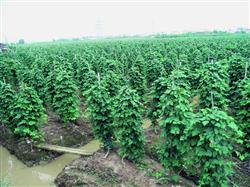
What are the main management practices for kudzu? Please provide guidance.
The main management practices for kudzu are:
1. Thinning and filling in seedlings: After the direct-seeded seedlings have all emerged, carry out thinning and filling in, keeping 1-2 strong seedlings per hole, and fill in the gaps where seedlings are missing. After transplanting the seedlings, diluted human and livestock manure water may be used appropriately to settle the roots. During the seedling stage, weed frequently, and apply 0.3-0.5% urea solution as a top dressing 2-3 times. From the second year onward, management is the same as for other transplanted seedlings.
2. Cultivation, weeding and fertilizing: After kudzu is planted, it must be cultivated and weeded 3 times in the first year: the first time after the seedlings have all emerged, the second time in June-July, and the third time after leaf fall in winter. From the second year onward, cultivate twice each year: the first time in spring after the seedlings have all emerged, and the second time in winter after the leaves have withered. Cultivation requires removing weeds and shallow hoeing of the soil around the holes. After each cultivation and weeding, apply a top dressing. In the first year, apply 600-800 kg of human and livestock manure water per mu each time. In subsequent years, when applying top dressings, apply less nitrogen fertilizer and more phosphorus and potassium fertilizers such as superphosphate and wood ash to promote root growth.
3. Removing terminal buds and inflorescences: In the summer of the 1st-2nd years after planting, when the vines have grown to about 2 m, the terminal buds should be removed to encourage branching and increase leaf area. From May to July each year, apart from deliberately retaining some flowers for seed, inflorescences should be removed promptly to reduce nutrient consumption.
4. Pest control
(1) Crickets: They bite and eat young seedlings. Control method: spray with 80% dichlorvos emulsifiable concentrate at 2000 times dilution.
(2) Scarab beetles: Adults come out at night in May-June to bite and eat leaves. Control methods: use light traps, or spray the leaf surfaces with 90% trichlorfon crystal at 1000 times dilution, or shake the kudzu vines and kill them when they feign death and fall to the ground.
(3) Blister beetles: When kudzu flowers are open, they bite and eat the petals. Control method: in the morning while the dew is still on and they cannot fly easily, catch them and suffocate them in white liquor, then sun-dry them for medicinal use.
Click to get more kudzu cultivation techniques
Click to get more medicinal herb cultivation techniques