How to plant greenhouse chives (Chinese leek) in autumn and winter? Detailed methods
How to plant greenhouse chives in autumn and winter? Please introduce the autumn and winter greenhouse chive planting methods. For planting greenhouse chives in autumn and winter, you can refer to the following methods: 1. Choose excellent varieties that can grow continuously in winter without going dormant. 2. Cultivating strong root stocks is the foundation of high yield and high efficiency. Mainly focus on...
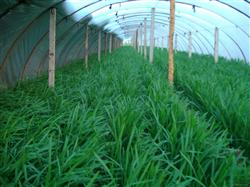 How to plant greenhouse chives in autumn and winter? Please introduce the autumn and winter greenhouse chive planting methods
For planting greenhouse chives in autumn and winter, you can refer to the following methods:
1. Choose excellent varieties that can grow continuously in winter without going dormant.
2. Cultivating strong root stocks is the foundation of high yield and high efficiency. Mainly focus on the following measures:
Raising root stocks by seedling transplanting gives better growth, more uniformity and higher yield than direct sowing. Sow as early as possible after the soil thaws in early spring; before sowing, apply 5000-8000 kg of high-quality farmyard manure per mu, and broadcast on a level bed; after sowing, cover with soil and mulch film to preserve moisture, raise temperature and promote early emergence; remove the film promptly once the seedlings emerge evenly.
When the seedlings have 3-4 leaves, move them to the greenhouse plot. Generally in June-July, after the previous fruit or vegetable crop is cleared, prepare the land and apply enough organic fertilizer, open furrows at a row spacing of 30-35 cm, with a furrow bottom width of 10 cm for clump planting, clump spacing 3-4 cm, about 15 plants per clump. After transplanting, water to promote seedling recovery, keep the soil moist, and water promptly when the surface dries.
The biggest difference between the root-nurturing technical measures for autumn and winter chive production and greenhouse chives after dormancy is heavy manure and frequent water, to promote rapid growth, accumulate more nutrients and cultivate thick, strong root stocks. Therefore, do not harvest in summer and autumn, and pay attention to intertillage and weeding; in the rainy and waterlogged season, pay attention to earthing up and drainage. Properly control growth before the Start of Autumn to prevent lodging and rot. After the Start of Autumn, strengthen water and fertilizer supply to promote growth; generally topdress 2-3 times, applying 2000 kg of human excrement and urine per mu, or 50 kg of diammonium phosphate, or 30-40 kg of ammonium sulfate plus 50-100 kg of superphosphate.
3. The proper time for covering the film should be before the local first frost. If covered too early, growth is rapid, the yield peak comes early, and premature aging is easy; if covered too late, the plants suffer low-temperature chilling injury in the open field, which easily causes leaf tip rot, and once the chives enter passive dormancy, growth after film covering is slow.
4. Management and harvesting after covering the film. Generally, before covering the film, you can cut once shallowly, and cover the film immediately after harvesting, which makes operation easier. If the chives have not yet reached harvest standard, in order to prevent freezing injury, cover the film first, but operate carefully to prevent damaging the chive plants. In the early stage after film covering, the indoor temperature is relatively high, so ventilation must be strengthened to prevent excessive leggy growth, generally keeping the daytime temperature no higher than 25°C. As the outside temperature drops, gradually reduce the ventilation amount, keeping it 20-25°C during the day and 5-10°C at night. Later, as the outside temperature continues to drop, add straw mats and paper quilts at night, covering early and uncovering late, to strengthen heat preservation.
For autumn and winter chive production, after covering the film, topdressing and watering are still needed. Generally when the plant height is about 10 cm, topdress 40-50 kg of ammonium sulfate per mu between the rows, earth up the ridges and water; when the plant height is 20 cm, earth up the ridges once more. Water 2-3 days before harvesting. After each watering, ventilation must be strengthened to remove moisture, but care must be taken to prevent freezing injury.
For autumn and winter chive production, if growth is strong, the harvest period can extend from October to February-March of the following year; after the final harvest, dig out the chive roots and carry out fruit or vegetable production. Note that each harvest should be cut shallowly to avoid affecting the growth of the next crop. But for the last harvest, since the chive roots will be dug out after cutting, you can cut as deeply as possible.
5. Strengthen pest and disease control. Because the greenhouse is often watered and the humidity is relatively high, attention should be paid to preventing and controlling gray mold: after each watering, you can fumigate the greenhouse with procymidone smoke agent for prevention. For Phytophthora blight: in the early stage of the disease, spray with 58% metalaxyl-mancozeb 500-fold solution or 64% oxadixyl-mancozeb 400-500-fold solution for control. For chive maggots, use 90% trichlorfon 1000-fold solution or phoxim 800-fold solution to drench the roots.
Click to get more chive growing techniques
Click to get more vegetable growing techniques