Rice Pest and Disease Control: What Is Rice Downy Mildew?
What is rice downy mildew? What harm does rice downy mildew cause? How do you control rice downy mildew? Please advise. Harm of rice downy mildew: Rice downy mildew generally shows symptoms in the late seedling stage, with symptoms becoming pronounced at the peak tillering stage. Diseased plants are stunted, with pale green leaves; small yellowish-white spots appear on the leaves, round or oval...
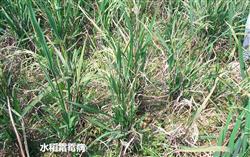 What is rice downy mildew? What harm does rice downy mildew cause? How do you control rice downy mildew? Please advise.
Harm of rice downy mildew:
Rice downy mildew generally shows symptoms in the late seedling stage, with symptoms becoming pronounced at the peak tillering stage. Diseased plants are stunted, with pale green leaves; small yellowish-white spots appear on the leaves, round or oval, often joining into lines; after booting, diseased plants are markedly stunted, with plant height less than one-half that of healthy plants. The leaves are short and thick, the central leaf is yellowish-white, sometimes curved or twisted and difficult to emerge, and the lower leaves gradually die off.
The leaf sheath of affected plants appears slightly swollen, with irregular ripples on the surface, sometimes producing wrinkles or twists. Tillering of diseased plants is reduced; if one tiller is infected, all the remaining tillers become infected. The panicle is deformed and cannot emerge normally; the panicle is small and unfilled, and sometimes the spikelets degenerate into leaf-like structures.
Control methods for rice downy mildew:
1. Improve the drainage and irrigation system of affected fields so that seedlings are not submerged.
2. Choose fields with higher terrain as seedling fields, pay attention to seedling field management, and prevent seedling flooding.
3. Promptly pull out diseased plants to control the spread of the disease.
4. In frequently affected areas and seedling fields flooded by heavy water, spray 50% carbendazim wettable powder or 50% thiophanate-methyl wettable powder, using 50-75 grams per mu, diluted with water for spraying.
Commonly used agents: 50% carbendazim wettable powder or 50% thiophanate-methyl wettable powder.
Click to get more rice cultivation techniques
Click to get more grain crop cultivation techniques