Rice Pest and Disease Control: What Is Rice Akagare Disease?
What is rice akagare disease? What harm does akagare disease do to rice? How is rice akagare disease controlled? Please explain the harm of rice akagare disease: Rice akagare disease, commonly known as "stewed seedlings" or "sitting clumps," is a physiological disease in rice production. Affected plants are noticeably stunted, with few and small tillers, and the upper leaves stand upright with a smaller angle to the stem...
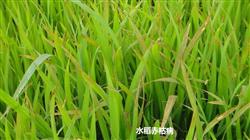 What is rice akagare disease? What harm does akagare disease do to rice? How is rice akagare disease controlled? Please explain
The harm of rice akagare disease:
Rice akagare disease, commonly known as "stewed seedlings" or "sitting clumps," is a physiological disease in rice production. Affected plants are noticeably stunted, with few and small tillers, and the upper leaves stand upright with a smaller angle to the stem. The young leaves of diseased plants are dull in color, usually appearing dark green or dull green. Symptoms in diseased plants generally start from the lower old leaves and gradually spread upward, but the new leaves often remain green. Symptoms are most obvious during the peak tillering stage, when crumb-like brown spots appear on the leaves and later gradually develop into irregular shapes. Diseased plants grow slowly. In severe cases, a field viewed from a distance looks as if it has been scorched by fire. Yield is generally reduced by 10-20%, and in severe cases by more than 30%.
Causes of rice akagare disease:
The long-term excessive application of nitrogen fertilizer alone, causing a deficiency of phosphorus and potassium in the soil, is the main cause of akagare disease. Nutrient imbalance in the plant is caused by blocked root uptake. The roots of rice plants affected by akagare disease are affected by organic acids or hydrogen sulfide in the soil, which disrupts normal physiological function. Diseased plants have few white roots, most of which are brown.
Control methods for rice akagare disease:
1. Improve soil aeration and drain the field at the appropriate time. Depending on the incidence of the disease, apply "black-white ash" (a mixture of 3 parts plant ash and 1 part lime) at 30-50 kg per mu, or gypsum at 2.5-4 kg, or lime at 5-25 kg. Where phosphorus and potassium are deficient, a certain amount of superphosphate and potassium sulfate can be applied as a top dressing.
2. Apply micronutrient fertilizers. Applying 1 kg of zinc sulfate per mu as a base fertilizer gives better results, and 1 kg of zinc sulfate can also be used as a top dressing. In affected fields, a 5% zinc sulfate fertilizer solution can also be sprayed on the leaves, which can produce immediate results, but the yield increase effect is not obvious.
Click to get more rice cultivation techniques
Click to get more grain crop cultivation techniques