How to Grow Leaf Goji (Lycium barbarum)? A Detailed Guide to Cultivation Techniques
Leaf goji is eaten as a vegetable, using its tender shoots and young leaves. It is rich in protein, vitamins, and various amino acids, rutin, betaine, and more, making it a health vegetable that consumers enjoy eating. It can be grown both under protective cultivation and in open fields. I. Variety types: There are two types, small-leaf and large-leaf. The small-leaf variety has oval leaves; ...
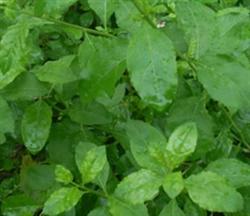
Leaf goji is eaten as a vegetable, using its tender shoots and young leaves. It is rich in protein, vitamins, and various amino acids, rutin, betaine, and more, making it a health vegetable that consumers enjoy eating. It can be grown both under protective cultivation and in open fields.
I. Variety Types
There are two types, small-leaf and large-leaf. The small-leaf variety has oval leaves; the lanceolate type has thicker leaf flesh, a stronger flavor, and somewhat lower yield; the large-leaf variety has thinner leaf flesh, a milder flavor, and higher yield.
II. Environmental Requirements
It prefers cool climatic conditions, with a suitable growing temperature of 20-25°C during the day and around 10°C at night. Above 35°C during the day or below 10°C, growth is poor and leaves may sometimes drop; it prefers light, especially after harvest when axillary buds on the basal branches regrow and branches elongate, requiring more light, but it is relatively shade-tolerant at other times; the soil should be kept constantly moist, but it is not tolerant of waterlogging; it needs an adequate supply of nitrogen, phosphorus, potassium, and trace elements; loose, fertile loam is most suitable.
III. Planting Season
1. Autumn-winter solar greenhouse: raise seedlings in August-September, transplant in early September to mid-October, begin harvesting in November and continue until June of the following year.
2. Open field: raise seedlings in a solar greenhouse in February-March, transplant in early to mid-April, or directly take cuttings in mid-April, begin harvesting from late May to early June, and if it does not flower and set fruit in autumn, harvesting can continue.
IV. Cutting Propagation
From healthy plants, cut branch sections about 15 cm long with 2-3 buds, preferably choosing the base or middle of the branch, not the tender, weak tip. Cut the upper end of the branch section flat and cut the base into a horseshoe shape, soak in a rooting agent or fulvic acid solution for 10 minutes, then insert into a seedling bed or ridge. Sandy loam is best for the seedling bed. Insert at a slant to 2/3 of the branch length, making sure the axillary buds face upward and that it is not inserted upside down, with a spacing of 10 x 10 cm, and water thoroughly immediately after insertion. In spring, use bamboo strips to build a small arch and cover with film to help increase temperature and retain moisture, then remove it after about 2 weeks.
V. Transplanting
Because the harvest period is long, apply sufficient base fertilizer. Apply more than 3000 kg of decomposed, finely crushed organic fertilizer per mu, mix it evenly with the soil, level it, and then make beds 1.3 m wide (in low-lying, easily waterlogged plots, tile-ridge raised beds 90 cm wide can be made). Transplant at a row spacing of 20-30 cm and a plant spacing of 12-20 cm, with 8000-15000 plants per mu. Greenhouse planting should be somewhat denser, while open-field planting should be somewhat sparser.
VI. Field Management
After the seedlings have recovered, practice controlled seedling hardening for about 15 days, and cultivate and weed 2-3 times; water every 7-10 days to keep the soil constantly moist. In open fields, drain promptly after rain. After the first harvest, apply additional fertilizer, placing 150 kg of "Yite Brand" active organic fertilizer in holes per mu, combined with watering, and thereafter apply additional fertilizer every 20-30 days.
VII. Harvesting
50-60 days after transplanting, when the plant height is about 50 cm, it can be harvested.
Click to get more goji cultivation techniques
Click to get more medicinal herb cultivation techniques