Where can I find high-yield cultivation techniques for lingzhi (Ganoderma lucidum)?
Where are there high-yield cultivation techniques for lingzhi? How should lingzhi be grown for high yields? Zhongdiwang has high-yield lingzhi cultivation techniques for reference: Lingzhi, also known as lingzhi herb or immortal herb. It is a precious large medicinal fungus, whose fruiting bodies and spores are used for medicinal purposes. It has the effects of nourishing and strengthening the body and prolonging life, ...
 Where are there high-yield cultivation techniques for lingzhi? How should lingzhi be grown for high yields?
Zhongdiwang has high-yield lingzhi cultivation techniques for reference:
Lingzhi, also known as lingzhi herb or immortal herb. It is a precious large medicinal fungus, whose fruiting bodies and spores are used for medicinal purposes. It has the effects of nourishing and strengthening the body and prolonging life, and clinically it can treat neurasthenia, chronic bronchitis, stomach disease, liver disease, high blood pressure, diabetes, coronary heart disease and many other ailments. As an adjunct treatment for tumors, it can reduce the side effects caused by radiotherapy and chemotherapy. Regular consumption of lingzhi spore powder can significantly improve the human body's disease resistance, enhance immunity, and reduce the probability of illness. Therefore, planting, researching and developing lingzhi products is very meaningful work that benefits society and improves and raises people's health levels. The artificial high-yield lingzhi cultivation techniques are introduced below, in the hope of achieving prosperity together.
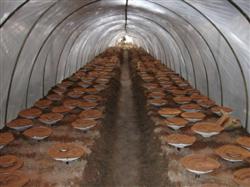
1. Building a lingzhi shed:The cultivation mode adopts three methods: indoor tiered rack structure, converting a shiitake shed into a lingzhi shed, and building a lingzhi shed. Building a reasonable lingzhi shed is an important factor in achieving high lingzhi yields. According to the biological characteristics of lingzhi, choose a lingzhi greenhouse that is warm, moisture-retaining, well ventilated, has appropriate light, drains smoothly, and is convenient to manage and operate. The lingzhi shed floor is required to be clean, and the walls smooth and moisture-resistant. The size of the lingzhi shed should be determined by the amount of substrate. Building the lingzhi shed in front of the village or behind the house in a shady spot with trees, close to a water source, is most suitable. Before the substrate enters the shed, it must be strictly disinfected. For each cubic meter of space, use 5 ml of formaldehyde and 10 g of potassium permanganate, seal and fumigate for 24 hours before use. Sheds can be built for cultivation all over the country, in both urban and rural areas. In North China and the Huang-Huai region, natural temperatures are used for cultivation; for spring planting, April to May is best, and for summer planting, September to October is best.
2. Selection of cultivation substrate formulas:During its growth and development, lingzhi needs various nutrients, and agricultural and sideline product residues are abundant in all regions, so local materials can be used according to local conditions, choosing a formula suitable for the region. 1. Cottonseed hulls 77%, bran 10%, corn flour 10%, sugar, phosphate fertilizer and gypsum 1% each. 2. Cottonseed hulls 89%, bran 10%, gypsum 1%. 3. Sawdust 70%, bran 25%, soybean flour 2%, phosphate fertilizer 1%, gypsum 1.5% and sugar 0.5%. 4. Cottonseed hulls 79%, corn flour 20%, gypsum powder 1%. 5. Corncobs 50%, miscellaneous wood sawdust 35%, bran 15%.
3. Preparation of the cultivation substrate:When preparing the cultivation substrate, first mix the cottonseed hulls, sawdust, bran, gypsum powder and other materials evenly, with a moisture content of 60%-65%. When squeezed tightly by hand, it is best if water is just about to drip but does not drip from the fingers and the material forms a clump. After the material is mixed, it can be bagged with a bagging machine. For the plastic bags, polypropylene or polyethylene tube bags of 15 cm x 35 cm or 17 cm x 33 cm can be selected, with 400 g-450 g of dry material per bag. Polyethylene bags are sterilized under normal pressure for 10 hours-12 hours, while polypropylene plastic bags are sterilized under high pressure, maintained for 2 hours, and inoculated in a sterile room after the material cools to below 30 degrees C. Generally, one bottle of wheat grain mother spawn can inoculate 40 bags-45 bags of substrate, and one bottle of cottonseed hull cultivation spawn can inoculate 25 bags-35 bags. Move the inoculated spawn bags into a disinfected cultivation room and arrange them in layers. Generally, each row is 6 layers-8 layers high, with walkways left between the racks. Turn them upside down once a week: first, to balance the temperature; second, to increase oxygen inside the bags through turning so that mycelium grows faster; third, to check for green mold or other contaminating fungi, and remove any if present.
4. Management techniques:Lingzhi is a warmth-loving fungus and requires relatively high temperatures during growth and development. The optimal temperature for mycelial growth is 26 degrees C-28 degrees C, and the fruiting body grows best between 24 degrees C-28 degrees C; below 18 degrees C the fruiting body cannot develop normally. 1. Mycelial growth stage: During the mycelial growth period, keep the cultivation room at 22 degrees C-30 degrees C, with relative air humidity of 50%-60%, ventilate for half an hour every day, and turn the spawn bags upside down once every 5 days-7 days. When the mycelium has grown over 2/3, move them into the cultivation shed, loosen the bag openings, and gently lift with the hand, leaving a small gap. Diffused light in the shed is suitable, avoiding direct strong light. Generally after about 25 days-32 days, the mycelium can fully cover the substrate bags. For individual bags where mycelial development is uneven, they can be selected and placed separately. 2. Fruiting management: After the mycelium is fully grown, use a blade to cut round openings at both ends the size of a 5-fen coin to promote fruiting. During fruiting, keep the shed temperature at 26 degrees C-30 degrees C, raise relative air humidity to 90-95%, and provide diffused light and sufficient oxygen. Keep a shallow layer of water on the floor, and spray water on the surrounding walls and into the air 3 times-4 times a day. Open the door and vents for ventilation before 8 a.m. and after 4 p.m. every day; when the temperature is low, ventilate between 12:00 and 14:00. The primordium expands for 3 days-5 days and gradually forms the cap. Increase water spraying to maintain moisture; if the temperature is too high, spray water to control the temperature. Poor ventilation easily produces deformed lingzhi, and deformed buds should be cut off promptly. When the cap changes from white to light yellow to yellow to reddish brown, the white edge of the cap basically disappears, the edge turns red, the cap begins to become leathery, and reddish-brown mist-like spores are ejected from the underside, it indicates that the lingzhi fruiting body has matured and can be harvested promptly (generally 40 days-45 days from cutting the opening to harvest). 3. Harvesting and post-harvest management: Stop spraying water one week before harvesting lingzhi, close the ventilation openings, and lay plastic film on the walkway floor so that the released spore powder can be collected. When harvesting lingzhi, cut it off from the base of the stipe with scissors or gently pick it by hand. If conditions permit, dry it by oven or sun until the moisture content is 12%, then bag it and store or sell it in a dry indoor place.
After harvesting lingzhi, remove the old fungal skin at the opening of the substrate bag, and rearrange the cultivation bags in the shed, raising humidity to 90-95% and keeping the temperature still above 28 degrees C. After one week, fruiting bodies can continue to grow from the original stipes. Following the cultivation and management methods of the previous stage, the second crop of lingzhi can be harvested after about 25 days-30 days, and generally 3 crops-4 crops can be harvested. Each kilogram of dry material can produce 130 g-150 g of dried lingzhi finished product. Generally, building a 25 sq m lingzhi shed yields 1000 kg of dried lingzhi finished product, with sales income of 20,000 yuan-50,000 yuan. After harvesting, remove the plastic bags from the cultivation substrate, crush it, and apply it as soil fertilizer.
View more lingzhi cultivation techniques
View more medicinal herb cultivation techniques