How to plant Pinellia pedatisecta? Detailed guide to Pinellia planting techniques
How to plant Pinellia pedatisecta? Has any reader shared a method for growing Pinellia pedatisecta? Because growing Pinellia pedatisecta differs somewhat from growing Pinellia ternata, you cannot follow the cultivation habits of Pinellia ternata when planting Pinellia pedatisecta; for the detailed growing method of Pinellia pedatisecta, refer to the list below. 1. Site selection for planting Pinellia pedatisecta...
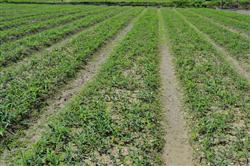 How to plant Pinellia pedatisecta? Has any reader shared a method for growing Pinellia pedatisecta?
Because growing Pinellia pedatisecta differs somewhat from growing Pinellia ternata, you cannot follow the cultivation habits of Pinellia ternata when planting Pinellia pedatisecta; for the detailed growing method of Pinellia pedatisecta, refer to the list below.
1. Site selection and land preparation for planting Pinellia pedatisecta:
Choose a water-retaining field with plenty of sunlight, fertile soil and convenient drainage and irrigation, and prepare the paddy field in the same way as a rice seedling bed. For dryland cultivation, use raised-bed planting. Whether planting in a paddy field or on dryland, you must apply plenty of decomposed organic fertilizer, such as human excrement and urine, barnyard manure, green manure and bran manure
2. Propagation and seedling-raising methods for Pinellia pedatisecta:
(1) Seedling raising
At harvest in the previous year, select tubers 2-3 fen in size and free of pests and diseases as seed material; after the selected seed tubers have dried slightly on the surface, store them in a dry, ventilated place or mixed with moist fine sand. Sow in March-April of the following year; prepare the nursery land the same way as the main field, evenly sow the seed tubers on the leveled seedbed, water with decomposed dilute human and livestock excrement and urine as a base fertilizer, and finally cover with about half a cun of soil. When the average daily temperature is above 20°C, seedlings emerge successively in 7-12 days. The seeding rate is 1000-1100 jin per mu.
Nursery management: after sowing, keep the bed surface moist but not cracked; after the seedlings form 2 true leaves, keep the bed surface under 2-3 fen of water; thereafter, apply decomposed human excrement and urine every 10 days to promote seedling growth.
(2) Field planting
About one month after seedling raising, transplant when the seedlings are 4-5 cun tall. When lifting the seedlings, use a shovel to cut horizontally 5-6 fen below the bed surface, then take out each plant, or use a bamboo strip to dig up each plant, remove excess soil, and be careful not to let the tubers of the seedlings fall off, so as not to affect survival. The planting spacing is 2×2 cun or 2×3 cun, and the depth at which the seedlings are set into the soil should be the same as when they grew in the seedling field; too deep and they are slow to revive, too shallow and they easily float in the paddy field.
3. Routine field management of Pinellia pedatisecta:
1. Drainage, irrigation and weeding: at planting, keep the field water 2-3 fen deep; after about one week, once the roots have taken hold, irrigate to a depth of one cun, and weed promptly.
2. Topdressing: within 15 days to 2 months after planting, fertilize 2-3 times in succession, mainly with nitrogen fertilizers such as human excrement and urine, to promote seedling growth. After July, mainly apply decomposed compost, phosphate fertilizer and so on.
4. Pest and disease control of Pinellia pedatisecta:
The main pest is the armyworm, which damages the leaves; it can be controlled by hand-picking or with trichlorfon.
5. Harvesting method for Pinellia pedatisecta:
Around the Start of Winter of the same year, harvest when most of the leaves have turned yellow and withered. Harvesting method: drain the field water, wait until the field soil dries until it turns white, then loosen the soil and sieve it or pick out the tubers; alternatively, before harvest, irrigate to soak the field, then rake back and forth to loosen the soil so the tubers float to the water surface and can be scooped out.
Click to get more Pinellia planting techniques
Click to get more medicinal herb planting techniques