What are the methods for preventing and controlling early senescence in loofah in summer?
How do you prevent and control early senescence in loofah in summer? Please provide an introduction to the prevention and control methods. In summer, as temperature, light and other environmental factors change, loofah plants grow stems and leaves quickly and roots age quickly. If management is improper, plant early senescence is very likely to occur. For loofah early senescence, the following methods can be used for prevention and control: Rational fruit retention: growers in...
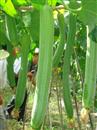 How do you prevent and control early senescence in loofah in summer? Please provide an introduction to the prevention and control methods
In summer, as temperature, light and other environmental factors change, loofah plants grow stems and leaves quickly and roots age quickly. If management is improper, plant early senescence is very likely to occur. For loofah early senescence, the following methods can be used for prevention and control:
Rational fruit retention:When growers plant loofah in winter, they generally retain one fruit every five or six leaves, which can both ensure that the fruit gets sufficient nutrients and ensure vigorous plant growth. When planting summer loofah, because the plants grow quickly, growers generally retain one fruit every three or four leaves, but growers must pay attention to plant vigor and decide fruit retention according to vigor. On vigorously growing plants, one fruit can be retained every three or four leaves; on weaker-growing plants, fruit retention should be appropriately reduced, changing to one fruit every five or six leaves, otherwise the plant burden will be too heavy, root, stem and leaf growth and development will be poor, and ultimately plant early senescence will be caused. It is recommended that growers adjust at any time according to plant growth conditions and retain fruit rationally.
Adjust the greenhouse temperature:The suitable temperature for loofah plant growth is 25-32°C during the day and 15-20°C at night. After the start of summer, the indoor temperature rises rapidly, so measures should be taken in time to lower the greenhouse temperature. First, ventilation should be strengthened; at noon the greenhouse door can be opened and vents enlarged. Second, set up shade nets. Shade nets mainly reduce heat by blocking part of the sunlight to lower the greenhouse temperature. In the morning and afternoon, when light is weak, shade nets should be used from after 11 a.m. to before 3 p.m. in order to improve photosynthetic efficiency. Third, water rationally to lower soil temperature. Water evaporation absorbs a large amount of heat, so rational watering is also an important measure for lowering the temperature inside the greenhouse, and growers should use it rationally.
Skillful fertilization and watering:Loofah likes moisture and is not tolerant of drought. The suitable soil moisture content is 70%-85%, and it should be watered in time to prevent loofah plants from early senescence due to drought. Under suitable weather conditions, growers should water once after pinching, water once two days after dipping the fruit, and water once two days before picking the fruit. This can promote fruit and plant growth and prevent early senescence. During the fruiting period, both vegetative growth and reproductive growth are very vigorous, and the demand for nutrients is great, so growers should pay attention to timely topdressing to ensure sufficient nutrient supply.
Scientific fertilization:It is best to test the soil before planting and apply fertilizer according to a formula based on soil nutrient status. Because growers have different fertilization habits, the nutrient status of greenhouse soil varies greatly. In some greenhouses, potassium fertilizer may seriously exceed the standard while nitrogen fertilizer is insufficient; in others, nitrogen fertilizer seriously exceeds the standard while potassium fertilizer is insufficient. The situations differ, so the focus of fertilization also differs. When a reporter interviewed the Shouguang City Soil and Fertilizer Testing Center, it was learned that in a grower's greenhouse in Luocheng Subdistrict, Shouguang City, the potassium content in the soil reached 2000 mg/kg, far exceeding the plant's needs. If potassium fertilizer is applied again at this time, it will certainly affect the normal growth and development of loofah.
Prevent pests and diseases:Overall, loofah has strong disease resistance and fewer diseases, but the high-temperature and high-humidity environment of greenhouses in summer can easily lead to a high incidence of bacterial diseases and viral diseases, so preventive measures should be strengthened in management. Bacterial diseases mostly occur after vine lowering, so before vine lowering, agricultural streptomycin 3000 times should be sprayed for prevention. For the prevention of viral diseases, the focus is on controlling virus-transmitting pests: set up insect-proof nets to prevent virus-transmitting pests inside and outside the greenhouse from spreading; hang yellow sticky insect boards to trap and kill pests in the greenhouse and observe pest conditions; use pesticides in time, such as acetamiprid, imidacloprid, etc. At the same time, it is also necessary to combine spraying with ningnanmycin, mushroom protein, etc., to improve plant disease resistance and prevent viral diseases.
Click to get more loofah cultivation techniques
Click to get more vegetable cultivation techniques