How to grow summer loofah? A detailed guide to loofah cultivation methods
How to grow summer loofah? How can summer loofah be grown for high yields? Please provide an introduction to the cultivation methods. Loofah is deeply loved by people for its crisp texture and sweet taste. Summer loofah is planted from late April to early July and comes to market from June to October. The cultivation methods can refer to the following: Summer loofah variety selection: For summer loofah, choose heat-tolerant...
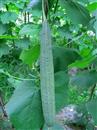 How to grow summer loofah? How can summer loofah be grown for high yields? Please provide an introduction to the cultivation methods
Loofah is deeply loved by people for its crisp texture and sweet taste. Summer loofah is planted from late April to early July and comes to market from June to October. The cultivation methods can refer to the following:
Summer loofah variety selection: For summer loofah, choose varieties that are heat-tolerant, early-maturing and high-yielding. Site selection: Summer loofah has no special requirements for the land; as long as the previous crop was not a cucurbit, it can be planted. Land preparation and sowing: Because there is a lot of rain in summer, the land for summer loofah should be prepared with deep furrows and high beds; the furrow width is 1.6 m and the bed surface width is 1.2 m. Summer temperatures are high and seedlings emerge quickly, so direct sowing is generally sufficient. Before sowing, soak the seeds for 3~4 hours, or soak them and then pre-sprout for 24 hours before sowing. Single row with two plants, hole spacing 30~40 cm, place 3~4 seeds per hole, cover with 1.5 cm of soil, cover with gauze netting, and water. After emergence, keep 2 plants per hole.
Fertilizer and water management for summer loofah : During the seedling stage of summer loofah, apply manure water 2~3 times. At the early flowering stage, apply a heavy topdressing, with 50 kg of compound fertilizer or 50 kg of peanut bran per mu. After every 2~3 harvests, apply topdressing again, each time using 15 kg of compound fertilizer, 10 kg of urea, and 5 kg of potassium fertilizer. During the seedling stage of summer loofah, there should not be too much water; too much is not conducive to root growth. During the vine growth and flowering stage, more water is needed; on sunny days, water in the morning and evening. During the harvest period, in addition to watering, maintain a 10~20 cm water layer in the furrows, and drain promptly on rainy days.
Summer loofah'sfield management:
When the vine grows to 30 cm, bamboo poles can be inserted to form an A-shaped trellis. After setting up the trellis, do not guide the vines immediately; instead, let the vines coil and press them down appropriately, and when female flowers appear, guide the vines upward and make the vines evenly distributed. Hanging the gourds. When the loofah bends, it should be hung; tie one end of a small packing rope to the fruit stalk and the other end to a small stone to pull the gourd straight. This is generally done 2~3 days after picking the gourds. Remove old leaves. In the late harvest stage of summer loofah, the diseased leaves and old leaves below affect ventilation and easily spread diseases, so they should be removed promptly.
Harvest promptly. Summer loofah takes 35~45 days from sowing to first harvest, with a harvest period of 50~60 days. From flower opening to harvesting the commercial gourd is about 10~12 days, and harvesting should be timely.
Click to get more loofah cultivation techniques
Click to get more vegetable cultivation techniques