Lingzhi (Ganoderma lucidum) cultivation techniques: How do you control termites when growing lingzhi?
How do you control termites when growing lingzhi? Please explain: termites, also called white ants, belong to the order Isoptera, family Termitidae. Termites occur mainly in hilly and mountainous areas, and are less common in plains areas. The termite group is a large family, most thriving in tropical and subtropical regions. In the cultivation of lingzhi and other edible fungi, ants mainly bore into and feed on the log segments....
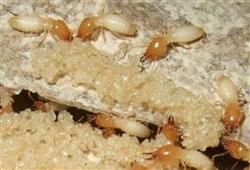 How do you control termites when growing lingzhi? Please explain
Termites, also called white ants, belong to the order Isoptera, family Termitidae. Termites occur mainly in hilly and mountainous areas, and are less common in plains areas. The termite group is a large family, most thriving in tropical and subtropical regions. In the cultivation of lingzhi and other edible fungi, ants mainly bore into and feed on the log segments.
Damage characteristics: termites bore into the log segments, causing the bark and wood of the logs to separate, inhibiting the growth of lingzhi mycelium and the formation of fruiting bodies. This in turn reduces lingzhi yield.
Occurrence pattern: termites mostly live in soil where wood is buried and like to be active in dark places. In May to June, winged ants swarm; they generally are active on muggy evenings. The eyes of soldier ants and worker ants have degenerated. When they go out to forage, their bodies are hidden under a layer of mud covering, as if draped in a mud coat, to prevent attacks by natural enemies and evaporation of water from the body surface. They like to be active in piles of dead branches and rotting leaves and in relatively moist, shaded places. Male and female individuals chase each other and together seek a site to build a nest, laying eggs and reproducing. The female ant becomes the queen, and the male ant becomes the king. The first batch of offspring ants bred are worker ants, and once the colony is slightly larger, soldier ants appear. The king and queen engage in reproduction, worker ants take on tasks such as feeding the colony and building the nest, and soldier ants take on defense against enemies. Termites fear cold and prefer warmth.
Methods for controlling termites in lingzhi cultivation:
(1) When cultivating, strictly choose the site for laying out the log segments, keeping away from termite nests, dead branches and rotten wood, and humus-rich matter. Clear dead trees and tree stumps around the cultivation site, dig out the tree roots, so as to prevent attracting termites and reduce termite sources.
(2) Dig a ditch 40 cm wide and 50 cm deep around the site, and put water in the ditch to prevent termites from entering the cultivation site.
(3) Arrange the log segments in a "#" shape (well-shaped) stack; support the lowest layer of mushroom logs on four stones, and scatter termite-killing pesticide around the stones to prevent termites from climbing onto the log segments and causing damage.
(4) For chemical control, mix 80% arsenic acid with 15% salicylic acid and 5% ferric chloride to make a poison bait, and spray it on termite nests and termite trails. When applying the pesticide, it must not be used directly on the log segments; the agent is highly toxic to humans and livestock.
Commonly used agents: arsenic acid, salicylic acid, ferric chloride.
Click to get more lingzhi cultivation techniques
Click to get more medicinal herb cultivation techniques