Onion Autumn Seedling Raising Methods and Key Technical Points
How do you raise onion seedlings in autumn? What should you pay attention to? Experienced readers are also welcome to share their advice. Onions have the characteristics of low input, high yield, simple management and high returns, making them an ideal vegetable variety for farmers to increase their income. Zhongdiwang has compiled the methods for raising onion seedlings in autumn, listed in detail below for...
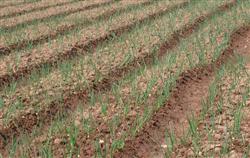 How do you raise onion seedlings in autumn? What should you pay attention to? Experienced readers are also welcome to share their advice.
Onions have the characteristics of low input, high yield, simple management and high returns, making them an ideal vegetable variety for farmers to increase their income. Zhongdiwang has compiled the methods for raising onion seedlings in autumn, listed in detail below for readers' reference.
Step 1. Determine the sowing time for onions:
Because the growth and development period of the onion's assimilating organs requires a cool season, except in the cold high-altitude regions of the north where spring sowing and oversummering cultivation can be used, all other hot summer regions sow and raise seedlings in autumn, either planting out before winter or storing the seedlings over winter and planting out the following spring, with harvest in early or mid-summer. The specific sowing time varies greatly due to climate differences between north and south. South of the North China Plain, as the geographical location moves southward, the autumn sowing time is delayed the further south you go. In the central and southern parts of our province, early to mid-September is generally suitable for sowing.
Step 2. Selecting onion seed:
Generally, purple varieties such as Ziyu No. 1, Ziyu No. 2 and Zixing are chosen more often. In addition, onion seeds have a short lifespan, so be sure to use new seed from the current year.
Step 3. Sowing method:
1. Determine the area of the sowing bed. The area of the sowing bed should be determined according to the seedling bed density and the actual number of seedlings needed. Generally, 4 kg-5 kg of fresh, plump seed can be sown per mu, and seedlings raised from one mu can be transplanted to 8~10 mu.
2. Preparing the sowing bed. For the sowing bed, generally choose a plot whose previous crop was not an onion or garlic type, and which is loose, fertile and convenient for irrigation and drainage. Flat beds or raised beds can be used. About 10 days before sowing, plow the soil deeply and apply thoroughly decomposed farmyard manure generally, about 2000 kg per mu, plus about 15 kg of compound or blended fertilizer per mu (use potassium sulfate for potash, not potassium chloride). Do not apply undecomposed organic fertilizer, to avoid burning the seedlings or causing pest problems. After fertilizing, plow and turn 2-3 times to a depth of 15 cm-20 cm, so that the soil and manure are fully mixed. After leveling the land, make the beds and prepare for sowing.
3. The onion seed must be soaked and pre-germinated before sowing (or it can be sown directly without soaking), and broadcast sowing can be used. Re-till the prepared seedling bed finely, rake it level, tread lightly with the feet or press once with a flat-bottomed farm tool so that the soil is firmly consolidated and the bed surface does not become uneven after watering, then water with a water depth of 5 cm-7 cm to ensure sufficient soil moisture. After the water has seeped through, lightly scatter a thin layer of fine dry soil on the bed surface to prevent the seed from rolling in the mud during sowing and to help the radicle grow downward. Scatter the seed evenly over the bed surface, and after sowing cover with fine dry soil about 1 cm-1.5 cm thick.
Step 4. Onion seedling stage management methods:
Before emergence, keep the bed soil moist, and water promptly if the surface becomes compacted, to prevent the seedlings from dying of water shortage. After the seedlings have all emerged, properly restrict watering and carry out seedling hardening to promote root growth and prevent excessive top growth.
The water restriction period is about 10 days; afterwards, according to weather conditions, water management follows the principle of watering when dry and withholding when wet. If the base fertilizer is insufficient and the seedlings are yellow and thin, topdress together with irrigation; the timing is when the seedlings have grown 2 true leaves, applying nitrogen fertilizer together with watering, 10 kg-15 kg of urea per mu. If the base fertilizer is sufficient, no topdressing is needed. When the seedlings are 5~6 cm tall, thin and weed them, keeping a spacing of about 1.5~3 cm square, and pay attention to controlling underground pests.
Cultivating moderately strong seedlings is the prerequisite for high yield. Onions are a green-plant vernalization type crop, and their requirements for strong seedlings differ from those of other crops. The standard for moderately strong seedlings is: generally the plant has grown 3-4 leaves, the plant height is about 25~30 cm, the false stem diameter is 0.6 cm-0.7 cm (if the false stem diameter exceeds 0.9 cm, there is a possibility of early bolting), and the plant is healthy with no pests or diseases. Such seedlings are moderately strong seedlings.
Click to get more onion growing techniques
Click to get more vegetable growing techniques