Where can I learn Welsh onion growing techniques?
Where are Welsh onion growing techniques available? What are the steps for growing Welsh onions? We ask experienced netizens to help introduce them. Zhongdi Network has compiled Welsh onion growing techniques, and the planting steps are listed below for netizens' reference. Step 1: Preparation before sowing Welsh onions: Selection of the Welsh onion field: the Welsh onion seedling bed...
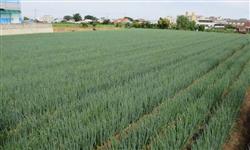 Where are Welsh onion growing techniques available? What are the steps for growing Welsh onions? We ask experienced netizens to help introduce them
Zhongdi Network has compiled Welsh onion growing techniques, and the planting steps are listed below for netizens' reference.
Step 1: Preparation before sowing Welsh onions:
Selection of the Welsh onion field:
For the Welsh onion seedling bed, choose a plot with flat terrain, fertile soil, convenient irrigation and drainage, and deep clayey soil plough layer; for the previous crop, choose a plot where Welsh onions, onions, garlic, or chives have not been grown within three years, or land rotated with grain crops, such as millet or corn stubble.
Land preparation and bed making before planting:
For the seedling bed, attention should be paid to applying rotted farmyard manure as base fertilizer, broadcasting 2500 kg per mu, shallow ploughing to a depth of 2.5 cm, then leveling and raking fine. Determine the length and width of the beds according to water source conditions. Generally, the bed is 20-30 m long and 1-1.2 m wide. Tread the bed ridges firm, with a ridge base width of 25 cm, and trim the ridge edges neatly.
In order to speed up sowing progress, you can start by measuring beds from the middle of the plot, lifting and covering soil; place the outermost bed edges on both sides of the plot. Apply 15 kg of compound fertilizer or 5 kg of urea per mu as seed fertilizer, first broadcast it on the two middle beds to be sown, deep hoe so the fertilizer and soil are mixed evenly, rake level and fine, let water flow steadily to the end, water evenly and thoroughly, and sow once the water has infiltrated.
Step 2: Selection of Welsh onion seed and sowing time:
For the choice of Welsh onion variety, you can choose a popular improved variety such as "Hybrid Fast Welsh Onion".
The sowing period for Welsh onions should be determined according to product requirements. In order to cultivate strong seedlings, determining the optimal sowing period is very important. Practice has proved that an average temperature of 16.5-17°C is suitable. It is exactly around October 1, within 2-3 days. This is the optimal sowing period, determined by the size of the seedlings before overwintering. If too large, they will bolt the following spring; if too small, they are likely to freeze to death. The standard for pre-winter seedlings is to grow to two leaves and one heart. For spring sowing, use the time when spring begins and the soil is still freezing (late February, early March).
Sowing methods for Welsh onions:
Before sowing, Welsh onion seeds need to be soaked. Pour the seeds into water and soak for 10-12 hours, then remove and spread them out to cool. That is, water before sowing, and broadcast the seeds immediately after the water infiltrates. Use 1.5 kg of seed per mu, broadcast separately by bed, sow back and forth three times per bed, and after sowing cover with soil 1 cm thick. If conditions permit, cover with straw sheets during the day and lift them at night, and 5-7 days will be enough.
Step 3: Management before and after Welsh onion emergence:
Welsh onions generally emerge about 7 days after autumn sowing, and 10-20 days after spring sowing. After emergence, if the soil surface crusts after rain during this period, you can use an iron rake to lightly and shallowly break the soil surface.
Management of Welsh onions before winter:
In order to cultivate strong seedlings, water 2-3 times during this period according to soil moisture, and water once with antifreeze water before the soil freezes. In early December, while there is frost in the morning, spread a thin layer of the prepared farmyard manure, not too thick, to ensure the seedlings overwinter safely.
In early March, pull out weeds; in late March, water to promote greening; in April, thin the seedlings 1-2 times, thinning where dense and filling where sparse to maintain a seedling spacing of 4 cm, moving large seedlings from dense areas to gaps, and water generally once; from early to late May, water 2-3 times. During this period, apply chemical fertilizer twice along with watering. Apply 25 kg of ammonium bicarbonate or 10 kg of urea per mu. During the seedling stage, pay special attention to controlling onion thrips and leafminers. Stop watering half a month before transplanting.
Step 4: Preparation before final planting of Welsh onions:
Preparation of the cultivation site before transplanting Welsh onions:
After the wheat harvest, immediately clear stubble, plough and rake fine. With a furrow width spacing of 80 cm and a furrow depth of about 30 cm, apply 5000 kg of rotted farmyard manure, 30 kg of diammonium, and 15-20 kg of potassium sulfate per mu; multi-element compound fertilizer is even better, plus 3-5 kg of 3% phorate granules. After the fertilizer and pesticide are applied to the bottom of the furrow, dig deeply 25-30 cm to form a loose upper layer with fertilizer and pesticide fully mixed.
Methods for lifting Welsh onion seedlings and disinfection:
If the soil is dry before lifting seedlings, water once two days in advance. When lifting seedlings, dig deeply to get the roots, and strictly prevent damage caused by pulling individual plants hard. During the seedling lifting process, eliminate mixed plants, bolting plants, and damaged plants at any time.
For the disinfection method of Welsh onion seedlings, make bundles of 5 kg, soak the onion roots for 5 minutes in 800 times dilution of 40% methyl isofenphos emulsion or 800 times dilution of 15% chlorpyrifos to kill root maggots.
Step 5: Planting methods for Welsh onion seedlings:
Selection of planting time:
In spring, fight for the day; in summer, fight for the hour. Generally, mid-June to mid-July (Minor Heat) is the best period. Taking Minor Heat as the reference, planting one month early increases yield by 40%, and planting one month late reduces yield by 30%.
Reasonable planting density for Welsh onions:
Reasonable density is one of the key links in ensuring yield. With a row spacing of 80 cm, a plant spacing of 4 cm gives 20,000 plants, 5 cm gives 17,000 plants, and 3.5 cm gives 24,000 plants.
Planting methods:
The water-insertion seedling method can be used. The tool for inserting seedlings is called an onion fork (made from a forked tree branch, about as thick as a pen shaft). Hold 7-8 seedlings in one hand and the fork in the other. The fork catches the fibrous roots of the onion and inserts them straight into the mud. Keep the insertion depth according to the principle that the tops are even and the bottoms are not. Do not plant too deep; if too shallow, they are prone to lodging. Generally, the depth into the soil is about 12 cm, and from the ground level to the onion roots is about 20 cm, so it is not easy to hill up soil. If too deep, seedlings recover slowly, are stifled and not vigorous, and are prone to rot and death. Water-insertion, as the name suggests, means watering first, then inserting seedlings immediately after the water infiltrates. Water one furrow, insert seedlings in that furrow, then water the next furrow, and plant in sequence until finished.
Step 6: Management after planting Welsh onions:
Management during the seedling recovery period of Welsh onions:
From planting to early August, this period is exactly high temperature and rainy. In addition, after planting, the root system ages, rots, and new roots grow slowly. Plant weight decreases rather than increases, and they are in a tenacious, tolerant, slow-growth period, with strong tolerance to drought and high temperature.
Welsh onion is a crop that likes air. At this time it fears soil surface crusting and water accumulation, which can easily cause rot, missing seedlings, or even complete loss of seedlings. In management, mainly grasp the following points:
First, sun the onion eyes. When inserting the onion, pulling out the fork leaves a hole, which is good for ventilation and releasing moisture.
Second, do not water. Drain promptly after rain, and strictly prevent water accumulation and sun exposure. After draining, promptly water once with well water (vegetable growers have the saying of watering the garden after flooding) and promptly hoe shallowly to break the crust.
Management methods during the peak period of Welsh onions:
After entering August, the temperature gradually becomes cooler, the day-night temperature difference increases, and growth gradually speeds up (the most suitable temperature for Welsh onion growth is 15-25°C). At this time, apply 10 kg of urea per mu, shallow hoe once, and water once. In late August (around End of Heat), the leaves enter the peak growth period. Apply 2000 kg of farmyard manure or 200 kg of cake fertilizer and 15 kg of urea per mu. After watering twice in succession, break the ridges (level the bed ridges).
In early September, around White Dew, the white part of the Welsh onion enters the thickening growth period. Apply 50 kg of ammonium bicarbonate per mu, then hill up soil, with the standard being to hill up to 3 cm from the heart leaf. Make the ridges become furrows and the furrows become ridges. Note that early hilling should not be too high, as it will affect the thickening and rooting of Welsh onions. Water twice in succession. In late September (around Autumn Equinox), the autumn air is clear and crisp, with a temperature of 16-20°C. A new leaf grows in 5-7 days.
According to the growth pattern of Welsh onions and their environmental needs, this is exactly the peak period for nutrients before product formation. Therefore, apply quick-acting fertilizer per mu: 50 kg of ammonium bicarbonate, 30 kg of phosphate fertilizer, and 15 kg of potassium fertilizer. During this period, hill up soil 2 times and water twice. Entering October, the temperature gradually drops to about 15°C, growth gradually slows, material accumulation speeds up, and product formation reaches its peak. Watering is the focus of management; the soil surface should look moist but not dry, and the leaves filled with gray transparent mucus (called "onion nose") is a sign that water supply is appropriate.
Welsh onion harvest period:
In early November, the temperature drops to 8-12°C, the aboveground part clearly stagnates, and the product has grown fully, so it should be harvested around Start of Winter.
Click to get more Welsh onion growing techniques
Click to get more vegetable growing techniques