Cowpea (Vigna unguiculata) cultivation techniques: pictures and video tutorials
Cowpeas are nutritious and delicious; city dwellers love to eat them, and vegetable growers love to plant them. They are grown throughout northern and southern China, especially in the south. Cowpeas are divided into long and short types; at present, long cowpeas are mainly cultivated in our area. Zhongdiwang has compiled cowpea cultivation techniques, listed below for netizens' reference. 1. Cowpea varieties...
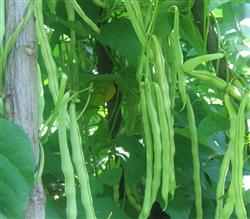 Cowpeas are nutritious and delicious; city dwellers love to eat them, and vegetable growers love to plant them. They are grown throughout northern and southern China, especially in the south. Cowpeas are divided into long and short types; at present, long cowpeas are mainly cultivated in our area. Zhongdiwang has compiled cowpea cultivation techniques, listed below for netizens' reference.
1. Selection of cowpea varieties:
1. Xiangjiang No. 1: Early maturing and high yielding; can be cultivated in spring, summer and autumn. It reaches market 2-4 days earlier than Zhijiang 28-2, with about 20% higher early-stage yield and 10-20% higher total yield. The usual yield is 3000 kg per mu; few branches, strong growth vigor, fertilizer-tolerant, pods light green, thick and uniform, with excellent market quality.
2. Xiangjiang No. 2: Early maturing and high yielding; can be cultivated in spring, summer and autumn. It reaches market 1-2 days earlier than Zhijiang 28-2, with 20% higher early-stage yield and 10-20% higher total yield. The usual yield is 3000 kg per mu; few branches, strong growth vigor, fertilizer-tolerant, pods green, thick and uniform, thick-fleshed and tender, with excellent market quality.
3. Changjiang No. 3: A newly bred variety; late maturing and high yielding. In the Yangtze River basin, it can be sown and cultivated from after Qingming (early April) to late July. It is heat-tolerant and poor-soil-tolerant, with few flower and pod drops under adverse weather. When grown as a late-maturing crop in the high-temperature season, its yield and quality are clearly superior to other varieties. Pods greenish-white, uniform, tender and neat, with excellent market quality. If fertilizer and water conditions keep up, the "rat-tail" phenomenon rarely appears in the late harvest period.
2. Cowpea seedling-raising methods and transplanting methods:
1. Reasons for raising cowpea seedlings:
Spring early-maturing cowpea varieties are generally sown around Qingming. The selection and combination of varieties for cultivation in different seasons should be based on variety characteristics. Generally, early-maturing, heat-intolerant varieties are suitable for spring early-maturing cultivation, while late-maturing, heat-tolerant varieties should be grown in summer. Cowpeas can be raised as seedlings and transplanted, or direct-sown. For spring cultivation, direct sowing of cowpeas occurs when temperatures are low, germination is slow, and under low-temperature rainy conditions the seeds are prone to mold and rot, resulting in poor emergence; moreover, direct-sown plants have vigorous stems and leaves but bear few pods. Raising seedlings and transplanting can inhibit vegetative growth, promote flowering and podding, help ensure a full stand, and also advance and extend the harvest period. For autumn cowpea cultivation, temperatures are generally higher, so direct sowing is feasible.
2. Cowpea seedling-raising methods:
The seedbed soil should be loose on top and firm below, to prevent the main root from going deep into the soil and encourage more lateral roots. The seedbed soil should have good drainage. The soil must not be too wet, to avoid seed rot and reduced germination, or the occurrence of damping-off and root rot causing seedling death. For early spring seedling raising, from sowing to seedling emergence, plastic film must be placed over the seedbed: first, to raise soil temperature and speed up seed germination; second, to prevent direct rain wash, increase seedbed temperature, reduce soil moisture, and improve the germination rate.
3. Cowpea transplanting and field-setting methods:
For spring cowpea cultivation, the soil width (including the furrow) is generally 1.5 m to 1.8 m, with row spacing of 60-80 cm and plant spacing of 26 cm to 40 cm, with 2-4 plants per hole. Too dense planting will cause the middle and lower leaves to yellow and drop early, and no fruiting in the early stage. For summer and autumn cultivation, appropriately closer planting is possible.
Reasonable close planting of cowpeas should be based on variety characteristics. Varieties with too many leaves, many branches and high branching nodes should be planted appropriately sparsely; otherwise, they should be planted appropriately densely. At the same time, planting density should also consider fertility level: where fertility is high, plant appropriately sparsely; otherwise, plant appropriately densely.
Precautions:For summer and autumn cultivation, if seedling raising and transplanting are used, because temperatures are high, plastic film must absolutely not be placed over the seedbed, to avoid "cooking the seeds" and reducing the germination rate. After sowing, it is best to cover the seedbed with a layer of rice straw to avoid rain wash, which can cause the seedbed to crust and affect seed emergence.
For cowpea transplanting, it is best to transplant small seedlings, generally after the cotyledons have unfolded and before the first pair of true leaves unfolds. During transplanting, try to avoid damaging the cotyledons, which would affect seedling growth.
3. Management methods during the cowpea growing period:
1. Water management for cowpeas:
The vine-running stage of cowpeas is also the period when root nodules begin to form and rapidly enlarge. During this period, excessive soil moisture is unfavorable to root development and root nodule activity.
During the flowering and podding stage, sufficient water must be supplied to keep the soil moist; otherwise, there will be fewer flowers and pods, short and thin pods, reduced quality and lower yield. However, too much water easily causes excessive vegetative growth, flower and pod drop, and can easily lead to root rot, root death and seedling death.
Therefore, in cowpea cultivation, attention should be paid to water control. An effective measure is to choose fields with convenient drainage and irrigation and adopt deep-furrow, high-ridge cultivation. For spring cowpeas, pay attention to clearing furrows and draining water; for summer and autumn cowpeas, pay attention to timely watering.
2. Fertilization methods for cowpeas:
The rhizobia of cowpeas are not well developed, and in the early growth stage of the plant, the root nodules are still in the formation stage. Supplying a certain amount of nitrogen fertilizer can promote seedling growth and thus accelerate nodule formation, but nitrogen fertilizer should not be applied alone; it should be applied together with phosphorus and potassium fertilizers.
In cowpea cultivation, applying sufficient organic fertilizer as base fertilizer can raise soil temperature, promote root nodule activity, form more root nodules, promote early root development, accelerate plant growth, and promote early harvest. The usual base fertilizer amount per mu: organic fertilizer more than 50∞ kg, superphosphate 25-30 kg, potassium fertilizer 15-20 kg, or plant ash 75-100 kg. In addition, for acidic red soil, add 50-75 kg lime. Base fertilizer application
should be combined with deep plowing and land preparation. Before deep plowing, apply slow-release fertilizers and turn them into the lower soil layer; during land preparation, apply fully decomposed human and livestock manure and quick-acting fertilizers to the surface soil.
Before cowpeas flower and set pods, the demand for fertilizer and water is not great. If fertilizer and water are excessive, the plant's stems and leaves grow too vigorously, resulting in only vines and leaves growing, few flower clusters, higher nodes for flowering and podding, side bud sprouting, and no pod setting in the middle and lower parts.
Therefore, in the early stage, fertilizer and water should be appropriately controlled to suppress excessive vegetative growth. After transplanting and survival, use 15% concentration human and livestock manure plus a small amount of nitrogen fertilizer for the first topdressing to promote seedling growth. After vines begin to run, topdress with 20-30% concentration human and livestock manure. After flowering and podding, demand gradually increases; apply 30-40% human and livestock manure once every 4-6 days to promote growth, more flowering and more pod setting. In the peak podding stage, more fertilizer and water are needed. If fertilizer and water are lacking, decline will occur, with flower and pod drop. At this time, timely heavy topdressing can prevent premature aging, promote reflowering, extend the harvest, and increase yield.
3. Cowpea trellising methods:
After transplanting and survival, during the period before trellising, after heavy rain and after topdressing, cultivation should be carried out once to improve aeration, which is beneficial to root growth and rhizobia activity. The first cultivation should be appropriately deeper. As the root system continues to grow and its distribution range continues to expand, the depth of cultivation should gradually change from deep to shallow; the last cultivation should be the shallowest. Generally, cultivation should stop after trellising, and field weeds should be pulled out in time.
When the vines are about 34 cm long, trellises should be set up in time to guide the vines. The direction of vine guiding around the bean poles is from left to right. Trellis forms include bird's-nest trellis, A-frame trellis, and fence trellis (single-row). Among them, the fence trellis has good ventilation and light transmission and high yield.
4. Pest and disease control of cowpeas:
1. Harm and control methods of cowpea rust:Rust mainly harms leaves, occurring on the underside of leaves. It is susceptible under high temperature and high humidity. After leaves are damaged, very small yellowish-white spots first appear, then gradually expand into yellowish-brown spore masses. Around the summer spore masses there is often a yellow halo.
Control methods: Mainly after harvest, remove diseased plant residues from the field and burn them centrally. 65% zineb powder at 500 times, 70% thiophanate-methyl, or 50% carbendazim at 100 times liquid all have control effects.
2. Harm and control methods of cowpea black mold disease:Black mold disease mainly harms leaves. High temperature and high humidity favor its occurrence. At initial onset, purple-brown spots appear on both sides of the leaves, later expanding into circular spots 1-2 cm in size with indistinct edges. The surface of the diseased spots is densely covered with sooty mold.
Control methods: After harvest, remove diseased plant residues and burn them centrally. 50% thiophanate-methyl or 50% carbendazim at 1000 times liquid, 65% zineb at 500 times liquid, sprayed once about every 7 days.
3. Harm and control methods of cowpea pod borer:Adult pod borers lay eggs on flower buds and tender tips. They mainly harm flower buds and young tender seeds inside pods. Under high temperature and high humidity conditions in June-August, they often occur in large numbers. Chemical control should be carried out before the larvae reach the third instar.
Control methods: Use 80% dichlorvos at 800 times or 90% trichlorfon at 100 times liquid; deltamethrin at 3000-5000 times liquid can also be used for spraying.
4. Harm and control methods of cowpea aphid:Cowpea aphids occur more severely after long sunny periods with low air humidity and temperatures of 20-30°C.
Control methods: Spray with 50% dichlorvos emulsifiable concentrate at 1500-2000 times liquid or 40% dimethoate emulsifiable concentrate at 1000-2000 times liquid for control.
Click to get more bean cultivation techniques
Click to get more vegetable cultivation techniques