Chive cultivation techniques video and image collection
Chives are a perennial plant with fibrous roots, with a unique flavor, spicy and savory taste, and rich nutrition. They can be supplied all year round and play an important role in enriching the variety of vegetables, meeting consumer demand, and increasing people's income. The following methods can be used for growing chives: 1. Select excellent chive varieties: it is advisable...
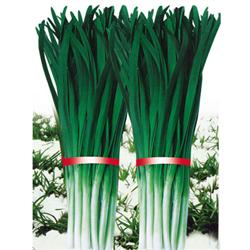 Chives are a perennial plant with fibrous roots, with a unique flavor, spicy and savory taste, and rich nutrition. They can be supplied all year round and play an important role in enriching the variety of vegetables, meeting consumer demand, and increasing people's income. The following methods can be used for growing chives:
1. Select excellent chive varieties:
It is advisable to choose Daming chives, which have broad leaves, relatively thick pseudostems, and high yield; Malin chives, whose leaves are upright, dark green, low in fiber, late in bolting, and of good quality; Hanzhong winter chives, which have more tillering, thick and strong pseudostems, broad leaves, strong cold resistance, and high yield; Dugenhong (9-1), which is cold resistant, comes back early, has strong tillering ability, thick stems and wide leaves, and a fresh fragrance; 791 Xuejiu, whose leaves are light green, emerges early, has thick and fleshy leaves, is cold resistant, and has strong regeneration ability; Saiqing, whose plant clumps are upright, grows rapidly, has strong tillering ability, is resistant to cold and disease, and has green leaves; and so on. All localities may select and use them in a planned way.
2. Grow chive seedlings:
1. Sowing time for chives: In North China, it is mostly in early to mid-April in spring, when the local soil temperature steadily passes 10-12 degrees C.
2. Preparation of the chive seedbed: Choose a loose and fertile plot with convenient drainage and irrigation that has not grown onions or garlic for 3 years. After the previous crop is harvested, apply 500 kg of decomposed organic fertilizer and 50-60 kg of ternary compound fertilizer per mu, plow and harrow finely, and make a flat bed 1.6-2 m wide and 8-10 m long.
3. Chive seed treatment method: To promote after-ripening and increase the germination rate, sun-dry the seeds for 2-3 days before sowing. After sun-drying, soak the seeds in warm water at 40 degrees C for 24 hours, remove them, wash them clean, drain them, wrap them in a wet cloth, and place them in a 20-25 degrees C environment to germinate. After about 3 days, when 80% of the seeds have sprouted white, they can be sown.
4. Sowing quantity of chives: The suitable density for raising seedlings is 1600 plants per sq m, using about 10 g of seed. Calculated at 80% of the actual sowing area, about 5 kg of seed is needed per mu. The seedlings raised can be used to plant twice the seedbed area.
5. Sowing method for chives: Before sowing, water the bottom water thoroughly. After the water seeps in, first thinly scatter a layer of fine soil to prevent the seeds from sticking to mud and affecting respiration, then evenly scatter the seeds into the seedbed. After sowing, cover with 1.5 cm of fine soil, and on the second day cover again with 1 cm of fine soil. This can keep the soil capillaries from connecting between the upper and lower layers, while also keeping the surface soil loose and moist, which is good for seedling emergence.
6. Management during the chive seedling stage: After chives emerge, keep the soil moist. When the seedlings are 4-6 cm high, water them in time, and thereafter water once every 5-6 days. When the seedlings are 10 cm high, apply 10 kg of urea per mu with irrigation water. When the seedlings are 15-20 cm high, apply another 10 kg of urea with irrigation water, and then the seedlings should be hardened to promote coordinated growth of the aboveground and underground parts. Pay attention to the prevention and control of diseases, insects, and weeds.
3. Transplanting and planting chives:
1. Determining the planting time for chives: When the plant height reaches 20 cm or the seedlings are found to be crowded, planting should be done promptly. Generally, the planting standard is reached 50-60 days after emergence. Planting should not be later than early July, otherwise it cannot avoid the high temperature and rainy weather of July and August, which is unfavorable for seedling survival.
2. Preparation and fertilization of the chive cultivation site: After the previous crop is harvested, apply 4000-5000 kg of high-quality farmyard manure per mu, deeply plow 25-30 cm, harrow finely, and make a flat bed 1.6-2 m wide and 20-25 m long.
3. Planting density of chives: The suitable row spacing is 20-25 cm, the clump spacing is about 15 cm, and each clump has about 25 chive seedlings. The clump spacing may also be appropriately shortened, with the number of seedlings per clump reduced accordingly, keeping about 800 plants actually planted per sq m as suitable.
4. Planting method for chives: Chive seedlings should be planted as soon as they are dug up, and should not be piled up for a long time. After digging out the seedlings, cut off the tips of the fibrous roots, leaving only 2-3 cm, then cut off a portion of the leaf tips to reduce leaf evaporation. Dig holes or open furrows according to the planned clump and row spacing. For the chive seedlings planted in each hole, the bulbs should be even and the plants should be compact. Bury the top of the bulbs 3-4 cm into the soil. Too deep and growth will not be vigorous; too shallow and root jumping will be too fast. Firm the soil around the chive clumps.
4. Field management of chives:
1. Management in the first year after planting chives: To ensure seedling survival, water immediately after planting. When new leaves appear and new roots develop, apply 25-30 kg of urea per mu with irrigation water. In the rainy season, pay attention to drainage and weed removal. In mid-August, apply 200 kg of cake fertilizer or 1000-1500 kg of decomposed barnyard manure per mu. The fertilizer and soil should be mixed evenly, and then water immediately. After that, water once every 5-6 days. In mid-September, apply 25-30 kg of urea or 50-60 kg of ternary compound fertilizer per mu, keeping the soil alternately dry and wet. Before the soil freezes, water thoroughly with winter water to facilitate overwintering and the sprouting of young buds the following spring.
2. Management in the second year after planting chives: After chives have grown for more than 2 years, the annual management method is roughly the same. In early spring, in order to raise the soil temperature and promote sprouting, remove dead leaves and weeds from the bed surface.
To prolong the life of chives and promote the development of new roots, spread 2-3 cm of new foreign soil on the bed surface, and at the same time apply 2000-3000 kg of decomposed organic fertilizer per mu. After new buds emerge, water once with human and livestock manure water, and water when the seedlings are 15-18 cm high.
2-3 days after harvest, fertilize and water again. For each harvest, apply 30 kg of urea per mu with irrigation water. In summer, attention should be paid both to drainage and to strengthening ventilation. Autumn is the period of vigorous growth for chives, so strengthen fertilizer and water management. About 50 days before local chives wither, stop harvesting and let them wither naturally, so that nutrients are transferred to the roots, laying a foundation for robust growth of chives the following spring.
5. Pest and disease control methods for chives:
The main diseases of chives include downy mildew, gray mold, and phytophthora blight, which can be controlled with agents such as carbendazim, phosethyl-Al, metalaxyl, Shuangyiqing, Huimeike, and Kailu.
The main insect pests of chives include chive maggots, thrips, diamondback moths, and leafminers. They can be controlled with dimethoate, phoxim, dichlorvos, imidacloprid, and pyrethroid insecticides.
For weeds in chive fields, pre-emergence herbicides include 33% pendimethalin, 48% butralin, and 50% prometryn. Post-emergence herbicides include 48% trifluralin, 25% nitrofen, and 50% linuron. Before using herbicides, read the instructions carefully to prevent herbicide damage.
6. Harvesting chives:
1. Harvest season for chives: In spring, the leaves grow vigorously, and this is the main harvest period. In summer, with high temperature and frequent rain, quality deteriorates, so they are mostly not harvested. In autumn, the leaves grow vigorously again, and another peak harvest period appears. If protected cultivation is used, they can also be supplied to the market in winter.
2. Harvest frequency of chives: Chives are generally harvested 5 or 6 times a year. If fertilizer and water conditions are good and management is proper, they can be harvested 7 or 8 times. The general yield is 4000-5000 kg per mu, and high yield can reach 7000-8000 kg. 5 years is one harvest cycle.
3. Harvest method for chives: When the seedlings are about 35 cm high and the growth period is 20-25 days, they can be harvested. Too early affects yield; too late affects quality. The best harvest time is on a sunny morning. Because the meristematic tissue is at the base of the leaf sheath, generally leave a stubble of 2-3 cm. Too low will damage the meristematic tissue and young buds.
Click to get more chive cultivation techniques
Click to get more vegetable cultivation techniques