Detailed Explanation of Key Points for Winter Cultivation Techniques of Pumpkin
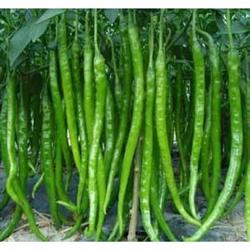
Potassium can enhance the photosynthesis of crops and plays an important role in the metabolism, synthesis and transport of carbohydrates. It can not only increase the yield of line peppers but also improve their quality. When potassium is deficient, flower formation and pod setting first decrease, and then the pods become smaller and thinner, and even their number decreases. In severe cases, the pepper's drought resistance and disease resistance...
 I. Variety Selection
The three introduced varieties are Juhong No. 3 pumpkin (Jiangsu Zhengda Seed Co., Ltd.), Honghui pumpkin, and Hongying pumpkin (Beijing Advanta Seeds Co., Ltd.). All three varieties have a certain degree of cold tolerance and disease resistance, and are characterized by a mealy, sweet taste, good marketability, and suitability for storage and transport.
II. Sowing and Seedling Raising
1. Sowing period: The sowing period is generally chosen from mid-September to early October. From sowing and seedling raising to fruit harvest, the whole growth period is about 90-100 days.
2. Seed soaking and germination: Before sowing, sun-dry the seeds for 2-3 hours to increase the germination rate. Then soak the seeds in a 0.1% potassium permanganate solution for 30 minutes, remove them, wash them clean, wrap them in a wet cloth, and place them in a 32°C constant-temperature chamber to germinate. After 2-3 days, the seeds begin to show white.
3. Cultivating strong seedlings: For each square meter of seedbed, mix 50g of compound fertilizer and 10g of carbendazim, level the bed, and then sow the germinated seeds evenly on the seedbed with the radicle facing downward. After the seedlings emerge, pay attention to controlling the temperature and humidity of the seedbed. When the temperature is relatively low, straw or plastic film can be used as cover. After the seedlings grow their first true leaf, thin them in time and remove diseased and weak seedlings. Spray foliar fertilizer once every 7-10 days. When the seedlings grow 2-3 true leaves, they can be transplanted.
III. Field Cultivation Management
In view of the low rainfall in winter, the field cultivation method can adopt creeping cultivation, which can save costs and improve economic benefits.
1. Land preparation and planting: Level the land and form beds, shaping them into a specification with a bed width of 1.2m, a ditch of 04.m, and a bed height of 80cm. Plant according to a plant spacing of 1.5m, and on average 278 plants can be planted per mu. Seedlings should be transplanted with soil to protect the root system, and after transplanting, water thoroughly to settle the roots.
2. Cultivation management during the growth period: After the seedlings are transplanted and survive, pay attention to fertilizer and water management. In the early stage, fertilizer should be applied frequently and lightly. Compound fertilizer can be applied once every 7 days at 5kg per mu, and foliar fertilizer Plant Power 2003 at 1000 times dilution should be sprayed in coordination to promote plant growth.
3. Cultivation management during the flowering and fruiting period: During the flowering and fruit-setting period, pay attention to the supply of water and fertilizer. During the flowering period, supplementary artificial pollination should be carried out to increase the fruit-setting rate. Pollination should be done in the morning on sunny days after sunrise when the temperature rises. After the young fruits are set steadily, carry out vine training, pinching, and bagging. For each plant, select and retain the main vine and 2-3 side vines for fruit retention. Choose fruits with a regular shape and no pests or diseases, retain 1 fruit per vine, pinch the growing tip after leaving 5-6 leaves at the top, and remove the remaining side vines. Press soil over the melon vines once every 4-5 nodes to prevent vine running and promote the development of adventitious roots. When the fruit grows to the size of an egg, bag it. First cover the fruit with a plastic foam net sleeve, and then put on a white perforated nylon film bag to prevent the prickly hairs of the melon vine from piercing the melon skin, and use grass to prop up the melon to improve the fruit's appearance. Before bagging, a comprehensive sterilization and disinfection treatment should also be carried out. A 800-times solution of 38% Dacotech wettable powder or 12% copper green emulsion oil can be selected for spraying to ensure that the fruit has no disease spots. During the growth period, turn the fruit about once every 10 days to promote even coloring of the entire fruit. All the above work needs to be done in the afternoon on sunny days. During the fruit expansion period, fertilizer and water management should be strengthened. A one-time hole application of dry fertilizer can be carried out, applying 50kg of compound fertilizer plus 25kg of peanut bran per mu into holes near the plants and melon vines, then covering with soil after fertilization and watering thoroughly to promote root absorption. Every 7 days, 0.2% potassium dihydrogen phosphate plus 800-times compound amino acid potassium can be used for foliar topdressing to promote fruit growth.
4. Pest and disease control: The main diseases include damping-off at the seedling stage, Fusarium wilt, and powdery mildew. For damping-off, plant ash or 15g of 70% Antaisheng wettable powder mixed with 10kg of sand can be spread over the seedlings. For Fusarium wilt, 70% Antaisheng or 70% thiophanate-methyl wettable powder mixed with 75% alcohol into a paste can be applied to the base of the stem, or an 800-times aqueous solution can be prepared for spray control. For powdery mildew, a 1000-times solution of 25% Bylitong wettable powder can be used for spray control. The main insect pests include whitefly and leafminer, which can be controlled with 1.8% abamectin 300-times solution plus 90% trichlorfon crystal 1000-times solution.
5. Harvesting: After the fruit grows to 1.5-2.5kg, the fruit stalk begins to show cracked patterns, the fruit colors evenly, the fruit becomes hard and develops a waxy layer, indicating that the fruit is mature and can be harvested. Harvesting can be done in the afternoon on sunny days, and 3-5cm of the melon stem should be retained. After the cut end of the melon stem air-dries, seal it tightly with wax. During handling, take care to handle it gently to ensure the fruit is undamaged, which can extend the storage period and reduce nutrient consumption.