Detailed Explanation of Key Cultivation Techniques for Ornamental Pumpkins
I. Variety Selection The ornamental pumpkin series includes varieties such as Flying Saucer, Zebra, Microphone, Mask, Golden Egg, Silver Egg, Wuzhishan, Golden Boy, Jade Girl, Censer, White Jade, Golden Apple, Little Alarm Clock, A Touch of Green, A Touch of Yellow, Little Pillow, Little Gourd, etc. Growers had best buy mixed packets of seeds for mixed planting, so the pumpkins produced...
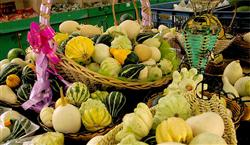
I. Variety Selection The ornamental pumpkin series includes varieties such as Flying Saucer, Zebra, Microphone, Mask, Golden Egg, Silver Egg, Wuzhishan, Golden Boy, Jade Girl, Censer, White Jade, Golden Apple, Little Alarm Clock, A Touch of Green, A Touch of Yellow, Little Pillow, Little Gourd, etc. Growers had best buy mixed packets of seeds for mixed planting, so the pumpkins produced are more varied and the ornamental effect is better.
II. Cultivation Season and Cultivation Methods Ornamental pumpkins prefer a cool climate and cannot tolerate high temperatures; the suitable growing temperature is 25°C. They are sown in two seasons, spring and autumn. For spring planting, sow in February to March; for autumn planting, sow in July to August. For spring sowing, pay attention to cold protection. Transplant when the seedlings have 2 to 4 true leaves, planting in double rows with a plant spacing of about 50 cm, at 1200 to 1500 plants per mu. Ornamental pumpkins mostly set fruit on the main vine, with very few fruits on side vines. Because the fruits are small, they are suitable for vertical (trellis or wall) cultivation. Protected cultivation with facilities (plastic tunnels or greenhouses, net houses, etc.) is mostly used, but open-field cultivation is also possible.
III. Sowing and Seedling Raising Since ornamental pumpkin seeds are relatively expensive, it is advisable to raise seedlings in nutrient pots. Nutrient soil preparation method: 5 parts disease-free fertile soil, 2 parts fully decomposed livestock and poultry manure, 12 parts coal ash. In addition, add 2 kg of ternary compound fertilizer per cubic meter of nutrient soil. After mixing, sieving and disinfecting, it can be used for raising seedlings. During the seedling stage, pay attention to controlling water and temperature to prevent the seedlings from growing leggy.
IV. Land Preparation and Fertilization Before planting, deeply plow and finely harrow the soil, and apply enough base fertilizer all at once. Generally, apply 4200 kg of high-quality organic fertilizer, 50 kg of ternary compound fertilizer and 40 kg of calcium magnesium phosphate fertilizer per mu. Mix the fertilizer and soil evenly, then make the beds.
V. Transplanting The seedlings can be transplanted when they have two leaves and one heart. Plant two rows per bed, with a plant spacing of 40 to 50 cm. After transplanting, water thoroughly to settle the roots.
VI. Post-Planting Management When the plants are more than 30 cm tall, use upright posts (A-frame trellis) or hanging strings to train the vines. Remove side buds promptly and keep the main vine for fruit setting. For cultivation in greenhouses, artificial pollination is required. Water and fertilizer management is the same as for ordinary pumpkins. In the early stage, pay attention to preventing the plants from growing leggy.
VII. Harvesting Ornamental pumpkins are used as ornaments and playthings, so they must be harvested only after the fruits are fully mature. Otherwise, they will not store long enough (normally, fully mature pumpkins can be stored for more than half a year) and will quickly lose their ornamental value.