Timely pest and disease control during the wheat greening stage
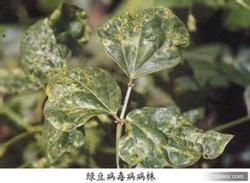
I. Viral disease (1) Symptoms This disease occurs very commonly, with more cases at the seedling stage. In the field it mainly manifests as mosaic mottling, crinkled mosaic, and so on. In mild cases, plants show mosaic and mottling symptoms at the seedling stage. In severe cases, seedlings develop crinkled, small-leaved, clustered mosaic plants, with deformed, crinkled leaves...
 Winter wheat is successively entering the greening stage, and wheat field pests and diseases are also entering a period of frequent occurrence. Attention should be paid to controlling wheat sharp eyespot, powdery mildew, red spider mites, blossom midges, wheat aphids, and other pests and diseases.
For sharp eyespot, use 20~30 ml of 25% diniconazole EC per mu, 20~30 g of 12.5% hexaconazole wettable powder, or 80 g of 15% triadimefon wettable powder, dilute with 50 liters of water, and spray the stem base; if necessary, apply again after 7~10 days.
For powdery mildew, at the booting to heading stage of wheat, when the diseased plant rate reaches 15%~30% or the diseased leaf rate reaches 8%~15%, choose 40 ml of 20% triadimefon EC or 50 g of 15% triadimefon wettable powder, dilute with 40 liters of water, and spray.
For red spider mites, when there are 200 insects per 33 cm of a single wheat row, pesticide control can be applied. Apply 1.8% abamectin EC at 5000~6000 times dilution, 15% pyridaben EC at 2000~3000 times dilution, or 20% Lubaosu (abamectin + phoxim) EC at 3000~4000 times dilution.
For blossom midges, use 200 ml of 50% phoxim EC per mu, add 5 kg of water, spray and mix into 20 kg of fine soil, mix well to make poisoned soil, and broadcast it in the wheat field at the wheat jointing stage during the pupal stage of blossom midges, which can kill part of the pupae and the larvae that have risen to the soil surface. At the heading stage, use 20~30 g of 10% imidacloprid per mu or 30 g of 4.5% beta-cypermethrin EC diluted with 20 kg of water and spray to control adults.
For aphids, when the number of aphids per 100 plants exceeds 500, use 10~15 g of 50% pirimicarb wettable powder per mu, 15~20 g of 10% imidacloprid wettable emulsion, or 20~30 ml of 3% acetamiprid EC per mu, dilute with 20 liters of water, and spray evenly to control wheat aphids.