How to carry out spring soybean cultivation and management? Sharing practical tips
1. Variety selection. According to the local ecological type and market demand, select approved (recognized) varieties with a suitable maturity period, high yield, good quality and strong stress resistance according to local conditions, such as Xiangchundou No. 21, Xiangchundou No. 22, Xiangchundou No. 23, etc. Replace the seed once every 3 years. 2. Seed treatment. For planting in acidic soil...
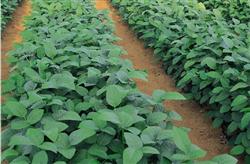 With changes in the market and consumption habits and the adjustment of the agricultural industrial structure, the soybean planting area has expanded rapidly. Our station hopes that through the promotion of excellent varieties and high-quality seeds, the harm of counterfeit and inferior seeds can be eliminated, the development of the soybean industry can be promoted, and services can be provided to meet market demand and increase farmers' income.
I. Characteristics and traits
Soybean prefers warmth. Seeds begin to germinate at 10-12°C, with 15-20°C being optimal. The optimal temperature for growth is 20-25°C, and the optimal temperature during the flowering and pod-setting period is 20-28°C. At low temperatures, pod setting is delayed, and below 14°C it cannot flower. If the temperature is too high, the plant ends growth prematurely. Seed germination requires more water, and during the flowering period the soil moisture content is required to be 70-80%, otherwise the rate of flower bud abscission increases. Before flowering, soybean absorbs less than 15% of the total fertilizer uptake, while during the flowering and pod-setting period it accounts for more than 80% of the total fertilizer uptake.
II. Cultivation key points
1. Soil selection. Soybean has a well-developed root system, so loam soil with deep soil layers, drainage and irrigation conditions, and medium or higher fertility should be selected for planting.
2. Timely sowing. For cultivation using small arched sheds, seedlings are generally raised in early February, with a seedling age of about 25 days, transplanted into small arched sheds in early March, and harvested in early May; for open-field plastic film mulching cultivation, sowing is in mid-to-late March and harvest is in mid-June; direct sowing can begin in early-to-mid April, with 2-3 seeds per hole.
3. Reasonable close planting. Use a small-bed narrow-row planting method, with a bed width including furrows of 80 cm, double-row hole sowing with a row spacing of 40 cm, and a hole spacing of about 20 cm. Do not cover with too much soil. Otherwise, the seeds are prone to rotting and it is not easy for them to emerge.
4. Scientific fertilization. Apply 150-200 jin of calcium superphosphate per mu as base fertilizer. Within one week after emergence, apply the first fertilization, using 30 jin of ammonium bicarbonate and 30 jin of calcium superphosphate per mu, mixed evenly, and applied in the middle of the bed with 3 jin per bucket of water; one week later, apply the second fertilization, using 40-50 jin of ammonium bicarbonate and 30 jin of calcium superphosphate per mu, mixed evenly, and applied in the middle of the bed with 4-5 jin per bucket of water; about 30 days after emergence (early flowering stage), apply 10-15 jin of urea and 30 jin of compound fertilizer per mu, mixed evenly and broadcast in the middle of the bed. After that, supplement fertilizer according to seedling vigor, and after each fertilization, irrigate once with water to half the depth of the furrow.
5. Field management. After emergence, when the plants grow to two compound leaves, carry out the first intertillage to promote root growth; in the late branching stage, carry out the second intertillage together with clearing the furrows and earthing up. In the early pod stage, attention should be paid to preventing damage by field rats, and in the pod-filling stage, attention should be paid to draining accumulated water from the field to prevent pod rot and ensure high yield.
6. Pest and disease control. To prevent underground pests, phoxim granules are best applied into the holes.