Cultivation Techniques for Autumn Buckwheat After Flooding
Buckwheat has a short growth period, strong adaptability, moderate yield and high nutritional value. It is an excellent catch crop and disaster-relief crop, and can be planted from south to north in our province. The key technical steps are as follows: 1. Timely sowing. Buckwheat prefers a cool environment and is afraid of frost; sowing too early or too late will seriously affect yield. In the riverside areas of southern Anhui in our province...
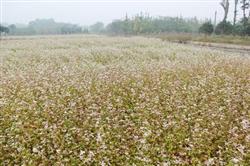
Buckwheat has a short growth period, strong adaptability, moderate yield and high nutritional value. It is an excellent catch crop and disaster-relief crop, and can be planted from south to north in our province. The key technical steps are as follows:
I. Timely sowing. Buckwheat prefers a cool environment and is afraid of frost; sowing too early or too late will seriously affect yield. In the riverside areas of southern Anhui in our province, the suitable sowing time is around mid-August, while in the Huai River areas it is best in early to mid-August.
II. Select good varieties. It is advisable to choose buckwheat varieties with a growth period of 70-80 days and strong stress resistance, such as Tianqiao No. 1, Tianqiao No. 2, Xiaohonghua Tartary Buckwheat, etc. It is best to use new seeds harvested in the current year.
III. Seed treatment. Before sowing, sun the seeds for 2-3 days, then select seeds by soaking them in warm water, that is, soak the seeds in warm water at 40°C for 10-15 minutes, remove the floating shriveled grains, and take out the plump grains that sink to the bottom and dry them. In areas with severe pests and diseases, seed dressing with chemicals can be carried out. In order to shorten the time from sowing to emergence, the seeds can be kept covered for 1-2 days after warm water soaking, and sown immediately when the seeds begin to sprout.
IV. Fine land preparation. Buckwheat seedlings have poor ability to push through the soil and weak root development, and have high requirements for land preparation, so the step of tillage and land preparation should be done as well as possible.
V. Increase fertilizer application. Buckwheat is tolerant of poor soil, but proper application of phosphorus and potassium fertilizer can significantly increase yield. Fertilizer can be applied as seed fertilizer; generally, 3-5 kg of diammonium phosphate per mu is applied at sowing, with an appropriate amount of high-quality organic fertilizer added. When applying, be careful to keep the chemical fertilizer separate from the seeds to prevent seedling burn.
VI. Sowing methods. There are mainly three types: broadcasting, dibbling and drilling. Broadcasting can be further divided into plowing first and then broadcasting seeds, and broadcasting seeds first and then plowing. Dibbling is generally 5000-6000 holes per mu, with 10-15 seeds per hole. The sowing depth is generally 3-4 cm; the sowing rate is generally 2.5-3 kg per mu for drilling, and about 5 kg per mu for broadcasting.
VII. Strengthen field management. First, remove waterlogging and prevent drought. Ditches should be opened for drainage at sowing to prevent waterlogging and seedling death. If drought occurs during the emergence period, timely furrow irrigation should be used to moisten the soil, or diluted manure water can be sprinkled in the morning and evening before emergence. Second, timely intertillage and weed control. If rain occurs after sowing, the soil crust should be broken in time. Intertill and weed twice when the seedlings are 6-8 cm high and before flowering. Third, supplement fertilizer to prevent decline. From flowering to seed-setting stage, use 0.5 kg urea and 200 g potassium dihydrogen phosphate per mu, diluted with 60 kg water, and spray 1-2 times. Fourth, assisted pollination. The natural pollination and seed-setting rate of buckwheat is low, so artificial assisted pollination should be carried out during the flowering period. Bees can be released for pollination, or from 8-10 a.m. a rope or thin bamboo pole can be gently pulled back and forth over the upper layer of the plants, for 2-3 times (at intervals of 3-5 days). Fifth, control diseases, insects, and rodent pests, and pay attention to using low-toxicity pesticides.
VIII. Timely harvest. Before Frost's Descent, when 707 of the grains on the whole plant are dark brown, harvest promptly in the early morning and evening, tie into bundles or small bundles, and place upright indoors so that the buckwheat can fully after-ripen.