What are the soil requirements for growing sorghum?
Rice "zuodou," or rice "red blight," is a common physiological disease in rice production. After rice zuodou, the impact on yield is very large, generally causing a yield reduction of 10%-20%, and in severe cases more than 50%. According to surveys, the annual affected area in our region is about 40,000 mu, accounting for about 10% of the rice planting area. This year 4...
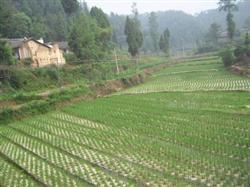 Sorghum is a crop tolerant of poor soil and salinity-alkalinity. It has a very wide range of adaptability to soil, and a certain yield can be obtained no matter what type of soil it is planted in. However, the highest yields are obtained in sandy loam soil that is fertile, high in organic matter, and good in soil structure. If clayey soil is prepared roughly and has many clods, it often results in uneven emergence, and after emergence the resistance to root growth is great, causing roots to develop horizontally, which is unfavorable for absorbing deep moisture and nutrients, resulting in lower yields. Therefore, to obtain high yields when planting sorghum in clayey soil, the key is good land preparation and deep intertillage to promote root growth. Sandy soil is favorable for sorghum emergence, but because of its poor structure and low organic matter content, it is prone to nutrient deficiency and premature aging in the later stage, so special attention must be paid to water and fertilizer supply in the later stage. Sorghum has strong adaptability to soil acidity and alkalinity. Neutral soil is of course very good, but both alkaline-leaning and acid-leaning soils can be planted, only because varieties differ, their ability to tolerate acid and alkali differs. Generally, the acid-alkali tolerance range is a hydrogen ion concentration between 3.16 and 3163 nmol/L (pH 5.5-8.5), while the suitable acidity-alkalinity for planting is a hydrogen ion concentration of 31.63-316.3 nmol/L (pH 6.5-7.5). It can grow normally on saline-alkali land with a salt content of 0.5%-0.9%, and not only can it obtain high yields, but it is also an important biological measure for improving saline-alkali soil.
Terrain also affects the growth and development of sorghum. In normal years, sorghum on flat land is better than that on sloping land. But in rainy years, because flat land has more water, microbial activity is inhibited, nutrients are lost, and the normal physiological activities of sorghum are hindered, while sloping land suffers less waterlogging, so its yield is better than that on flat land.