Fertilizing and Watering Chinese Cabbage This Way Makes the Heads Firmer
From the perspective of the entire growth period of Chinese cabbage, it goes through three stages: the seedling stage, the rosette stage, and the heading stage. During the seedling stage, Chinese cabbage absorbs few nutrients, accounting for only 10%, and the rosette stage accounts for 30%. During this period, production should control water and fertilizer, especially nitrogen fertilizer, so that the cabbage leaves grow slowly. This is also called the seedling hardening period. Do not let too much water cause...
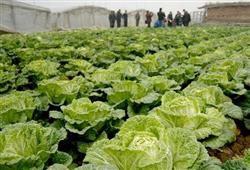
From the perspective of the entire growth period of Chinese cabbage, it goes through three stages: the seedling stage, the rosette stage, and the heading stage. During the seedling stage, Chinese cabbage absorbs few nutrients, accounting for only 10%, and the rosette stage accounts for 30%. During this period, production should control water and fertilizer, especially nitrogen fertilizer, so that the cabbage leaves grow slowly. This is also called the seedling hardening period. Do not let too much water cause the leaves to grow excessively and stand upright; instead, the leaves should grow like a rosette, tightly and flatly arranged between the leaves. Only then, at the heading stage, can the heads be firm, with high yield and good quality. Irrigating and applying nitrogen too early during the rosette stage will cause excessive leaf growth, large leaves, and loose heads. Applying too much nitrogen fertilizer and insufficient phosphorus and potassium nutrients will cause loose heads; during the rosette stage, Chinese cabbage should have controlled water and nitrogen to lay a good foundation for heading. Watering and applying nitrogen too early will cause loose heads.