How to grow Chinese cabbage in summer? Detailed explanation of key cultivation techniques
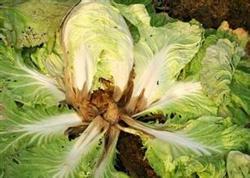
Symptoms of Chinese cabbage soft rot: 1. This disease mainly occurs after the cabbage heads form. It generally invades through wounds at the base of the leaf stalks, forming a water-soaked infected area, which then gradually expands and turns pale grayish-brown, with the tissue becoming slimy, soft and rotted, accompanied by a foul odor, known as "rotten gourd" or "rotten lump." The diseased part can...
 1. Select excellent varieties: Choose excellent cabbage varieties with strong heat tolerance, strong resistance and good yield, such as Kangre No. 45, Xiafeng and Xialu.
2. Sowing time: The suitable sowing time in summer is until the end of July.
3. Land preparation and ridging: After harvesting the previous crop, apply 3000-5000 kg of decomposed organic fertilizer, 75 kg of NPK compound fertilizer, 20 kg of superphosphate and 10 kg of zinc sulfate per mu. After fertilizing, plow deeply and harrow finely to achieve a level soil surface. To facilitate drainage, it is best to use high ridges or high beds during cultivation, with a ridge spacing of 40 cm and a bed width of 100 cm. To prevent the occurrence of pests and diseases, 0.75 kg of thiophanate-methyl mixed with 10 kg of fine soil can be buried under the ridge per mu.
4. Sowing method: For direct sowing, to save seeds, hole sowing is preferable, with a plant spacing of 33-37 cm and a row spacing of 40 cm, planting 4500-5000 plants per mu, with a seeding rate of 50-100 g per mu. After sowing, cover with 0.5 cm of fine soil, then rake level and press firm.
5. Field management
1. Thinning and final thinning: Carry out the first thinning at the 3-4 leaf stage, and final thinning at the 5-6 leaf stage. When thinning and final thinning, try not to damage the roots to prevent soft rot of the root system, keeping 4500-5000 plants per mu.
2. Fertilizer and water management: Summer temperatures are high and soil moisture evaporates quickly, so the soil should always be kept moist, and uneven dryness and wetness of the soil must be strictly prevented. In hot and dry weather, increase the amount of watering; during or after rain, drain promptly to prevent waterlogging in the field from causing root rot. For summer cabbage, water thoroughly once 10-15 days before heading, then carry out intertillage to control seedling growth; after watering for seedling control, apply a heading-strengthening fertilizer once. During the heading stage, pay attention to maintaining soil moisture, and water promptly when the soil surface turns white. Along with watering, apply another 10 kg of urea or 15 kg of ammonium sulfate per mu, mainly by hole application or furrow application. The fertilization point should be 8-10 cm away from the plants to avoid root damage. Stop watering 5-7 days before harvest.
3. Mulching the vegetable field: To keep warm and control weeds, cover the vegetable field with wheat straw or rice straw after final thinning.
4. Pest and disease control: The main diseases of summer cabbage are downy mildew and soft rot. Once diseased plants appear, pull them out promptly. To control downy mildew, spray 40% phosethyl-Al wettable powder at 200-300 times dilution or 50% metalaxyl-mancozeb at 500-600 times dilution in the early stage of the disease. For soft rot, in the early stage of the disease, spray 200-300 g of Fengchanling mixed with 100 kg of water per mu, or spray agricultural streptomycin wettable powder at 3000-4000 times dilution. The main pest of summer cabbage is the cabbage caterpillar, which can be controlled with Cascade and Lvbao or Yibianjing.