Detailed Explanation of High-Yield Cultivation Techniques for Chinese Cabbage in Summer and Autumn
In summer, temperatures are high and pests and diseases occur severely, making the cultivation of pak choi difficult, so field management should be strengthened. Thinning and weeding: carry out the first thinning when the seedlings begin to form a "cross" shape; it should be done early rather than late, thinning out overly dense small seedlings. Carry out the second thinning when the seedlings have 4 true leaves, removing weak and diseased seedlings, and at the same time, in line with market conditions...
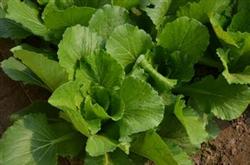 Summer and autumn Chinese cabbage has a short production cycle and quick returns, requiring only 60-70 days from sowing to harvest. In Hongta District in recent years, the summer and autumn Chinese cabbage planted has generated sales income of 700-1000 yuan per mu, with the higher end reaching more than 1200 yuan. After deducting production materials such as seeds, pesticides, and chemical fertilizers as well as labor costs, the net income per mu is 500-800 yuan, with good economic and social benefits.
1 Variety Selection
Choose early-maturing varieties such as "83-1" and "Shandong No. 19". Because Chinese cabbage sown in summer and autumn grows in a hot and rainy season with severe pests and diseases, varieties should be selected that are early-maturing, fast-growing, short in growth period, heat-tolerant, waterlogging-tolerant, disease-resistant, high-yielding, and with firm heads.
2 Soil Preparation
2.1 Land Preparation
There is more rainfall in summer, so it is best to choose high, dry terraced land that is easy to drain and irrigate and does not accumulate water for planting. Chinese cabbage should not be continuously cropped. After the previous crop is harvested, dig deeply and sun the soil clods, apply heavy base fertilizer, and allow the soil to mature. Apply 2000-3000 kg of decomposed barnyard manure or chicken manure per mu, or 120 kg of bio-organic fertilizer, 3 kg of biological potassium fertilizer, and 40 kg of ordinary calcium superphosphate, and make the soil and fertilizer uniform, fine, and level.
2.2 Bed Making
The bed surface should preferably run north-south, as this helps ventilation and light penetration. For ease of management, make double combined beds, with the double combined bed 4.3 m wide, the middle walkway 0.3 m wide, the single bed 2 m wide, and the ditch 0.3 m wide and 0.3 m deep. The ground surface is required to be level, the ditches smooth, and drainage and waterlogging prevention easy.
3 Timely Sowing
Summer and autumn Chinese cabbage sown in early May or late July and marketed in early July or late September can obtain relatively high economic benefits. The sowing spacing is 0.3 x 0.35 m, with 4500 plants per mu, sown by dibbling in holes. The sowing rate is 50-70 g per mu. After sowing, water thoroughly, and cover the holes with fine manure soil or plant ash, which helps retain water and moisture and ensure full stands.
4 Field Management
4.1 Timely Thinning and Final Thinning
Thin 15 days after sowing when there are 3-4 true leaves, leaving 3-4 plants per hole. Final thinning is done 20 days after sowing when there are 5-6 true leaves, selecting and leaving one robust seedling per hole. At the same time, transplant seedlings from dense areas to fill gaps. Replanting should be done after sunset, and watering should be done promptly. During final thinning, if there are weeds in the field, shallow hoeing may be done.
4.2 Fertilizer and Water Management
After thinning, apply 10 kg of urea per mu or 40 kg of bio-organic fertilizer diluted with water to promote strong seedlings. From 25-30 days after emergence, the plant enters the rosette stage, which is also the peak period of water demand. Apply 1500-2000 kg of human excreta and urine per mu or 15-20 kg of urea and 8-10 kg of potassium sulfate to promote strong plants. During the heading stage, apply 20 kg of ternary compound fertilizer per mu to promote head formation. The Chinese cabbage growth period coincides with high temperatures, and evaporation is high, so watering should be done promptly according to the water requirement pattern of Chinese cabbage and the drought conditions. At the same time, there is more rainfall in the later growth stage of Chinese cabbage, so drainage should be timely to prevent waterlogging damage.
5 Integrated Pest and Disease Control
In summer and autumn, high temperature and high humidity make pest and disease damage severe. Pests and diseases are one of the important factors affecting the yield and quality of Chinese cabbage. The principle of "prevention first, integrated control" should be adhered to, and efficient, low-toxicity, safe biological pesticides or chemical pesticides should be selected, with scientific control measures taken to reduce losses. Before sowing, use 1500-fold dilution of 50% phoxim to drench the holes to control underground pests. After emergence, promptly use pesticides such as Baishude to control cabbage caterpillars. Chinese cabbage soft rot, downy mildew, and other diseases cause severe damage. In combination with pest control, during the rosette stage and heading stage, use streptomycin or Shajunwang together with Caichongyisaoguang and other pesticides for continuous control 2-4 times, killing pests and diseases at the germination stage to achieve twice the result with half the effort.