Key Technical Points for Plastic Film Mulching Cultivation of Spring Sesame
1. Select high-yield, disease-resistant varieties. Demonstrations in recent years have shown that choosing an excellent variety is the guarantee of a high yield. The E Zhi No. 2 variety has the characteristics of wide adaptability, good yielding ability, and relatively strong resistance, with a yield generally of 130-150 kg per mu, and it has now been promoted and cultivated over a large area. 2. Finely prepare the soil. Sesame seeds are relatively small...
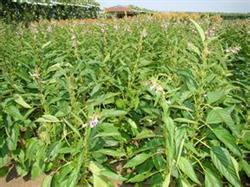 Plastic film mulching cultivation can bring sesame yield to more than 150 kg per mu, and some can exceed 200 kg, so film mulching is an effective cultivation measure for achieving super-high sesame yields. The specific techniques are introduced as follows:
1. Seed selection and timely early sowing: After plastic film mulching, the effective growth period of sesame is extended. Therefore, mid-to-late maturing excellent sesame varieties with waterlogging tolerance, disease resistance, and high yield potential should be selected, such as Yu Zhi No. 5, No. 7, No. 8, and sesame hybrids. Early sowing is suitable, with the sowing period from the end of April to early May, to make full use of the growing season and increase sesame yield.
2. Soil preparation, fertilization, and ridge formation: Increase the application of phosphorus and potassium fertilizers and control the amount of nitrogen fertilizer. When the yield is more than 200 kg of sesame per mu, apply about 20 kg each of nitrogen, phosphorus, and potassium. In terms of fertilization methods, base fertilizer is the main application, supplemented by topdressing at the flowering stage and foliar topdressing. All phosphorus and potassium fertilizers and half of the total nitrogen amount are used as base fertilizer, and the remaining half of the nitrogen fertilizer is used as topdressing. Film-mulched sesame must be grown on ridges, generally forming a ridge every 80 cm, with a ridge surface width of 45 cm, a furrow width of 35 cm, and a ridge height of about 10 cm. Plant 2 rows per ridge, with an average row spacing of 40 cm.
3. Sowing and film mulching: Film-mulched sesame can use drilling, and generally sowing can be done first and then the film covered. The film width should preferably be 70 cm. In order to reduce production costs, linear low-density polyethylene thin film is generally used (when the film thickness is 0.008 mm, about 6.5 kg of film is needed per mu). Film mulching can be done mechanically or manually, but the ridge surface must be level, the film must be firmly attached to the soil surface, and the film must be sealed tightly. Any holes must be tightly covered with soil. In addition, before covering the film after sowing, spray a pre-emergence soil-treatment herbicide to prevent weeds.
4. Chemical regulation: Before sowing, soak the seeds with 100 mg/kg-150 mg/kg (ppm) mepiquat chloride, or spray 150 mg/kg (ppm) mepiquat chloride at the seedling stage to promote root growth and restrain seedling growth.