How to fertilize soybeans? Master these technical key points
The amount of fertilizer applied to soybeans should not be excessive. After excessive basal fertilizer application, it will seriously affect emergence and rooting. Seed fertilizer will cause serious damage to the radicle and hypocotyl of soybeans, and may even prevent some seeds from germinating. When sowing, chemical fertilizer and seeds must never be placed into the soil at the same time. Because excessive basal fertilizer or topdressing will both cause excessive vegetative growth in soybeans, ...
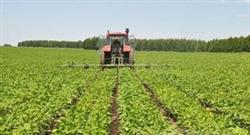
The amount of fertilizer applied to soybeans should not be excessive. After excessive basal fertilizer application, it will seriously affect emergence and rooting. Seed fertilizer will cause serious damage to the radicle and hypocotyl of soybeans, and may even prevent some seeds from germinating. When sowing, chemical fertilizer and seeds must never be placed into the soil at the same time. Because excessive basal fertilizer or topdressing will both cause excessive vegetative growth in soybeans, and even lodging, resulting in reduced yield, therefore, soybeans must not be over-fertilized.
After fertilizing soybeans, a water supply must be ensured. If water is not supplied in time after fertilization, deep application will cause root damage; when broadcast on the surface, it is easily lost through sun exposure and will have no effect on soybeans.
Fertilization of soybeans must fully take into account the plant type of the variety. For varieties with tall plants, when cultivating with heavy fertilizer and heavy water, appropriate sparse planting must be used. Otherwise, in mild cases it will increase the number of empty stalks, and in severe cases it will cause lodging and reduced yield.
Fertilization should take soil fertility into consideration. When soil fertility is high, apply less or no basal fertilizer, and at the same time tall varieties should also be planted sparsely, and topdressing can be applied at the late podding stage.
Applying an appropriate amount of organic fertilizer and phosphorus and potassium fertilizer to summer soybeans is very beneficial for cultivating a strong soybean root system and increasing root nodules. Therefore, soybeans should be given more organic fertilizer and phosphorus and potassium fertilizer. It is best to apply organic fertilizer together with phosphorus and potassium fertilizer as basal fertilizer, which both strengthens the roots, increases nodules, and strengthens the stems, and also makes flowers abundant and pods numerous with plump seeds.
Under general soil fertility, nitrogen fertilizer should not be applied around the branching stage of soybeans. Experiments have shown that applying nitrogen fertilizer at the branching stage not only inhibits the growth and development of the root system and root nodules, but also turns flower buds into leaf buds, causing excessive growth and reduced yield.
Most experts at home and abroad believe that topdressing nitrogen fertilizer at the flowering stage of soybeans increases yield. Experiments show that under general soil fertility conditions, it is best not to apply nitrogen fertilizer at the flowering stage. If soil fertility is insufficient, the amount of nitrogen fertilizer applied at the flowering stage should also be small, because applying nitrogen fertilizer at the flowering stage will cause serious shedding of buds and flowers. Topdressing nitrogen fertilizer at the late podding stage can reduce blighted pods, greatly increase the 100-seed weight, and can also cause a small number of plants to produce buds and flowers again and form pods (mostly one- or two-seeded pods), increasing yield by 20%-40%. This is because at the late podding stage, vegetative growth has basically stopped, and the growth rate of the root system and root nodules is greatly reduced; by the seed-filling stage, the nitrogen-fixing ability of rhizobia gradually declines. During the seed-filling stage, the amounts of nitrogen and phosphorus absorbed by soybeans account for 60% to 65% of the whole growth period respectively, and the absolute amount of nitrogen required is 8-9 times that of phosphorus. Therefore, during the soybean seed-filling stage, there is often an insufficient supply of nitrogen. Topdressing nitrogen fertilizer at the late podding stage not only meets the needs of soybean seed filling, but also does not cause excessive vegetative growth of the plants, so it can greatly increase grain yield. In phosphorus-deficient plots, nitrogen and phosphorus can also be applied together as topdressing. The suitable ratio of nitrogen to phosphorus is 9:1. After topdressing, be sure to irrigate in time.