Four determinations for high-yield fertilization of spring corn
In recent years, due to the lack of organic fertilizer input and people's demand for increased unit yield, the amount of corn fertilization has increased significantly, and the application area of some high-concentration compound (mixed) fertilizers has also continued to expand, effectively promoting yield increases, but seedling-stage fertilizer damage, nutrient deficiency symptoms, or late-stage fertilizer loss and yield reduction also often occur, and farmers...
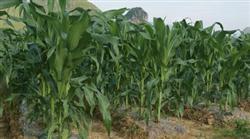
In recent years, due to the lack of organic fertilizer input and people's demand for increased unit yield, the amount of corn fertilization has increased significantly, and the application area of some high-concentration compound (mixed) fertilizers has also continued to expand, effectively promoting yield increases, but seedling-stage fertilizer damage, nutrient deficiency symptoms, or late-stage fertilizer loss and yield reduction also often occur, and farmers urgently need to understand and master the essentials of rational fertilization for spring corn. Spring corn fertilization should make the following four determinations:
1. Determine the appropriate ratio
It is necessary to determine a reasonable application ratio of nitrogen, phosphorus, and potassium fertilizers, and strive for balanced fertilization. The ratio of absorbed nitrogen, phosphorus, and potassium is roughly 100:37:84. Considering the characteristics of relatively high nitrogen and potassium utilization rates and relatively low phosphorus utilization rate, fertilization should focus on supplementing nitrogen, supplementing phosphorus in an appropriate amount, and supplementing potassium. The suitable application ratio of nitrogen, phosphorus, and potassium is roughly 100:60:40, and formula fertilization should be implemented as much as possible.
2. Determine the high-yield fertilization amount
It is necessary to determine a reasonable fertilization amount, determining fertilizer by yield and determining fertilizer by soil fertility. 1 kg of pure nutrients of nitrogen, phosphorus, and potassium can increase grain production by 8-10 kg. Generally, for every 100 kg of grain produced, with the soil's production capacity calculated at 60%, 3.43 kg of pure nitrogen, 1.23 kg of phosphorus, and 2.36 kg of potassium are required.
3. Determine the scientific number of fertilization applications
Strive to make each fertilizer supply effective and reasonable, and apply base fertilizer, seed fertilizer, and topdressing in combination. Generally, on the basis of applying 1000-1500 kg of organic fertilizer as base fertilizer, the seed fertilizer can use 20-25 kg of 15 nitrogen-15 phosphorus-15 potassium (general type), 20 nitrogen-15 phosphorus-5 potassium (for medium-yield or relatively fertile land), or 16 nitrogen-12 phosphorus-12 potassium (for low-yield or barren land); at the large trumpet stage, topdress 20-25 kg of urea; at the ear stage, topdress 10-15 kg of urea.
4. Determine efficient fertilization methods
Reasonable fertilization methods should be adopted. The application of base fertilizer should combine organic fertilizer with chemical fertilizer. The fertilization method can be broadcasting before plowing, or deep application combined with mechanical plowing; seed fertilizer must be strictly separated from seeds, or the variety must be strictly limited to diammonium phosphate, with a per-mu application amount within 5 kg, which can be sown together with corn seeds; topdressing should be done at the jointing-booting stage, that is, the small trumpet-large trumpet period, 10-15 cm from the base of the stem, mechanically side-dressed and deeply applied at 10-15 cm, or applied in furrows or holes by human or animal power and covered with soil in time.