How to grow tomatoes outdoors in the south? A detailed guide to the method
How to grow tomatoes outdoors in the south? Please give an introduction and guidance. For growing tomatoes outdoors in the south, you can refer to the following methods: 1. Quantitative indicators for high-yield tomato cultivation. Tomatoes' temperature requirements: tomatoes like warmth; the suitable daytime temperature is 25°C-28°C, and the nighttime temperature is 16°C-18°C. Below 15°C, tomato seed germination...
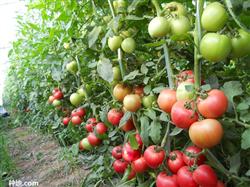
How to grow tomatoes outdoors in the south? Please give an introduction and guidance
For growing tomatoes outdoors in the south, you can refer to the following methods:
I. Quantitative indicators for high-yield tomato cultivation
Tomatoes' temperature requirements: tomatoes like warmth; the suitable daytime temperature is 25°C-28°C, and the nighttime temperature is 16°C-18°C. Below 15°C, tomato seed germination, pollination and fertilization, and tomato ripening to red are affected; below 10°C, growth is slow and reproductive development is inhibited; at 5°C, stems and leaves stop growing; at 2°C, they suffer cold damage; at 0°C, they are frozen to death. Above 35°C, reproductive development is affected; above 40°C, physiological disorder occurs and the plants die from heat. Sufficient light and a suitable temperature difference are beneficial for nutrient accumulation and ripening, promote healthy plant development, prevent excessive vegetative growth, enhance tomatoes' disease resistance and stress resistance, and increase yield.
Tomatoes' humidity requirements: the basic principle is that except for germination, emergence, and the recovery period after seedling separation and transplanting, which require higher temperature and humidity, other periods do not need high humidity. As for water requirements, except that water should be properly controlled before transplanting, during the flowering period, and during the ripening period, sufficient water supply should be ensured in all other periods.
The principle of nutrient supply for tomatoes: tomatoes have a relatively large fertilizer requirement, and sufficient nutrients should be ensured in each period, but the fertilizer demand differs somewhat among the various growth and development periods. In the early stage, emphasis is on nitrogen fertilizer; in the later stage, emphasis is on potassium fertilizer; the demand for phosphorus fertilizer runs through the entire growth period. However, the demand for potassium fertilizer must be ensured throughout the entire growth period.
Under the condition of ensuring normal growth and development of tomatoes, subjecting tomatoes to low-temperature hardening can not only improve the plants' own heat resistance and cold tolerance, but also reduce heating and insulation costs. Under normal circumstances, the optimal temperature is needed at the turning points and key periods of tomato growth and development, such as germination, emergence, flower bud differentiation, pollination and fertilization, the ripening period, and after seedling separation and transplanting, so as to promote normal reproductive physiological processes and rapid healing and recovery growth after injury; before seedling separation and transplanting, sufficient hardening should be carried out to ensure safe passage through the difficult period after injury; and during normal growth stages, the temperature can be appropriately slightly lower.
The key to tomato cultivation is to cultivate strong seedlings. The indicators of strong seedlings are 6-7 leaves, seedling age 60-70 days, height 20-23 cm, and 60%-70% showing flower buds.
II. Preparing nutrient soil
Prepare nutrient soil in a certain proportion. The nutrient soil is required to have a porosity of about 60%, pH 6-7, available phosphorus above 100 mg/kg, available potassium above 100 mg/kg, available nitrogen 150 mg/kg, and to be loose, fertilizer-retentive, water-retentive, and nutritionally complete. Spread the prepared nutrient soil evenly on the sowing bed (thickness 10 cm), or in seedling trays.
III. Seed treatment
Disinfection treatment of tomato seeds. There are two methods. (1) Hot water seed soaking, that is, soak the seeds in clean water for 1-2 hours, then remove them and put the seeds into 55°C hot water, maintain the water temperature and soak evenly for 15 minutes, then continue soaking for 3-4 hours. When soaking seeds in hot water, generally use one part seeds and two parts water; stir continuously and quickly so that the seeds are heated evenly and to prevent scalding the seeds; third, continuously add hot water to maintain the water temperature at 55°C. This can prevent diseases such as leaf mold, canker, and early blight. (2) Trisodium phosphate seed soaking, that is, first soak the seeds in clean water for 3-4 hours, remove and drain them, then put them into a 10% trisodium phosphate solution and soak for 20 minutes, then remove and wash clean. This method has a relatively obvious effect on tomato viral disease.
Freeze potato tubers and then slowly thaw them, then squeeze the juice. Soak tomato seeds in the potato juice overnight. The next day, dip a piece of thick cloth without fuzz in the juice, place the soaked seeds loosely on it so that the seeds do not touch each other, then cover with polyethylene film to prevent drying, but keep it breathable, and then place them in a warm place (cannot be heated). After the seeds germinate, insert them into the soil for seedling raising. Using this germination acceleration method can make tomatoes mature 2-3 weeks earlier than ordinary germination.
IV. Germination acceleration and sowing
Determining the sowing rate. Generally, tomato seeds contain about 300 seeds per gram. According to the planting density, generally 20-30 grams of seed are used per 667 sq m of field. Each square meter of sowing bed can be sown with 10-15 grams. If the seed germination rate is lower than 85%, the sowing rate should also be appropriately increased.
Determining the sowing period. Determine the suitable sowing period based on comprehensive consideration of planting season, climatic conditions, cultivation method, seedling facilities, and other factors. For example, for spring open-field cultivation, the Beijing area usually sows and raises seedlings from mid-February to early March. For autumn open-field cultivation, south of the Yangtze River such as Shanghai, Nanjing, and other places, sowing from late July to early August gives the best results; while in eastern Sichuan, sowing in early July gives higher yield. The yield is also relatively high. In areas where some tomato diseases occur seriously, appropriately delaying the sowing period by 1-2 months, and then through measures such as close planting, early pinching, and increasing fertilizer and water, can also obtain relatively high yields.
Seeds can be sown directly after treatment, but it is best to accelerate germination before sowing. When accelerating germination, usually seeds that have not been treated with chemicals need to be first soaked in warm water for 6-8 hours to make the seeds fully expand, and then placed under a temperature condition of 25-28°C for 2-3 days. For seeds soaked in chemicals, simply rinse the seeds clean with clean water and then directly accelerate germination. During the germination acceleration process, suitable temperature, moisture, and air need to be provided. For this purpose, frequently check and turn the seeds so that the seeds remain loose. Every day, they also need to be rinsed with clean water 1-2 times to renew the air and maintain humidity. For germination acceleration, it is best to use a constant-temperature cabinet. Seeds that have undergone germination acceleration emerge quickly and neatly after sowing, which is conducive to cultivating strong seedlings.
Sowing methods. Usually there are broadcast sowing, drilling, and dibbling. After sowing, soil should be covered immediately, and the soil used for covering should be sifted fine soil. The thickness of the covering soil is about 0.8-1.0 cm, and the thickness should be consistent. After sowing, for each square meter of seedling bed, use 8 grams of 50% carbendazim wettable powder mixed with fine soil and evenly thinly spread on the bed surface, which can prevent the occurrence of damping-off of seedlings. In winter and spring, the surface of the seedling bed also needs to be covered with plastic film. In summer and autumn, the surface of the seedling bed needs to be covered with a shade net or rice straw, and the covering should be removed when 70% of the seedlings have emerged through the soil.
V. Seedling stage management
Generally, if the seedling bed temperature is relatively high, the insulation conditions are good, and the seeds have first undergone germination acceleration, seedlings can emerge 2-3 days after sowing; otherwise, it takes 5 days or longer for seedlings to emerge.
Seedling stage management is mainly the control of temperature and light.
(1) Seedling bed management from sowing to emergence. This period refers to the period from sowing to the full expansion of the two cotyledons. For spring open-field tomato cultivation, the seedling raising period is arranged in the cold season in all places, and the bed temperature must be controlled at 25-28°C during the day and 15-18°C at night. For seedling raising with a cold bed or hot bed, during this period, solar energy should be fully utilized to increase the bed temperature, and coverings should be used to maintain a relatively high bed temperature. Before emergence, generally do not uncover the film or open windows for ventilation. When the young shoots begin to emerge through the soil, if the covering soil is too thin and shell-topping is found, soil should be covered again immediately. See the table below for temperature management during the winter and spring seedling raising period.
(2) Seedling bed management from emergence to before seedling separation. This period is mainly about regulating the temperature and humidity of the seedling bed, timely thinning, covering soil, improving light conditions, and preventing seedling-stage diseases. After the two cotyledons of the seedlings have fully expanded, the bed temperature should be appropriately lowered, controllable at 20-25°C during the day and 10-15°C at night, to prevent excessive vegetative growth. Four to five days before seedling separation, in order to adapt to the lower temperature of the seedling separation bed, improve the survival rate after transplanting, and promote recovery, the bed temperature at this time can be lowered by another 2-3°C. For cold bed seedling raising, especially hot bed and greenhouse seedling raising, the ventilation openings should be gradually enlarged during the day and the ventilation time prolonged, and straw mats or thin mats should also be gradually uncovered earlier and covered later to prolong lighting time. The damping-off or seedling blight that easily occurs during the seedling stage is often caused in bad weather by not carrying out appropriate ventilation and air exchange, and by covering for a long time with straw mats, film, and other coverings, which gradually increases the air humidity in the seedling bed. During this period, special attention should be paid to protecting the cotyledons; improving light conditions; thinning at the appropriate time; water and fertilizer management; and reasonable soil covering.
VI. Growth period management
Do a good job in growth period management, including intertillage and weeding, storing water and preserving moisture, erecting trellises and tying vines, pruning and removing side shoots, removing old leaves, ventilation and light transmission, strengthening pest and disease control, and strengthening temperature management. Among them, the main diseases of tomatoes include viral disease, bacterial wilt, early blight, late blight, and so on; the main insect pests include cotton bollworm, aphids, and so on. Tomato diseases can be prevented but are difficult to cure, so prevention should be the main approach. Methods for preventing and controlling viral disease include: selecting disease-resistant varieties, disinfecting seeds, planting on virgin soil, controlling aphids, and timely early transplanting. Temperature management means appropriately increasing the ventilation volume of the shed during the day so that the temperature inside the shed remains at about 25°C. The nighttime temperature should remain between 10-13°C. When ventilation begins, the ventilation openings should go from small to large and from few to many, and after the afternoon temperature drops, gradually make the openings smaller or close them.
Do a good job in fertilizer and water management. During the summer and autumn rainy season, tomatoes generally do not need watering during the growth period, but when 2-3 clusters of fruit mature and drought occurs, they should also be appropriately watered. According to the growth condition of the tomato plants, topdress fertilizer in a timely manner to promote fruit development and preserve flowers and fruits. Generally, Jinbaobei microbial bacterial fertilizer can be applied as base fertilizer, and Jinbaobei seedling-strengthening agent and Jinbaobei sweetening agent can be applied as topdressing, making them look better and taste more delicious. If conditions permit, cake fertilizers such as soybean cake and cottonseed cake can be applied as topdressing.
VII. Fruit harvesting
Harvest fruit at the appropriate time. Tomato ripening has 4 stages: green ripe, color change, ripe, and fully ripe. For storage and freshness preservation, they can be harvested at the green ripe stage. For transport and sale, they can be picked at the color change stage (1/3 of the fruit has turned red). For local sale or personal consumption, they should be picked at the ripe stage, that is, when more than 1/3 of the fruit has turned red. When harvesting, pick and place them gently. When picking, it is best not to leave the fruit stalk, to prevent the fruits from piercing each other during packing and transport. Before the first frost, if there are still green fruits that cannot ripen, they should be picked and stored in a greenhouse, and put on the market after the fruits ripen. This not only prolongs the supply period but also increases economic benefits. During the post-ripening period of the fruit, it is not suitable to use hormones to stimulate fruit coloring. After careful selection, they are boxed for sale. Its advantages are that it not only reduces production costs, improves fruit quality, but also safeguards consumers' food safety.
VIII. Pest and disease control
1. Control of tomato fruit skin disorder
This is a physiological disease, also called rib rot or strip rot or band rot. It mainly damages the fruit. Below is an introduction for everyone. There are two common types.
The first is the browning type. It begins to occur at the young fruit stage, mainly harming the 1st to 2nd clusters of fruit. During the fruit expansion stage, local browning appears on the fruit surface, the fruit surface is uneven, and individual fruits become tea-brown and hard or show necrotic spots. When the diseased fruit is cut open, it can be found that the vascular bundles in the fruit skin show tea-brown strip-like necrosis, the fruit core becomes hard or the flesh turns brown, and it loses commercial value.
The second is the white-change type. It mainly occurs during the period when green ripe fruit turns red. Its symptoms are uneven fruit coloring. In mild cases, the fruit shape changes little; in severe cases, green protruding areas appear near the fruit stalk, the reddened part is slightly sunken, and the diseased part has a waxy luster. When the diseased fruit is cut open, it can be found that the flesh is "pithy" and the vascular bundle tissue of the flesh is dark brown. In mild cases, part of the vascular bundles become brown and necrotic, and the browned part does not turn red, the flesh hardens, the quality is poor, and it tastes bland and flavorless. In severely affected fruits, all the vascular bundles of the flesh are dark brown, some fruits form cavities, and the surface is unevenly red and green. What this vegetable grower described belongs to the white-change type.
Tomato rib rot generally cannot be seen on the stems and leaves, but when the stem at 70 cm from the root is cut open, it can be seen that the vascular tissue of the stem shows brown lesions and has been damaged, leading to the above symptoms in the fruit. This is where it differs from viral disease.
Cause: Because it is a physiological disease, the degree of damage depends on the variety, sunshine hours, light intensity, and the ratio of nitrogen, phosphorus, and potassium in the soil.
Control methods: mainly work hard on management, appropriately increase light, scientifically determine the sowing and transplanting period, and adopt formula fertilization. For those that have already shown the above symptoms, multi-element fertilizer can be sprayed. Pest and disease control techniques for greenhouse cucumbers
(1) Physical control
High-temperature disinfection of soil: carry out during the high-temperature period of the three summer months. After pulling up the vines in spring protected cultivation, first clean the field, remove diseased residue plants, diseased leaves, and diseased roots out of the field and bury them deeply or burn them; apply 50-100 kg of lime and 1000 kg of chopped rice straw (or wheat straw) per mu, evenly spread on the ground surface; deeply plow the soil 66 cm, make super-high ridges 33 cm, irrigate so that the furrows are always full of water; cover with plastic film and keep the shed closed for 7-10 days, which can control cucumber fusarium wilt, phytophthora blight, root-knot nematodes, and so on.
Control of powdery mildew with baking soda or high-fat film: when powdery mildew just occurs, spray 500 times diluted baking soda solution, once every 3 days, continuously spray 5-6 times. It not only prevents powdery mildew but can also decompose carbon dioxide and increase cucumber yield. Or use 27% high-fat emulsion 80-100 times diluted solution, spray once every 6 days, continuously spray 4 times. (3) Yellow sticky boards to trap aphids or silver-gray film to repel aphids.
(2) Biological control
Disease prevention: for powdery mildew, anthracnose, and black spot, when individual lesions first appear, spray 2% agricultural antibiotic 120 or agricultural antibiotic B0-10 aqueous solution 200 times diluted, once every 6-7 days, continuously spray 3-4 times. It can also concurrently control gray mold and downy mildew. For bacterial diseases, such as when angular leaf spot occurs in the initial stage, spray agricultural antibiotic 751 aqueous solution 100 times diluted, once every 5-6 days, continuously spray 2-3 times.
Pest prevention: when cucumber aphids occur, spray Shaoguanmycin 200 times diluted, add 0.01 neutral washing powder, or use 0.65% shanzhiside 200 mL, add 60-80 kg water for spraying. For tea yellow mite, spray 20% compound Liuyangmycin 800-1000 times diluted, once every 6-7 days, continuously spray 2-3 times.
(3) Chemical control
For greenhouse cucumbers that have already developed disease, pesticides with high efficiency and low residue can be selected for appropriate control. For downy mildew, 7% dimethirimol dust or 80% Daconil M-45 wettable powder or 72% metalaxyl wettable powder can be used; for gray mold, 5% meimeiling dust or 50% meimeiwei wettable powder or 50% wanmeiling No. 2 1000 times diluted solution; for angular leaf spot, 5% antibacterial dust or xijunling; for scab, anti-black-mold dust or 40% fuxing emulsifiable concentrate; for anthracnose, 8% ketanling dust or 80% anthracnose thiram wettable powder; for aphids and whiteflies, anti-aphid anti-whitefly dust or 10% imidacloprid wettable powder can be used for control.
2. Reasons for hollow tomatoes
Hollow tomato fruit refers to fruit with cavities between the fruit skin and the gelatinous flesh. Although hollow fruit does not affect tomato yield very much, it seriously affects its commercial quality and reduces economic benefits, so it cannot be ignored in production.
Hollow tomato fruit is a physiological disease, and varieties with few locules are prone to it. There are many reasons for the formation of hollow tomato fruit, such as improper timing of hormone spraying, insufficient light, insufficient watering during the peak fruiting period, too many fruits retained, and inability to supply nutrients. To avoid hollow fruit, tomato varieties with more locules should be selected in cultivation, and growth regulators should be used reasonably. When 2/3 of the flowers in each inflorescence are open, spray 15 ppm-25 ppm of 4-CPA, and be careful not to repeat the application. In addition, in cultivation, sufficient base fertilizer should be applied, and formula fertilization techniques should be adopted. During the peak fruiting period, topdress fertilizer in a timely manner and water sufficiently to meet the plant's nutritional needs. The growth vigor of different tomato varieties varies, and pinching should be done in a timely manner according to the characteristics of each variety so that the plant's vegetative growth and reproductive growth develop in a balanced way.
Click to get more tomato growing techniques
Click to get more vegetable growing techniques