Detailed Explanation of Key Points for Virus-Free Spring Potato Cultivation Techniques
How to grow virus-free spring potatoes well? For guidance on virus-free spring potato cultivation, you can refer to the following methods: (1) Adapt to local conditions and select improved varieties: Virus-free seed potatoes have the advantages of being virus-free, having a high emergence rate, growing uniformly and consistently, and increasing yield by more than 30%. At present, the virus-free potato varieties suitable for cultivation in our city include...
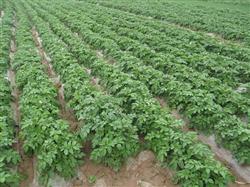
How to grow virus-free spring potatoes well? Please advise
Virus-free spring potato cultivation can refer to the following methods:
(1) Adapt to local conditions and select improved varieties: Virus-free seed potatoes have the advantages of being virus-free, having a high emergence rate, growing uniformly and consistently, and increasing yield by more than 30%. At present, the virus-free potato varieties suitable for cultivation in our city include Dongnong 303, Xiang Potato No. 1 (early-maturing), and E Potato No. 5 (mid-maturing), etc.
(2) Finely prepare the soil and cultivate on ridges: Potato is a shallow-rooted tuber crop that is not tolerant of continuous cropping and is afraid of waterlogging. You must choose sandy loam soil that has not been planted with potatoes or other Solanaceae crops within three years, is flat, has irrigation conditions, has good drainage, and has a deep, loose, and breathable plow layer. After harvesting the previous crop, apply 50 loads of barn manure and 25 kg of compound fertilizer per mu, and plow deeply into the soil as base fertilizer. Before sowing, make ridges with a ditch depth of 10 cm, ditch width of 40 cm, and bed width of 2 m. Plant 4 rows per bed with a row spacing of 0.5 m and a plant spacing of 25 cm, about 4,400 plants per mu, and open perimeter ditches and waist ditches 20-30 cm deep.
(3) Sow at the right time and cover with plastic film: Before sowing, cut the seed potatoes into pieces of 20-25 g in size (cut 20-25 pieces per jin), leave 2-3 buds per piece (cut into square pieces, do not cut into thin slices), dry the cut surfaces, dip and mix with plant ash, and sow around the Winter Solstice (late December). Use 150 kg of seed per mu, apply 25 kg of phosphate fertilizer per mu mixed with 20 loads of soil and miscellaneous ash fertilizer as seed fertilizer in holes, and cover with fine soil after sowing. In early January, apply 5-7 kg each of urea and potassium fertilizer per mu diluted with water and pour around the roots, then lay plastic film flat on the bed surface (about 10 kg per mu), and press the edges of the film firmly with broken soil.
(4) Manage according to seedling conditions and prevent drought and waterlogging: After seedlings emerge in mid-to-late February, let them grow under the film for warmth. At the end of February and beginning of March, when seedlings grow to more than 15 cm and the temperature rises to about 10°C, remove the film (it can be reused the following year). If the film is not removed, in late February when seedlings emerge, punch holes in the film and use your hands to guide the seedlings out of the film, then seal the openings with broken soil. During the entire growth period, if cracks are found in the film, seal them promptly with soil to prevent weed growth. Around late January, if drought occurs and the soil is dry, irrigate the furrows to moisten the bed soil (if not covered with plastic film, cultivate once when 90% of seedlings have emerged, and at the same time apply 10 kg of urea per mu diluted with water and pour around the roots as a seedling-promoting fertilizer, and earth up 2-4 cm; when seedlings are 20 cm tall, cultivate and weed once more; before budding, apply 10 kg of urea per mu diluted with water and pour around the roots as a tuber-setting fertilizer; after full budding, cultivate and earth up once more). From March onward, after each heavy rain, clear the ditches promptly to drain water and prevent waterlogging.
(5) Spray paclobutrazol and control pests and diseases: For seedlings with long internodes, large leaves, and tender weak branches and leaves showing a tendency to spindly growth at the budding stage, spray 50 g of 15% paclobutrazol per mu diluted with 50 kg of water on the leaves; if aphids are found, use 20 g of 10% imidacloprid diluted with 60 kg of water for spray control; if seven-spotted lady beetles are found, use 150 g of 25% bisultap per mu diluted with 50 kg of water for control; if late blight is found (at first, light brown lesions appear at leaf tips or leaf margins, with yellow-green around the lesions; when humidity is high, the lesions expand, and the leaf surface shows water-soaked green wilt spots with white mist outside the dead spots), use agricultural streptomycin, kang Kuling, or Shuangmei Yijing for control; if bacterial wilt is found (when diseased, the main stem or individual branches suddenly wilt and turn green-wilted, while other stems and leaves temporarily grow normally, and soon the whole plant dies), irrigate mildly diseased plants with 0.1% potassium permanganate solution or thoroughly pull out diseased plants and burn them, and disinfect the diseased holes with quicklime.
Click to get more potato cultivation techniques
Click to get more vegetable cultivation techniques