How to grow large-leaf mustard greens? Detailed growing method
How are large-leaf mustard greens grown? Please advise. The growing method for large-leaf mustard greens can refer to the following: 1) Growing season. In the northern regions of our country, large-leaf mustard greens are suitable for autumn planting and protected cultivation in spring. Autumn planting is generally sown from August to October and harvested from October to November; spring protected cultivation is sown from January to February, and in March to April the plants grow to a...
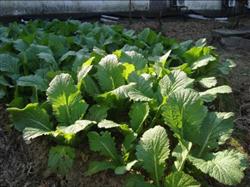
How are large-leaf mustard greens grown? Please advise
The growing method for large-leaf mustard greens can refer to the following:
1) Growing season. In the northern regions of our country, large-leaf mustard greens are suitable for autumn planting and protected cultivation in spring. Autumn planting is generally sown from August to October and harvested from October to November; spring protected cultivation is sown from January to February, and in March to April, when the plants grow to a certain size, they are harvested for market. If harvested too late, they tend to bolt and flower.
2) Key points of cultivation techniques.
① Sowing. Large-leaf mustard greens are generally raised as seedlings and then transplanted. The seedling bed should be chosen from land with good water and fertilizer retention. The seedling bed is 1.0-1.1 m wide, and the amount of fertilizer applied in the bed is the same as for broccoli. Drilling is used, with row spacing of 5 cm, drill depth of 1 cm, and seed spacing of 2-3 cm. Water thoroughly before sowing, then sow and cover with soil. Winter seedling raising is done in a greenhouse. After sowing, cover with a small arch shed for warmth. After the seedlings emerge, cover with another layer of fine soil. After the cotyledons unfold, thin the seedlings to a spacing of 3 cm, removing weak and diseased seedlings. Water according to seedling condition. When the seedlings grow to 1-2 leaves, loosen the soil and weed appropriately between the seedling rows. When the seedlings grow 3-4 leaves, prepare for transplanting.
② Land preparation and transplanting. 7-10 days before transplanting, prepare the land and apply fertilizer, applying 22500 kg of decomposed compost per hectare. Plow the land, level it, and make beds 1.1 m wide. Transplant 3 rows, with plant and row spacing of 35 cm x 35 cm. Large-leaf mustard greens root rather slowly, and how quickly they establish after transplanting is related to transplanting technique. When transplanting, be careful not to damage the roots or cause the root system to twist or be suspended in air.
③ Field management. Water 7-10 days after transplanting, and thereafter according to seedling condition. Large-leaf mustard greens are a leafy vegetable, so topdressing is mainly nitrogen fertilizer. Because in the northern regions small plants with 7-8 leaves are harvested for market, topdressing is generally done 1-2 times. After transplanting and seedling recovery, apply one topdressing of nitrogen fertilizer (urea) at 150-225 kg per hectare, and then apply another topdressing as needed. For winter protected cultivation, pay attention to ventilation and air exchange, and protect against cold and preserve warmth. Control the daytime temperature at 15-20°C and keep the nighttime temperature above 5°C.
④ Harvesting. Because they are supplied for consumption as small plants, after 40 days from transplanting, when they have about 7-8 leaves, they can be harvested at any time as needed.
Click to get more mustard green growing techniques
Click to get more vegetable growing techniques