How should root mustard be fertilized when growing it?
How should root mustard be fertilized? Please give an introduction to the methods. Root mustard fertilization can refer to the following methods: 1. Application of base fertilizer. Root mustard likes soil rich in organic matter, so before land preparation, a sufficient amount of organic fertilizer must be applied. Generally, farmyard manure or composted urban waste can be used, then wood ash and super...
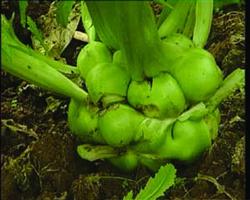
How should root mustard be fertilized? Please give an introduction to the methods.
Root mustard fertilization can refer to the following methods:
1. Application of base fertilizer. Root mustard likes soil rich in organic matter, so before land preparation, a sufficient amount of organic fertilizer must be applied. Generally, farmyard manure or composted urban waste can be used, then wood ash and superphosphate are added. The specific amount depends on soil fertility. Generally, per 667 sq m, use 3500-4000 kg of farmyard manure, 150 kg of wood ash, and 25 kg of superphosphate, spread evenly over the ground, then plow and turn into the soil, with a plowing depth of 40-50 cm, then rake level and make beds.
2. Application of topdressing. During the growth and development period of directly sown root mustard, topdressing can be applied 5 times according to specific conditions. After the cotyledons of the seedlings unfold, carry out the first topdressing, using dilute manure urine with a manure-to-water ratio of 1:7, applying 500 kg per 667 sq m. After the first thinning of seedlings, during intertillage and weeding, apply the second topdressing, using manure urine water at a ratio of 1:5, applying 800 kg per 667 sq m. After final thinning, the plants grow rapidly and need sufficient fertilizer and water, so the third topdressing can be carried out, applying 10-15 kg of ammonium sulfate per 667 sq m. After entering the rosette stage, to promote the swelling of the fleshy root, apply the fourth topdressing, using 10 kg of urea and 4 kg of potassium sulfate per 667 sq m. When entering the peak swelling stage of the fleshy root, apply the fifth topdressing, which can accelerate the swelling of the fleshy root and increase yield. This time use a nitrogen, phosphorus, and potassium compound fertilizer at 15-20 kg per 667 sq m. When applying topdressing, apply it early and combine it with phosphorus and potassium fertilizers. If topdressing is too late and nitrogen is excessive, the aboveground part will grow too vigorously, affecting the swelling of the fleshy root.
3. Application of foliar fertilizer. Root mustard needs more boron during its growth process. Entering the seedling stage, foliar spray 0.1%-0.25% borax or boric acid. In the early growth stage, spray 0.02%-0.05% ammonium molybdate aqueous solution. After the shoulders are exposed, spray 2% superphosphate on the leaves once a week, which has a significant yield-increasing effect.
Click to get more mustard growing techniques
Click to get more vegetable growing techniques