How do you carry out field management for autumn-planted sweet corn?
How should autumn-planted sweet corn be managed? Please explain: for planting sweet corn in autumn, you can refer to the following methods: 1. Scientific fertilization. For sweet corn to have a high yield, fertilization techniques should follow the principles of applying an appropriate base fertilizer, applying seedling fertilizer early, applying sufficient fertilizer for strong stalks, and heavily applying the fertilizer for the ear (ear fertilizer). Adjust flexibly according to the fertility of the previous crop's soil...
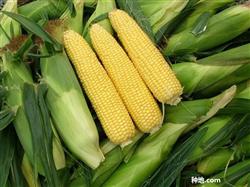
How should autumn-planted sweet corn be managed? Please explain
For planting sweet corn in autumn, you can refer to the following methods:
I. Scientific fertilization For sweet corn to have a high yield, fertilization techniques should follow the principles of applying an appropriate base fertilizer, applying seedling fertilizer early, applying sufficient fertilizer for strong stalks, and heavily applying the fertilizer for the ear (ear fertilizer). Adjust flexibly according to the fertility of the previous crop's soil. Generally, for the base fertilizer, after transplanting apply 7-8 dan of human waste or 10-12 kg of ammonium bicarbonate and 10 kg of phosphate fertilizer per mu, mixed with water and poured on; apply seedling fertilizer early, 6-7 days after transplanting, together with intertillage, use 7.5-10 kg of urea and 5 kg of potassium chloride, mixed with water, opened in holes and poured on; at the 6-7 leaf stage, apply sufficient fertilizer for jointing and stalk strengthening, using 8-10 kg of urea and 5 kg of potassium chloride per mu, opened in holes and applied in a pinch; heavily apply the ear fertilizer, because autumn corn has only one peak of fertilizer uptake, the ear fertilizer should account for more than 50% of the total fertilizer amount, apply 50 kg of ammonium bicarbonate per mu, mixed with 25 kg of superphosphate, opened in holes and applied in a pinch, plus 5 kg of urea mixed with water and poured on, and combined with ridging and earthing up to improve fertilizer efficiency.
II. Intertillage and earthing up After the Start of Autumn, in mid-August, the temperature is high, there are many thunderstorms, and weeds grow quickly. At the same time, corn roots have a strong need for air. If the soil is compacted and aeration is poor, there will be few lateral roots and they will not go deep. For this reason, intertillage should be carried out multiple times. For intertillage, follow the principle: the first pass shallow, the second pass deep, the third and fourth passes without injuring the roots. Combine with fertilization by trenching and earthing up, which both prevents lodging and helps the fertilizer take effect, and can also suppress weeds with soil. For autumn corn, do a good job of drought resistance and seedling protection; furrow irrigation is preferable, and never slow irrigation, but in case of waterlogging, drainage must be timely to promote root growth.
III. Pest and disease control Good pest and disease control is an important key to achieving high yields of sweet corn. For disease and pest control when snapping fresh ears, it is strictly forbidden to use highly toxic pesticides or those with a long residual period, so as to meet the requirements of being pollution-free. The main pest is the corn borer, also called the stalk borer, whose larvae bore into and damage corn. For control methods, at the late heart-leaf stage and the tasseling and silking stage, use 1000-1500 times dilution of fipronil spray, or use 800-1000 times dilution of 90% trichlorfon crystal, or 800-1000 times dilution of 50% dichlorvos emulsifiable concentrate for pouring; remove the sprayer head (diffuser plate) and spray into the leaf cluster at the funnel mouth, 10 ml per plant. At the tasseling and silking stages, spray on the tassel and the silking part of the corn. Corn aphids gather in the heart leaf during the corn seedling stage to cause damage, affecting growth and development; during the ear stage they cause damage and secrete honeydew, affecting photosynthesis and reducing the 1000-grain weight. For aphid control, it can be controlled together with corn borer control, using 2000 times dilution of 10% imidacloprid (Yibianjing) spray. The main diseases are sheath blight and northern and southern leaf blight. For sheath blight control, use 500 times dilution of 5% jinggangmycin spray. At the initial stage of northern and southern leaf blight, use 500 times dilution of 50% carbendazim, or 800 times dilution of 50% thiram, or 500 times dilution of 77% copper hydroxide, or 500 times dilution of 70% mancozeb for control. IV. Whole-plant ear retention Sweet corn has strong tillering ability and many branches, so whole-plant pruning should be carried out in time, leaving one main stalk per hole and removing the branches. When corn silks and tassels, whether each plant has two or three ears, only one upper ear should be retained and the lower ears removed, and the three leaves around the ear must be kept intact, so as to lay the foundation for a large ear.
Click to get more corn planting techniques
Click to get more grain crop planting techniques