How to plant and manage red chestnut pumpkin? A full breakdown of the technical key points
How to plant and manage red chestnut pumpkin? Please introduce the method. Red chestnut pumpkin can be planted for eating, adjusting the diversity of vegetable market varieties, and can also be cultivated as an ornamental greening plant in main sites. The cultivation method is as follows: 1. Characteristics of red chestnut pumpkin. The young fruit is light yellow-white, and as the fruit age...
How to plant and manage red chestnut pumpkin? Please introduce the method
Red chestnut pumpkin can be planted for eating, adjusting the diversity of vegetable market varieties, and can also be cultivated as an ornamental greening plant in main sites. The cultivation method is as follows:
1 Characteristics of red chestnut pumpkin
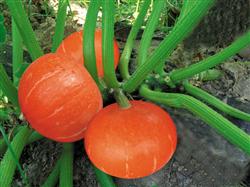
The young fruit is light yellow-white, and gradually darkens as the fruit age increases. The skin of the mature old fruit is orange-red, and the flesh is orange-red. When the young fruit is 5cm in diameter, 10 light white longitudinal lines can be seen, evenly dividing the whole pumpkin into 10 equal parts. As the fruit age increases, the longitudinal lines widen and become more obvious. The mature fruit is flat-round, mostly 20cm in transverse diameter and 12-16cm in height, with a beautiful and gorgeous appearance. The seed cavity is not large, and the seed coat is yellow, smaller than all other pumpkin seeds. The single weight of a mature fruit is about 1-2kg. Under natural conditions, it can be stored for more than 80 days. The plant grows prostrate, and the stem vine is round and thick. Due to different soil fertility levels, the leaf color may be dark or light. The leaves are round, mostly 25cm in diameter, with a maximum diameter of 40cm. The internode length of the pumpkin vine is 15-25cm.
2 Biological characteristics
Red chestnut pumpkin has strong disease resistance, stress resistance, and adaptability, and grows well in various soils such as black soil, loess, yellow mountain sandy soil, and meadow soil. When the soil fertility is uniform and fertile, the fruit size is relatively uniform. The vines are 2.5m-6m long. In fertile soil, when there is only one main vine, the length can exceed 10m. During growth, each main vine can produce 1-5 side vines (vines), and both the main vine and side vines have the ability to bear fruit. Each plant bears 1-3 fruits.
Red chestnut pumpkin is hybrid first-generation seed. In principle, the seeds harvested after planting are not suitable for use the next year.
2 Cultivation methods
Red chestnut pumpkin can be planted on a large scale. It can also be intercropped with tall crops such as corn, sorghum, or sunflowers, with a row spacing of 4-5m, and can also be planted between rows in 4-year, 5-year, and 8-year-old fruit tree orchards.
Red chestnut pumpkin can be planted in cool open fields, can be directly seeded or raised as seedlings for transplanting, cultivated and managed with plastic film mulching, and can also be planted in protected areas.
2.1 Seedling raising and plastic film mulching cultivation
Seedling raising with plastic film mulching cultivation is an important measure for obtaining high yield. According to the local last frost termination date, raise seedlings in a greenhouse or small plastic arch shed in advance, and transplant to the open field immediately after the last frost. Before raising seedlings, prepare the seedling soil. Mix 6 parts field soil with 4 parts fully decomposed farmyard manure, then sift and use. Or mix humus mountain soil, waste material from cultivating wood ear mushrooms or mushrooms, or leftover rotten distillers' grains into field soil, sift, and use as seedling culture soil. These mixed soils can make the seedlings grow robustly with well-developed root systems. The seedling pots are 8-10cm in diameter. Fill the sifted fine soil to 2/3 of the seedling pot and arrange them neatly for later use. Before sowing, put the selected red chestnut pumpkin seeds into a container, pour in 50°C hot water to soak and stir with a wooden stick, let the water temperature drop to room temperature, then soak for 3-5 hours, then take out the seeds for germination, keeping the temperature at 25-30°C. When the germinating seeds just show a white tip, they can be sown. Place 1 seed flat in each seedling pot, cover with 3cm of soil, water thoroughly, control the daytime temperature at 25-30°C, and keep it at about 15°C at night. After the cotyledons emerge, reduce the frequency of watering, control the temperature below 25°C, pay attention to ventilation, and prevent the seedlings from becoming leggy.
2.2 Open field cultivation
For red chestnut pumpkin cultivated in the open field, land preparation can be done in autumn or spring; autumn land preparation is better. Before land preparation, apply as much fully decomposed farmyard manure as possible, then plow and turn it so the manure and soil are fully mixed, then form ridges with a ridge spacing of 60-65cm.
For pumpkin seedlings cultivated for open field transplanting, plant them promptly after the last frost. When planting 1 ridge and leaving 1 ridge empty, the plant spacing is 50-60cm; when planting every ridge, the plant spacing is 100cm. After digging pits (holes), first apply 15-20g of diammonium phosphate per pit (hole) as base fertilizer. The base fertilizer and soil must be mixed evenly to prevent root burning. Then place the seedling with its soil ball, water thoroughly, and cover with soil. For those covered with plastic film, press the film edges firmly with soil, make holes to expose the seedlings, then seal the soil tightly around the seedlings to prevent the wind from tearing the film. Those covered with plastic film mature 20-30 days earlier than those not covered with plastic film. Each kilogram brings 1-1.5 yuan more income.
2.3 Direct seeding
After digging pits (holes), apply 15-20g of diammonium phosphate as base fertilizer. To prevent the fertilizer from burning the seeds, cover the fertilizer with soil before sowing. Sow 1 seed per pit (hole), covering with about 3cm of soil. The pits (holes) in each ridge should be staggered.
3 Field management
For pumpkin seedlings raised, transplanted, and covered with plastic film, because the ground temperature is increased, the seedlings grow faster after reviving. When the seedlings grow to 100cm high, press a spade of soil at the 80cm internode. Later, as the vines extend, press a spade of soil every 100cm so that adventitious roots grow at the internodes to help absorb nutrients and also prevent strong winds from flipping the vines. Remove all young fruits within 10 leaves. When the 2nd or 3rd young fruit on this main vine grows to 5cm in diameter, pinch off the growing tip above the fruit while leaving 5 leaves. All side vines that sprout again from the leaf axils must be removed to ensure sufficient nutrients for fruit growth. Each plant bears 1-3 fruits. Pull out weeds in the field at any time.
For those directly sown with seeds and not covered with plastic film, when the seedlings grow 3 leaves, hoe weeds once and promptly plow once to achieve the purpose of eliminating weeds and loosening the soil. When the seedlings grow to 20cm high, carry out the second weeding, apply 20g of urea per pit (hole), then plow the second time, and also press the vines with soil. Whether using seedlings for transplanting or direct seeding, during the growth period, apply fertilizer in a timely manner according to leaf color.
After 3 years of production cultivation management, no diseases or insect pests of red chestnut pumpkin have been seen in practice. No pesticide of any kind was ever used during the growth period.
Red chestnut pumpkin is a plant with cross-pollination on the same plant but different flowers. If artificial supplementary pollination is carried out during the flowering period, the fruit-setting rate can be increased; the best time for artificial pollination each day is 6-11 o'clock. Pick a fully open male flower from another robust plant, remove the corolla (petals), and contact the stamen anther with the stigma of a fully open female flower to achieve pollination; a brush can also be used to gently dust the pollen onto clean paper or a glass slide, then dip the brush in pollen and smear it onto the stigma of the female flower; if conditions permit, releasing 1 or more boxes of bees in the field gives an even better pollination effect.
4 Harvest
Red chestnut pumpkin is mainly harvested as mature old fruit. The mature old fruit has a darker fruit color, hard skin, and shows its inherent golden-red color, with obvious cracking at the fruit stalk, and the fruit stalk is short and thick. Near the harvest period, some old withered leaves can be removed to improve ventilation and light transmission, which helps the pumpkin color. If conditions permit, harvest at the right time according to market conditions and bring it to market for sale promptly.
Click to get more pumpkin cultivation techniques
Click to get more vegetable cultivation techniques