How to prevent and control fruit rot in mini pumpkins?
How to prevent and control fruit rot in mini pumpkins? Please introduce the control methods. Pumpkin fruit rot, also called flower rot, when it strikes the fruit is covered in black fuzz, usually the one that has just set at the very top. The lesions first appear at the withered flower, then invade from the stem end and gradually spread to the young fruit; the affected fruit rots from the top...
How to prevent and control fruit rot in mini pumpkins? Please introduce the control methods
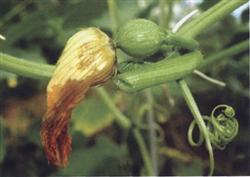
Pumpkin fruit rot, also called flower rot, when it strikes the fruit is covered in black fuzz, usually the one that has just set at the very top. The lesions first appear at the withered flower, then invade from the stem end and gradually spread to the young fruit; the affected fruit rots from the top downward, and on the lesions dense black pinhead-shaped fungal spores grow, causing the fruit to rot rapidly. The pathogen is Choanephora cucurbitarum, a type of fungus in the subphylum Zygomycotina. Shileshi (fludioxonil) has good control efficacy against pathogens in the Ascomycota, Deuteromycota and Basidiomycotina, so the Shileshi added to the fruit-setting hormone has limited efficacy against pumpkin fruit rot and cannot stop the disease from developing.
Control methods: from flowering to the young fruit stage, spray 78% mancozeb-bordeaux mixture (Kebo) at 600 times dilution, or 86.2% cuprous oxide (Copper Master) at 1000 times dilution, or 47% kasugamycin-copper hydroxide (Jiaruinong) at 700 times dilution for prevention. In the early stage of the disease, spray 72% mancozeb-cymoxanil (Kelü) at 600 times dilution, or 69% mancozeb-dimethomorph (Anke Manganxin) at 700 times dilution, or 60% flumorph-mancozeb (Mieke) at 700-800 times dilution. At present, as temperatures drop, special attention must be paid to controlling the humidity in the greenhouse and avoiding low-temperature, high-humidity conditions; on cloudy days, if pesticide application is needed, chlorothalonil smoke agents are recommended, at 250 g per mu.
Click to get more pumpkin cultivation techniques
Click to get more vegetable cultivation techniques